

When it comes to survival gear, there’s a weird pressure to buy the flashiest, priciest thing on the market. Titanium fire starters. Plasma arcs that look like something out of a sci-fi movie. Lighters that cost more than your first car.
But, after years of testing gear in real-world situations and talking to other preppers, I can confidently say that the humble BIC is the best survival lighter out there.

It’s cheap, reliable, and just keeps working. No fuss. No charging cables. No “tactical” nonsense. Just fire, every time you flick it.
Below, I’ll explain exactly why I recommend the BIC and what other top survival lighters I like. We’ll cover how they performed in the field, what makes them worth packing, and why the simplest tool often wins when it matters most.
Let’s get started:
Quick List of our Favorite Survival Lighters



Best Survival Lighter: BIC Classic Lighter
I chose the BIC Classic Lighter as the best survival lighter because it exemplifies reliability and affordability. It’s just a lighter that works. It performed consistently under our testing, and most of the experts on our team use BICs in their personal bug out bags and EDC. I recommend getting a big pack of orange ones, as they’re easier to find in the dark.

Features
- Fuel Type: Butane
- Ignition: Flint-wheel
- Burn Time: Up to 3,000 lights per lighter
- Size: Compact and lightweight
- Shelf Life: 10+ years if stored properly
Our Testing Scores
Here’s how the BIC stood up during several of our testing:
| Category | Score (Out of 10) | Why? |
|---|---|---|
| Ease of Use | 10 | Simple, one-handed operation (even with gloves) |
| Portability | 10 | Lightweight and compact |
| Reliability | 9 | Consistent ignition |
| Wind resistance | 6 | Flame susceptible to wind; requires shielding |
| Water resistance | 5 | Not waterproof |
| Durability | 7 | Durable under normal use; plastic casing can crack under pressure |
Our Expert Take on the BIC Classic Lighter
Just about everyone is familiar with BIC lighters (even those who have never researched prepping or survival). I’ve carried a BIC Classic Lighter in every emergency kit, glovebox, and backpack for over a decade. Its reliability is unmatched.

While this lighter isn’t technically waterproof, it is fairly easy to dry one out by blowing the water away from the wheel and rubbing it on my pants a few times. They can also freeze up in very cold weather, but I haven’t had an issue when I keep one in my pocket.
One of our expert testers reported:
“In a high-stress survival situation, the BIC lighter is the one you reach for over other gadgets. It’s reliable and straightforward.”

A BIC lighter just works. It might be simple, but it’s dependable. It’s easily our top choice for both everyday use and emergency preparedness.
PROS
Extremely reliable
Lightweight and compact
Long shelf life
Affordable and widely available
CONS
Not windproof or waterproof
Plastic casing can crack under pressure
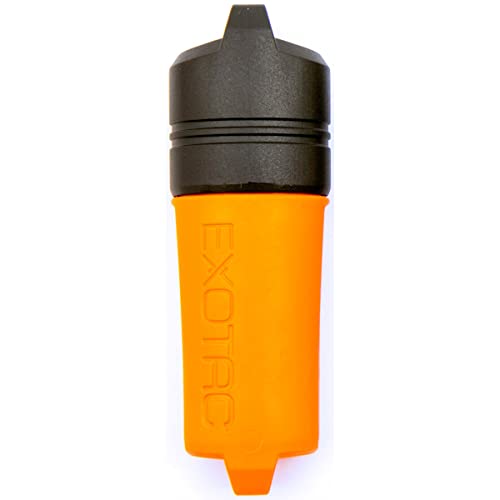
Best BIC Upgrade: Exotac fireSLEEVE
The Exotac fireSLEEVE is the best upgrade for my BIC Classic Lighter because it transforms the basic BIC into something more rugged and waterproof. In our field tests, the fireSLEEVE consistently protected the lighter from water intrusion and accidental gas discharge.

Features
- Fuel Type: Butane (via BIC lighter)
- Ignition: Flint-wheel (via BIC lighter)
- Burn Time: Up to 3,000 lights per lighter (via BIC lighter)
- Size: 4″ x 1.2″; adds minimal bulk to the lighter
- Shelf Life: 10+ years if stored properly (via BIC lighter)
Our Testing Scores
Based on our testing, here’s how this upgrade performed:
| Category | Score (Out of 10) | Why? |
|---|---|---|
| Ease of Use | 8 | Simple installation |
| Portability | 9 | Adds minimal bulk to the lighter |
| Reliability | 9 | Protects lighter from water and accidental discharge |
| Wind resistance | 6 | Doesn’t enhance a BIC’s wind resistance |
| Water resistance | 10 | Keeps the lighter dry, even in the rain |
| Durability | 9 | Withstands drops and rough handling |
Our Expert Take on the Exotac fireSLEEVE
I used a plain BIC for many years, but after discovering the Exotac fireSleeve, I’ve started using it in most of my survival kits. It’s kept my BIC lighter dry during many wet trips. (I live in Tennessee, so it is often wet.)

I like many features about this lighter upgrade, but the waterproofing is my favorite. Something about a BIC lighter still working after being fully immersed is just something I love.
Plus, the case is buoyant. So, if I drop it in the water, it won’t sink straight to the bottom (like your usual BIC).

However, I did find the gas lock a bit hard to use. It requires some practice, but it’s pretty straightforward once you figure it out! I’d recommend figuring it out, as it is a nice extra feature.
BIC lighters are so cheap that this upgrade is easily affordable by most. Skip a more expensive lighter and choose a BIC with this case instead.
PROS
Excellent waterproofing
Floats
Protects against accidental discharge
Durable construction
CONS
Gas lock is a bit difficult to engage
Limited to BIC lighters only
Best for Wet Conditions: Black Beard Arc Lighter
I live in Tennessee, so it is wet a lot. I chose the Black Beard Arc Lighter as the best option for wet conditions because it ignites reliably even after being submerged in water. It is an arc lighter, which means it doesn’t use traditional flame. So, it performs much better in damp and windy environments. It even works when frozen.

Features
- Fuel Type: Electric plasma arc (electricity)
- Ignition: Dual arc plasma beam
- Burn Time: 300+ ignites per charge
- Size: Compact
- Shelf Life: Rechargable battery; lifespan varies with usage
Our Testing Scores
I’ve had the Black Beard Arc Lighter for a while. Here’s how I would rate it:
| Category | Score (Out of 10) | Why? |
|---|---|---|
| Ease of Use | 9 | Simple operation; no fuel required |
| Portability | 8 | Compact design |
| Reliability | 10 | Performs consistently in wet and windy conditions |
| Wind resistance | 10 | Dual arc plasma beam ensures ignition in strong winds |
| Water resistance | 10 | Waterproof |
| Durability | 9 | Rechargeable battery lasts very long |
Our Expert Take on the Black Beard Arc Lighter
I’ve used the Black Beard Arc Lighter many times over the years. It works great in wet conditions when other lighters just won’t function. Based on my experience, this lighter is one of the most reliable out there.

The battery also lasts a very long time. Even after being stored for a year or two, the lighter still comes on like it’s brand new (and that’s without recharging it). I’d completely trust leaving this lighter in a bug-out bag for emergencies.
This lighter comes on faster and easier than most other lighters I’ve used. The wind or rain doesn’t impact it, so you don’t have to worry about getting out of the wind to light your fire.

Why isn’t it number #1? Well, it’s much more expensive than a BIC and not nearly as widely available. Plus, in a SHTF situation, getting electricity to recharge it might be a problem.
PROS
Excellent performance in wet conditions
Very long shelf life
Lightweight and compact
Not impacted by wind
CONS
Expensive
Requires electricity to recharge
Best Heavy-Duty Survival Lighter: X.100 Survival Lighter
If you’re looking for something a bit more heavy-duty, you may want to consider the Tactica X.100 Survival Lighter. It is much more durable and rugged than other options, performing consistently in rough environments based on my testing. It’s a fantastic tool for serious preppers and outdoor enthusiasts.

Features
- Fuel Type: Standard lighter fluid
- Ignition: Flint-wheel striker
- Burn Time: Dependent on fuel capacity
- Size: Compact
- Shelf Life: Long-lasting with proper maintenance
Our Testing Scores
While this lighter isn’t necessarily my favorite, I have used it extensively. Here are the scores I’d give it:
| Category | Score (Out of 10) | Why? |
|---|---|---|
| Ease of Use | 8 | Straightforward ignition |
| Portability | 7 | A bit bulkier than other lighters |
| Reliability | 9 | Consistent performance in many different conditions |
| Wind resistance | 8 | Flame remains stable in strong winds |
| Water resistance | 9 | Waterproof |
| Durability | 10 | Solid die-cast zinc body can withstand just about everything |
Our Expert Take on the X.100 Survival Lighter
I’ve relied on the X.100 Survival Lighter during multiple outdoor trips, including a particularly challenging winter camping trip. Despite the cold temperatures, this lighter performed well.
I’ve never really had any serious problems with it working.

It’s built to be very durable, and the added waterproofing is an added bonus when I’m in damp environments (which is a lot). I do like the added emergency firestarter. I’ve never used it, as I’ve always had my fire starting kit with me, but it’s always nice to have a backup.
It is slightly heavier than other options. But, it isn’t so heavy that I wouldn’t recommend carrying it. Unless you’re really counting ounces, the added weight isn’t a huge deal.

I don’t like that this lighter requires regular maintenance. You have to refill it with fuel and replace the flint. While this is theoretically a nice addition, it does mean this lighter takes more work than a BIC. At the end of the day, I’d rather just pick up a new jumbo pack of BIC lighters. It is a good option for survival kits in cold weather though.
PROS
Very durable
Waterproof design
Integrated emergency firestarter
Good in Cold Weather
CONS
Heavier than most alternatives
Requires regular maintenance
Best Survival Lighter Comparison Chart
| Lighter | Fuel Type | Ignition | Burn Time | Size | Shelf Life |
|---|---|---|---|---|---|
| Bic Lighter | Butane | Flint-wheel | Up to 3,000 lights | Compact & Lightweight | 10+ years if stored properly |
| Exotac fireSLEEVE | Butane (BIC insert) | Flint-wheel | Up to 3,000 lights | Adds minimal bulk to BIC | Matches BIC’s shelf life |
| Black Beard Arc Lighter | Electric plasma arc | Dual arc plasma beam | 300+ ignites per charge | Compact | Recharagable |
| X.100 Survival Lighter | Standard lighter fluid | Flint-wheel striker | Dependent on fuel capacity | A bit bigger than others | Long-lasting with maintenance |
How I Tested Survival Lighters (So You Don’t Have To)
I didn’t just line these lighters up on a desk and stare at them thoughtfully. We took them into the field (the cold, the wet, the windy) and asked one simple question: “Will this thing work when everything else is going sideways?”
Here’s what that looked like:
Real-World Ignition Tests
Some lighters talk a big game. But when it’s 38°F, your hands are shaking, and you’re trying to get a fire going with damp twigs? That’s where the posers get exposed.
So, me and my team tested each one:
- Right out of the box
- After a swim in a cold creek
- With gloves on
- In light rain and gusty wind
The goal? See if they light.
Spoiler: Not all of them did.
Wind & Water Resistance
If a lighter can’t handle a bit of breeze or moisture, it probably isn’t made for survival.
So, we ran tests in gusty wind and misty conditions. We also tried repeated lightings in wet conditions, which can be a hangup for some lighters.
Some lighters shrugged it off. Others fizzled like a Dollar Tree firecracker.
Cold-Hands, Real-Use Ergonomics
You know what’s fun? Trying to strike a flint-wheel lighter with numb fingers.
We ran usability tests while wearing winter gloves and under pressure (read: we were cold, hungry, and annoyed). If it took more than a few seconds or made us question our life choices, we took points off.
Drop & Durability Tests
Because if it can’t survive a clumsy drop onto rocks, it isn’t survival gear (it’s an accessory).
So, I dropped every lighter several times, including onto gravel and concrete. Then, I tried lighting them again. Some were fine. Some didn’t survive the fall. One shattered so bad I’m still finding pieces.
Fuel & Battery Tests
In most cases, you aren’t going to be using these lighters right away. Instead, they’re going to be sitting on a shelf or in your get-home bag for years.
We’ve owned all the lighters above for a year or more, at the very least. And, for much of that time, they’ve been sitting on a shelf.
All the lighters that stopped working at some point during storage aren’t included in the recommendations above (because they’ve been thrown in the trash).
What Actually Matters in a Survival Lighter
There are tons features survival lighter companis advertise as “must-haves.” But many of these fancy, high-tech additions don’t actually matter when you’re cold and wet.
So, here’s the deal:
If you’re picking a survival lighter, you’re not just shopping for something to flick your next candle. You’re choosing a tool that needs to work when everything else is going wrong. Over the years, I’ve field-tested dozens of them and learned (sometims the hard way) what actually matters.
And here’s what you should be really looking for (and what’s just marketing fluff).
- Reliability > Flashiness: Forget flamethrower mode or tactical laser sights. If it doesn’t light after sitting in a bag for a year, it’s useless. BICs get this right. They just work.
- Weather Resistance: Your lighter should work in the rain (not just next to it). Prioritize waterproof or at least weather-resistant housing.
- Fuel Type and Burn Time: Butane, plasma, or waxed rope? Depends on how long you want it to last and how much maintenance you’re okay with. Butane has a great shelf-life and is reliable, while plasma is windproof but requires recharging.
- Ergonomics and Size: You know what no one talks about? Trying to use a tiny lighter when your hands are numb or shaking. Look for big, obvious buttons (not sleek nonsense) and textured grips.
- Shelf Life and Storage: If you’re prepping for the long haul, you need a lighter that won’t dry out, leak, or mysteriously stop working by year three.
What’s the main takeaway? The fewer moving parts, the better. A lighter isn’t the place for complexity! If you’re ever in a situation where fire means warmth, food, or life, you won’t care how “cool” your lighter looks. You’ll care that it works.
How to Store Survival Lighters Long-Term
Let’s be honest: most of us aren’t building fires every weekend. Our gear sits. Sometimes for months. Sometimes for years. And when it finally comes time to use it? That’s when storage matters.
For instance, you cannot keep a butane lighter in your car over the summer and expect it to be okay by the end of it.
So, here’s how to actually store your survival lighter so it still works when you’re done:
1. Keep Them Out of Extreme Heat
I know, “bug-out bag in the car trunk” seems logical. Until the heat bakes your lighter’s fuel right into the stratosphere.
Preferably, you want to store your BIC and other butane lighters in a cool, dark place. If it gets above 120°F regularly (hello, Arizona), don’t leave lighters in vehicles, either.
Plasma lighters and rechargeable models?
Heat destroys batteries fast, so same rule applies.
2. Airtight Is Your Friend
Oxygen is fine for humans. But it’s not so great for gear longevity.
Here’s what works:
- Vacuum-sealed bags
- Ammo cans with desccant packs
- Dry boxes or Pelican-style cases
Wrap your lighters in a bandana, throw in a few silica packets, and you’ve got a poor man’s long-term storage solution that actually works.
3. Rechargables Need a Routine
If you’re using a plasma lighter, congrats: you’re now in a long-term relationship. Because those batteries? They’re needy.
Basic Maintenance:
- Charge them every 3 to 6 months
- Don’t store fully discharged. Lithium-ion really doesn’t like that.
- Write the last charge date on a piece of tape and stick it to the lighter. Trust me: you will forget.
4. Rotate like a Prepper, Not a Hoarder
No one needs 14 half-empty lighters that you “swear still work.”
Instead, use the oldest lighter first and check every 6 to 12 months for leaks and damage. Make sure every emergency bag has at least one lighter.
When a Lighter Isn’t Enough: Backup Fire Starting Methods
Even the best lighter can fail. Maybe it’s soaked. Maybe the fuel leaked. Maybe the cold turned your fingers into useless sausages and you dropped it in a creek.
That’s why you always have to pack for redundancy. After all, fire is just too high on the priorities of survival not to pack extra. As one of the preppers on our team says:
“Plan A rarely survives first contact.”
So, if your trusty BIC bails, here are some fire-starting backups that I highly recommend:
- Ferro rods: If you’ve never lit a fire with a ferro rod, it’s time to learn how. They’re totally waterproof and have an infinite shelf life. They also can’t “run out” unless you’re doing something dumb.
“Pro Tip: Scrape off the black coating first. It’s not just there for looks.”
- Tinder options that work when wet: Not all kindling is created equal. Some burn like a dream. Some smolder with disappointment. Check out our fire kit guide for some of my favorites.
- Friction fire? We’ve all seen it in the movies: the protagonist rubbing together two sticks and then fire! But, in reality, that’s not really how it works. Sure, this is a survival skill you should probably learn, but, trust me, you won’t want to use it. Friction fire is great for Instagram. Terrible for 2 a.m. in the rain with a splitting headache.
- Magnifying glass? Solar ignition sounds cool until it’s cloudy for 48 hours straight. It’s a fun skill, but it has zero reliability. Leave it in the bushcraft section of your brain, not your bug-out bag.
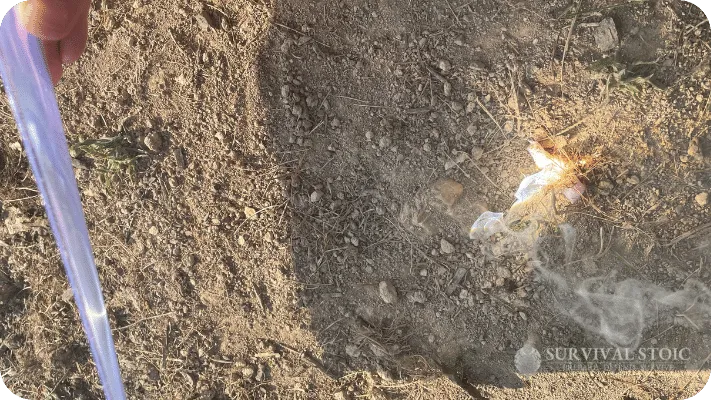
Lighters are great, but that doesn’t mean they’re perfect. Here’s a list of what I keep in my fire making kit, keeping redundancy in mind:
- Light My Fire Ferro Rod
- Orange BIC Lighter
- CZ Garden Supply Large Fresnel Lens
- überleben Tindår Wick & Bellow
- Blackbeard Fire Plugs
When in Doubt, Pack the Orange BIC
At the end of the day, fire-starting isn’t about gear envy or flashy gadgets. It’s about finding something that works.
You don’t need a $60 lighter forged in the fires of Mordor. You need something that’s going to spark every single time, even after it’s been rattling around at the bottom of your pack for six months.
And that’s why I keep recommending the orange BIC.
It’s bright enough to find in the dark, cheap enough to carry three, and reliable enough for when it matters. Toss one in every kit, glove box, and jacket pocket. Then add your upgrades: ferro rods, BIC covers, whatever floats your boat. Keep your fire-starting gear on hand in case you decide to bug in or bug out.
Just remember: simple usually wins. And there’s nothing simpler than a little orange lighter.
