
We tested popular emergency food kits for taste, calories, shelf life, and real-world practicality to find the best options for families and preppers.
Most emergency food kits are marketed to look bigger than they really are.
You’ll see phrases like “30-day supply,” but those numbers are usually based on small serving sizes, often around 1,200 calories per day. That might technically keep you alive, but it’s not enough to sustain an active adult, especially in a real emergency where you’re moving, thinking, and working under stress.
And calories aren’t the whole story.
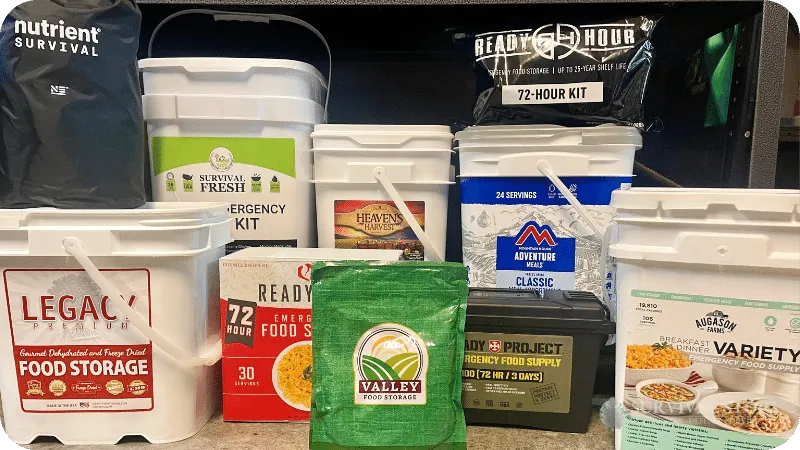
Many kits lean heavily on inexpensive, carbohydrate-heavy meals with very little protein. That can leave you full for a while, but it won’t hold up over multiple days when your energy, strength, and focus actually matter.
So instead of repeating manufacturer claims, we broke these kits down using a more practical standard:
- How many real days of food are you actually getting at 2,000 calories
- How much protein does each kit provide per day
- And how efficiently those calories are delivered for the price
This guide is about what emergency food kit you can actually rely on in an emergency.
Emergency food kits are only one part of a complete pantry, though. For a broader look at long-term food storage, see our guide to the best survival foods for emergency preparedness.
In this guide, I’ll walk you through the best emergency food kits available today, based on real-world testing. I’ll also explain how these kits fit into a complete emergency pantry and what else you should store if you want to build a truly resilient food supply.
Best Emergency Food Kits (Quick Picks)
If you want the quick answer, these are the emergency food kits we recommend most based on taste, calorie value, shelf life, and real-world testing.
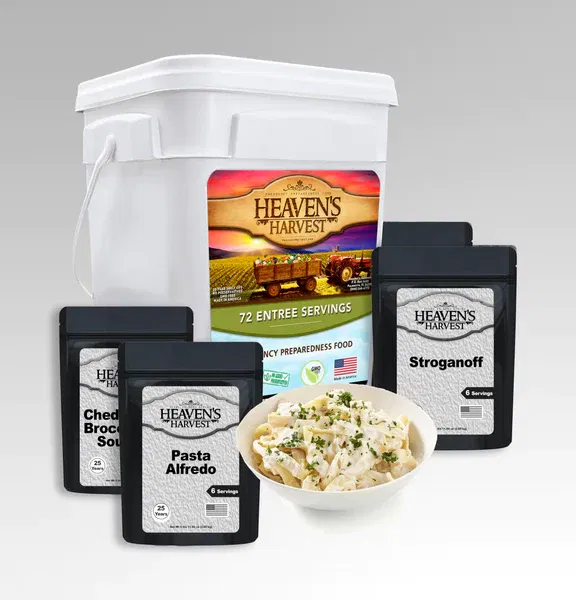
Quality Meals
≈7 days for one adult
25 Year Shelf Life
MSRP: $205.99
Save 10% at Heaven’s Harvest with code “survivalstoic”
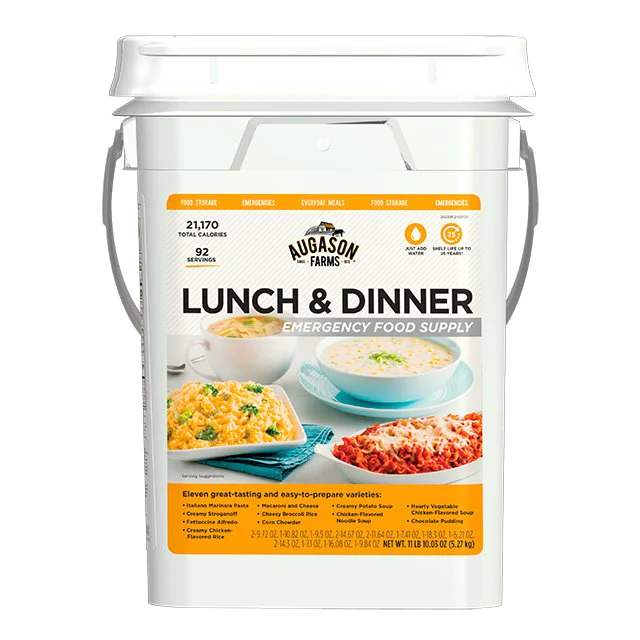
Augason Farms Lunch & Dinner Kit
Affordable
≈10 days for one adult
10-30 Year Shelf Life
MSRP: $99.99
Save 10% at Augason Farms with code “survivalstoic”

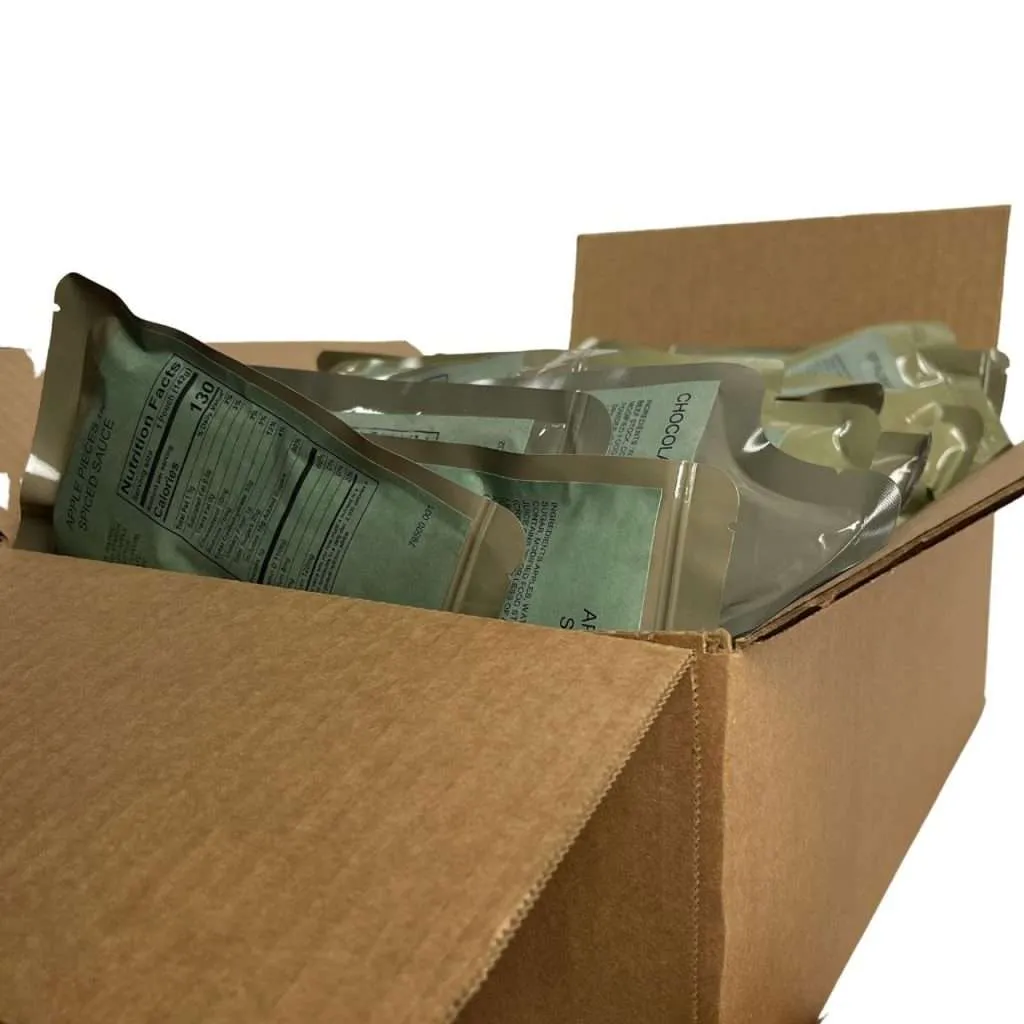
≈3 days for one adult
18 MRE Entrees
6 MRE Sides
MSRP: $49.95
Save 10% off at Army Navy Outdoors with code “Survive10”
If you’re building an emergency pantry because you’re concerned about supply disruptions, you may also want to read our guide on how to prepare for a food shortage.
If I Could Only Buy One Emergency Food Kit
If I had to choose one emergency food kit and nothing else, I would buy the Heaven’s Harvest Entree Kit.
It’s the most practical option we tested.
Not because it’s the cheapest or the highest calorie, but because it’s one of the few kits that actually works across the board. You get real meals, solid calorie density, and enough variety to eat it for multiple days without burning out.
That combination is rare.
A lot of emergency food kits inflate their value with drink mixes, desserts, and low-calorie fillers. This one doesn’t. The calories come from actual meals, which makes a real difference when you’re relying on it.
It’s also one of the only kits my entire family consistently ate without complaints. That may sound like a small thing, but in a stressful situation, it matters more than most people expect.
If you’re starting from scratch, this is the one I’d buy first. Then I’d build around it.
The 3 Biggest Mistakes People Make When Buying Emergency Food Kits
Most people assume emergency food kits are straightforward: pick a bucket, store it, and you’re covered.
In reality, a lot of these kits are built around marketing, not real-world use. These are the three mistakes that trip people up most often.
1. Trusting “days of food” instead of actual calories
When a kit says “30-day supply,” that number is usually based on small serving sizes, often around 1,200 calories per day.
For an adult, especially in a stressful or physically demanding situation, that’s not enough.
A better way to evaluate any kit is simple:
- Look at the total calories
- Divide by 2,000 calories per day
That gives you a much more realistic idea of how long it will actually last.
2. Ignoring protein completely
Calories keep you alive, but protein is what keeps you functioning.
Many lower-cost kits rely heavily on pasta, rice, and drink mixes. They’ll fill you up, but they don’t provide much protein. After a few days, that starts to matter.
Low-protein kits can lead to faster fatigue and poorer focus. The longer you have to live off these kits, the worse off you’ll be.
If you’re planning for more than a couple of days, protein becomes just as important as calories.
3. Assuming all kits are nutritionally complete
Most emergency food kits are designed to be shelf-stable and inexpensive, not perfectly balanced.
That means:
- limited variety
- heavy reliance on simple carbs
- minimal fresh or nutrient-dense ingredients
That doesn’t make them useless. It just means they’re best viewed as a base layer, not a complete food system. The people who get the most out of these kits are the ones who understand their limitations and plan around them.
Emergency Food Kit Comparison Table
If you want to quickly compare calories, shelf life, and preparation requirements, this table breaks down the most important differences between the best emergency food kits we tested.
Instead of sticking solely to things like meal counts and marketing claims, we broke these kits down based:
- Real Days of Food → based on a 2,000-calorie daily intake
- Protein Per Day → because energy without nutrition doesn’t hold up
- Cost Per Calorie → what you’re actually paying for usable food
This gives you a clearer view of what you’re actually getting in each kit.
| Emergency Food Kit | Total Calories | Real Days of Food | Calories per Dollar | Protein per Day | Shelf Life | Prep Simplicity | Best For |
|---|---|---|---|---|---|---|---|
| Heaven’s Harvest Entree Kit | 15,270 | ~7 days | ~74 cal / $ | 54 g | 25 years | Hot water | Best overall balance of taste, calories, and value |
| Augason Farms Lunch & Dinner Kit | 21,170 | ~10 days | ~212 cal / $ | 55 g | 10–30 years | Hot water | Best budget emergency food kit |
| Ready Hour 4-Week Emergency Kit | 56,140 | ~28 days | ~227 cal / $ | 50 g | 25 years | Hot water | Best long-term supply |
| Mountain House Classic Meal Kit | 6,120 | ~3 days | ~48 cal / $ | 60 g | 30 years | Hot water | Best tasting emergency meals |
| Ameriqual MRE Entree & Side Case | ~6,000 | ~3 days | ~120 cal / $ | 63 g | 5–10 years | Ready to eat | Best no-cook option |
| Nutrient Survival 14-Day Kit | 18,060 | ~9 days | ~60 cal / $ | 75 g | 15 years | Hot water | Best for nutrition |
| Valley Food Storage 175 Serving Kit | 28,340 | ~14 days | ~94 cal / $ | 79 g | 25 years | Hot water | Balanced long-term food storage |
| ReadyWise 120 Serving Kit | 26,320 | ~13 days | ~96 cal / $ | 47 g | 25 years | Hot water | Solid all-around kit |
Most emergency food kits assume roughly 2,000 calories per day per adult, which is how we calculated the “days of food” column above.
Most budget kits hover around 45-50g of protein per day. While this meets basic survival needs, it is on the lower end for active adults in a high-stress environment.
How Many Calories Do You Need in an Emergency
When evaluating emergency food kits, the most important number to look at is calories, not servings.
Many kits advertise impressive serving counts, but if the total calories are too low, they won’t sustain you for long. In an emergency situation, calories are the fuel that keeps your body functioning and allows you to continue working and staying warm.
For most adults, daily calorie needs fall around 2,000–2,500 calories per day, depending on age, body size, and activity level.
In fact, many disaster relief guidelines use roughly 2,100 calories per day per adult as a baseline for emergency feeding programs.
During emergencies, however, calorie needs may actually increase. Situations like cold weather, physical labor, and high stress can cause your body to burn more energy than usual.
A simple rule of thumb when planning emergency food supplies:
| Person | Estimated Calories Per Day |
|---|---|
| Adult | 2,000–2,500 |
| Teen | 1,800–2,400 |
| Child | 1,200–1,800 |
These numbers are estimates, but they give you a useful starting point for planning a food supply.
What This Means for Emergency Food Kits
Most emergency food kits assume about 2,000 calories per person per day. That’s why many preparedness guides recommend storing at least three days of food per person as a minimum emergency supply.
Using that guideline:
| Emergency Duration | Calories Needed Per Person |
|---|---|
| 72 hours (3 days) | ~6,000 calories |
| 1 week | ~14,000 calories |
| 2 weeks | ~28,000 calories |
| 1 month | ~60,000 calories |
This is why the total calorie count of an emergency food kit matters so much. A bucket with 20,000 calories might sound like a lot, but it really only feeds one adult for about ten days.
Why Many Emergency Kits Fall Short
One of the biggest issues we noticed while testing emergency food kits is that some companies inflate their serving counts with low-calorie items like drink mixes, instant oatmeal, or desserts.
You might see a bucket advertised as “120 servings,” but when you divide the calories by the number of days of food, it may only provide 1,500 calories per day or less.
That’s not enough for most adults during an emergency.
When comparing emergency food kits, it’s far more useful to look at:
- Total calories
- Calories per dollar
- Calories per day
Those numbers tell you how long the food will realistically sustain you.
Bottom Line
For most emergency planning, assume about 2,000 calories per person per day as a baseline. Some people will need more, especially if they’re active or dealing with harsh conditions.
When choosing an emergency food kit, always calculate how many days of food it actually provides, not just how many servings it claims.
That simple step will prevent one of the most common mistakes people make when building an emergency food supply.
Best Emergency Food Kit Reviews
Best Overall: Heaven’s Harvest Entree Kit
Save 10% with code “survivalstoic” (automatically applied with button above)
- Best for: Families building a starter emergency pantry
- Total Calories: 15,720
- Meal Variety: 12 different meals
- Shelf Life: 25 years
- Preparation: Hot water
- Total Protein: 380 g
Why We Picked It
The Heaven’s Harvest 72-Serving Entree kit hits the best overall balance we found between calories, taste, and cost.
A lot of emergency food kits lean heavily on fillers to inflate their serving counts. This one doesn’t. Most of the calories come from actual meals, not drink mixes or empty carbs, which makes a big difference if you’re relying on it for more than a couple of days.
It’s not the absolute highest in calories or the cheapest per dollar, but it’s one of the few kits that feels practical to live on, not just store.
Our Real-World Experience
This was one of the few kits my family didn’t get tired of quickly.
The Alfredo pasta is legitimately good, not “good for emergency food,” just good. Several of the meals had that same effect, where people went back for seconds, which is rare in this category.
Prep was relatively straightforward. We boiled water, poured it into the pouch, and then waited.

Most meals rehydrated well, though a few needed an extra minute or two beyond the instructions to fully soften.
One thing I noticed after eating these for multiple meals in a row: They’re filling without feeling overly heavy, which is not always the case with carb-heavy kits.
Meal Quality and Practical Use
This is where Heaven’s Harvest stands out.
Instead of padding the kit with oatmeal, rice, and drink mixes, you’re getting:
- actual lunch and dinner meals
- solid variety (12 entrees)
- consistent calorie density
That matters more than people expect. In a stressful situation, variety and familiarity help more than you’d think. Eating something that tastes like a normal meal goes a long way toward maintaining morale.
The freeze-dried pouches were also lightweight and easy to store.
What to Watch for
This isn’t a perfect kit.
- While protein is decent, it’s not especially high compared to something like Nutrient Survival
- Like most kits, it still leans somewhat carb-heavy
- Requires hot water (no workaround here)
For longer-term use, I’d still recommend supplementing with additional protein sources.
How We Use It in a Real Food System
This is the kind of kit I’d use as a base layer, not the entire system. It covers calories and variety while being easy to store. I’d build around it with higher-protein options, like powdered eggs and dried meats, along with additional pantry staples.
For a full breakdown of this kit and our favorite meals, see our full Heaven’s Harvest Emergency Food Review.
Recommended For
If you want a ready-to-store emergency food kit that balances taste, variety, and affordability, Heaven’s Harvest 72-serving Entree kit is one of the best options we tested. It’s especially well-suited for families looking to build a reliable emergency pantry quickly.
PROS
Strong balance of taste, calories, and cost
Real meals (not filler-heavy)
Long 25-year shelf life
Good variety across entrees
CONS
Not the highest protein option
Requires hot water
Still somewhat carb-heavy for long-term use
Best Budget Emergency Food Kit: Augason Farms Lunch & Dinner Pail
Save 10% with code “survivalstoic” at Augason Farms Checkout
- Best for: Budget-friendly emergency food storage
- Total Calories: 21,170
- Meal Variety: 11 different meals
- Shelf Life: 10–30 years
- Preparation: Hot water
- Total Protein: 557 g
Why We Picked It
If your goal is to store as many calories as possible for the lowest cost, it’s hard to beat Augason Farms Lunch & Dinner Pail.
This kit delivers significantly more calories per dollar than most freeze-dried options, which makes it one of the most practical ways to build a large emergency food supply without overspending.
It’s not trying to be premium, and that’s exactly why it works.
Our Real-World Experience
This is one of the few kits where the value is immediately obvious.
The meals aren’t gourmet, but they’re completely serviceable. Nothing we tried was inedible, and most of it was better than I expected given the price point.
That said, this is not a “comfort food” kit.
After a few meals, you start to notice the simpler flavors and more repetitive texture. There is less variety here than in some of the premium kits.
Prep is straightforward, but because ingredients are often packaged separately (like pasta and cheese powder), you occasionally have to do a little more mixing than with fully combined meals.
That said, the separated ingredients do make it easier to portion!

What Makes This Kit Different
Augason Farms uses a different approach than most emergency food kits.
Instead of pre-mixed, fully freeze-dried meals, many components are stored separately. For instance, the noodles and sauce for many meals are in different containers.
This has two major effects:
1. More flexibility
You can adjust portions and ratios depending on what you want.
2. More management required
Different ingredients have different shelf lives.
For example:
- noodles may last 25–30 years
- cheese powder may only last ~10 years
So this isn’t quite a “set it and forget it” system.
What to Watch For
This is where most people misunderstand this kit.
- The meals are more basic and carb-heavy than premium options
- Flavor is decent, but not something you’ll look forward to long-term
- Shelf life varies by ingredient, so it requires occasional attention
This is a calorie-first kit, not a nutrition-first kit.
How We Use It in a Survival Pantry
This is where Augason Farms really shines. It is one of the best emergency food kits to use as a foundation. Because it’s so affordable, you can use the money you save to add canned meats, freeze-dried protein, and fruits and veggies (which Augason Farms sells, too).
This allows you to round out each meal’s nutrition and customize it to your family’s taste.
For a deeper look at Augason Farms products, see our full Augason Farms Emergency Food Review, where we break down the kits we tested and our favorite meals. You can also read our guide to the Best Emergency Food Companies to see why Augason Farms remains one of our top long-term food storage brands.
Recommended For
If you’re looking for the most affordable way to build an emergency food supply, the Augason Farms Lunch & Dinner Pail is one of the best budget emergency food kits available.
It’s best suited for budget-conscious preppers and those with picky eaters. The recipes are pretty basic and can be customized by purchasing other ingredients.
PROS
Extremely high calories per dollar
Affordable way to build a large food supply
Good variety for the price
Flexible ingredient system
CONS
Simpler, less flavorful meals
More carb-heavy than premium kits
Different ingredients have different expiration dates
Best Four-Week Emergency Food Kit: Ready Hour Four-Week Emergency Kit
- Best for: Long emergencies or large households
- Total Calories: 56,140
- Meal Variety: 16 food and drink options
- Shelf Life: Up to 25 years
- Preparation: Hot water
- Total Protein: 1,400 g
Why We Picked It
If your priority is having enough calories to last through a longer emergency, this is one of the most efficient kits we tested.
The Ready Hour 4-Week Emergency Food Kit delivers a large amount of food at a relatively low cost per calorie, which makes it one of the most practical options for feeding a family or covering multiple weeks without constantly restocking.
This is not a premium kit; it’s a volume-first solution.
Our Real World Experience
This kit surprised me in a few ways. First, it’s not just oatmeal and filler. You actually get full meals like:
- chili mac
- creamy pasta
- rice-based dishes
- even bread mixes
That makes it much more usable than a lot of “bulk calorie” kits.
Prep is simple:
- add hot water
- wait a few minutes
Most meals came out consistently, though like most kits in this category, they lean heavily on pasta and rice, so you’ll notice repetition after a few days.

The Tradeoff: Packaging and Storage
This is where the biggest downside started to show.
The food itself is solid for the price, but the buckets are not. During testing:
- one of our bucket lids popped off during shipping
- the lids feel thinner and less secure than other brands
- there’s no strong water-resistant seal
That doesn’t make the food unusable, but it does mean that I wouldn’t trust this kit for long-term storage without additional protection. At a minimum, I’d recommend storing them in a dry, stable environment. If you could transfer them to more secure containers, that’d be even better.


Meal Quality and Practical Use
This is a classic calorie-focused kit.
- Meals are simple but filling
- Flavor is decent, but not standout
- Variety is good enough to get through a few weeks
This is not a kit you buy for enjoyment. You buy it because it will actually carry you through an extended situation.

What to Watch For
- Flavor is average, not bad, but not something you’ll look forward to long-term
- Meals rely heavily on carbs (rice and pasta dominate)
- Bucket durability is noticeably weaker than competitors
This is one of the best examples of a high-utility kit with clear compromises.
How We Use It in a Real Food System
This is a bulk calorie backbone, not a complete system.
It works best when paired with higher-protein foods and canned goods. Think of it as an insurance layer. It’s the food you rely on when everything else runs out. Then, you can improve it by layering on nutrition, variety, and taste.
Recommended For
If you want a large supply of emergency calories at an affordable price, the Ready Hour 4-Week Emergency Food Kit is a solid option. It’s especially useful for families or anyone preparing for longer emergencies where calorie supply matters more than gourmet taste.
PROS
Extremely high total calorie count
Strong value per calorie
Good variety for a bulk kit
Simple preparation
CONS
Bucket quality is below average
Flavor is only average
Carb-heavy meals dominate
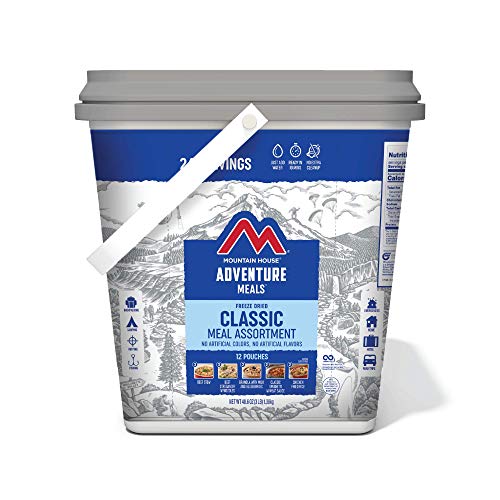
Best Tasting Emergency Food Kit: Mountain House Classic Meal Kit
- Best for: Taste and premium freeze-dried meals
- Total Calories: 6,120
- Meal Variety: 5 different meals
- Shelf Life: 30 years
- Preparation: Hot water (prepared directly in the pouch)
- Total Protein: 180 g
Why We Picked It
Mountain House consistently produces some of the best-tasting freeze-dried meals available. Most emergency food is just something you tolerate. This is something you’ll willingly eat. (My husband actually eats Mountain House meals for lunch regularly.) That distinction matters more than people expect, especially after a few days when appetite and morale start to drop.
It’s not the most efficient option in terms of cost or calories, but it fills a role that most other kits don’t.
Our Real-World Experience
This is easily the best-tasting emergency food we’ve used.
The meals come out close to what you’d expect from a decent backpacking meal, not typical “survival food.” The texture holds up well, and the flavors are consistent across different meals.
My family often chooses to eat their meals even when there are home-cooked options available. I keep Mountain House meals on hand for hiking trips, since they overlap heavily with backpacking meals and lightweight bug out bag food.
It’s also one of the easiest kits to use. You add hot water directly into the pouch, seal it, and eat from the bag. There’s no extra cookware and almost no cleanup, which becomes more valuable than you might expect in a real situation.
That convenience alone makes it something I keep on hand outside of emergencies, especially for camping and travel.

Where it Falls Short
The tradeoff is cost.
You’re paying significantly more per calorie than almost any other option on this list. If you tried to rely on Mountain House as your primary food supply, it would get expensive quickly.
The total calorie count is also low compared to bucket-style kits. This isn’t something you buy to cover weeks of food. It’s better suited for shorter timeframes or as part of a larger system.
How It Fits Into a Real Food System
This is not a foundation kit. It’s a quality layer.
If your base food supply is built around bulk calories, this is what you add to make it more usable. It gives you meals you’ll actually look forward to eating, which helps more than most people realize during stressful situations.

It’s also one of the best options for bug out bags and short-term emergencies. Used this way, the higher price makes sense.
Recommended For
If taste matters most to you, Mountain House is one of the best emergency food brands available. It works best as a supplement to a larger food supply, not a replacement for one.
PROS
Exceptional taste compared to most emergency food
Meals prepare directly in the pouch
Very long 30-year shelf life
CONS
Very expensive compared to other kits
Not enough calories for long-term use
Best No-Cook Emergency Food Kit: MRE Entree and Sides Case
- Best for: No-cook emergency food and bug-out situations
- Total Calories: ~6,000
- Meal Variety: 18 MRE entrees + 6 sides
- Shelf Life: 5–10 years
- Preparation: None (ready to eat)
- Total Protein: 190 g
Why We Picked It
Most emergency food kits assume you’ll have time, water, and a way to heat it. MREs don’t.
That alone makes them one of the most practical options you can have on hand. When you can’t cook, can’t boil water, or don’t want to stop moving, this is one of the few food sources that still works.
Our Real-World Experience
MREs are exactly what people expect: heavy, a little bulky, but extremely convenient.
You open the pouch and eat. That’s it.
I’ve used these while camping and during long days outside, and they’re one of the easiest ways to get a full meal without stopping to cook. The entrees feel like real food compared to ration bars, and having multiple options makes it easier to avoid getting burned out on one flavor.
That said, they’re not something that I’d want to eat exclusively for long stretches. They just aren’t made to be lived on for that long. After a couple of meals, you’ll start to notice the higher sodium and slower digestion.
In my MRE guide, a dive into this problem more in-depth, if you’re interested.
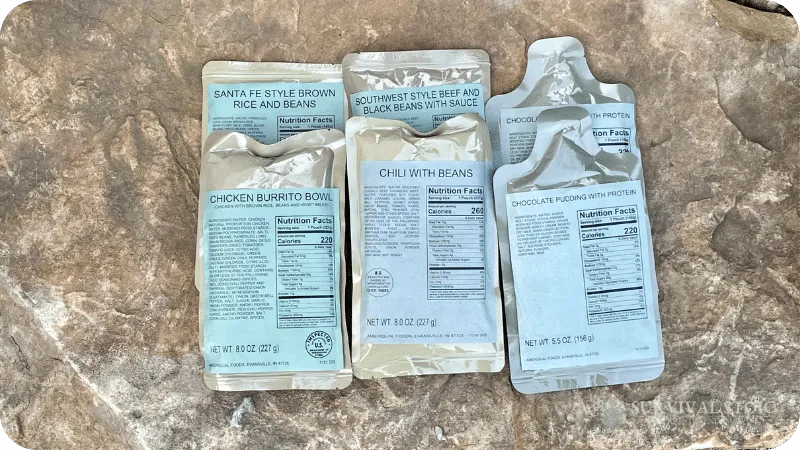
A Smarter Way to Buy MREs
One thing I consistently recommend is skipping full MRE kits and buying entrees and sides instead.
Full MREs include:
- crackers
- utensils
- napkins
- accessories
That all takes up space without adding much real value. Buying just the entrees gives you more usable calories and a lower cost per meal. Plus, you don’t have to worry about storing or throwing out all that extra stuff.
Shelf Life Reality
MREs don’t last as long as freeze-dried food, and that’s important to understand.
They’re typically rated for 5–10 years, but that depends heavily on storage temperature. Heat shortens their lifespan significantly. Check out my guide to how long MREs last for more details than I can include here.
This makes them better suited for active use and short-term planning. Not deep, decades-long storage.
How It Fits Into a Real Food System
MREs are not a replacement for long-term food storage. They’re a mobility tool. They work best for bug-out bags, short-term emergencies, and situations where cooking isn’t possible.
In a full system, they fill the gap between ready-to-eat convenience and longer-term stored food.
Recommended For
MREs are one of the most practical emergency food options available, especially for situations where cooking isn’t possible. They’re especially useful when time is limited and water is scarce.
PROS
No cooking or water required
Real meals, not just ration bars
High protein compared to many emergency foods
CONS
Shorter shelf life than freeze-dried food
Heavier and bulkier than other options
High sodium and less ideal for long-term use
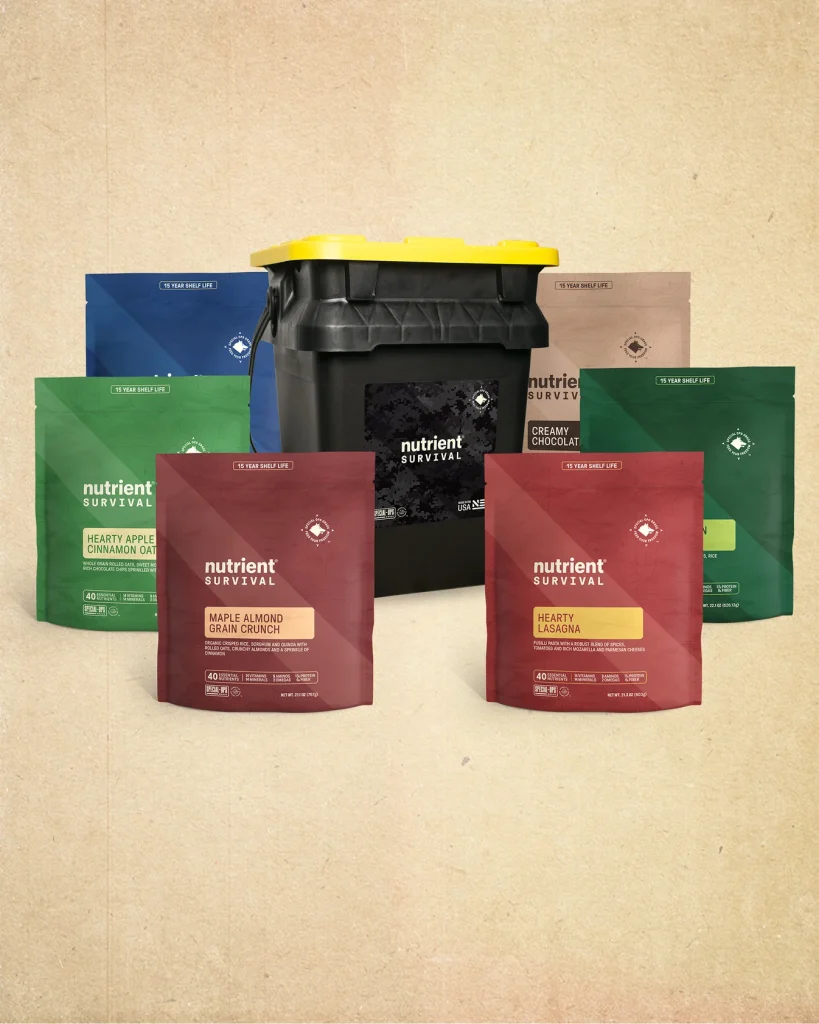
Best Emergency Kit for Nutrition: Nutrient Survival 14-Day Emergency Food Supply
Save 10% with code “SS10” at Nutrient Survival Checkout
- Best for: Nutritionally complete emergency food
- Total Calories: 18,060
- Meal Variety: 6 meals
- Shelf Life: 15 years
- Preparation: Hot water
- Total Protein: 1,047 g
Why We Picked It
Most emergency food kits focus almost entirely on calories and shelf life. Nutrient Survival takes a different approach by prioritizing protein and vitamins.
This is one of the few kits we tested that provides meaningful protein levels and a more complete nutritional profile, rather than relying heavily on cheap carbohydrates to fill calories.
If you’re concerned about how your body will actually perform during an extended emergency, this kit stands out immediately.
Our Real-World Experience
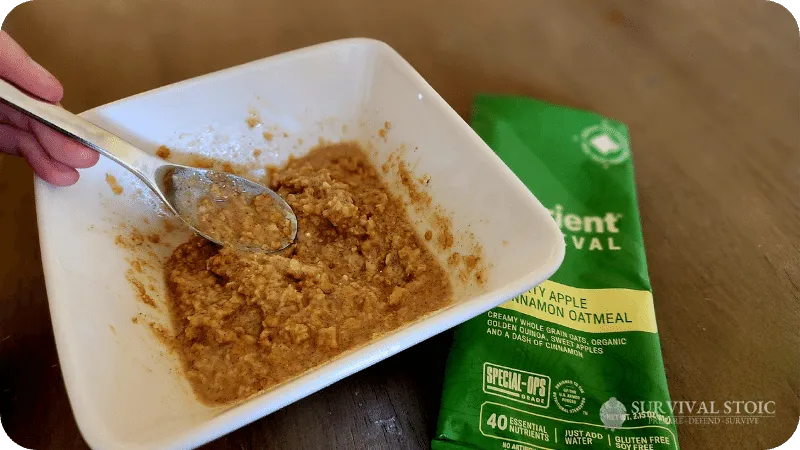
This is easily one of the most nutritionally impressive kits we tested, and also one of the most polarizing.
On paper, it’s hard to beat. The protein content alone is significantly higher than most emergency food options, and many of the meals are fortified with vitamins and minerals.
In practice, it’s a mixed experience. Some items, like the powdered eggs, are excellent. They’re easily the best powdered eggs we’ve tried, and they’re something I would use even outside of an emergency. The oatmeal is also very solid and tastes close to standard instant oatmeal.
Other items are less appealing. The shakes, in particular, were difficult for my family to enjoy, and they’re not something we’d want to rely on repeatedly.
So while the nutrition is strong, the experience isn’t as consistent as other kits.
The Tradeoff: Nutrition vs Taste
This is the clearest example on this list of a real tradeoff. You’re getting high-protein, balanced meals. But, in exchange, flavor is inconsistent, and variety is limited. Some meals absolutely feel more functional than enjoyable.
That doesn’t make it a bad option. It just makes its role more specific.
If you want a deeper breakdown of which meals we liked and which ones we didn’t, see our full Nutrient Survival Review.
How It Fits Into a Real Food System
This is not a standalone solution for most people. It works best as a nutritional upgrade layer.
For example, if you store cheaper freeze-dried kits, canned foods, or ration bars, adding Nutrient Survival meals can help fill in the vitamin and protein gaps that many emergency foods have. Used this way, it can be extremely valuable.
Recommended For
If nutrition is your top priority, Nutrient Survival is one of the most impressive emergency food kits available.
While it isn’t the tastiest option we tested, it provides an exceptional amount of protein and micronutrients, making it a great addition to a well-rounded emergency food supply.
PROS
Fortified with vitamins and minerals
Extremely high protein content
Includes some standout items (like the powdered eggs)
CONS
Flavor is inconsistent
Limited meal variety
Requires hot water
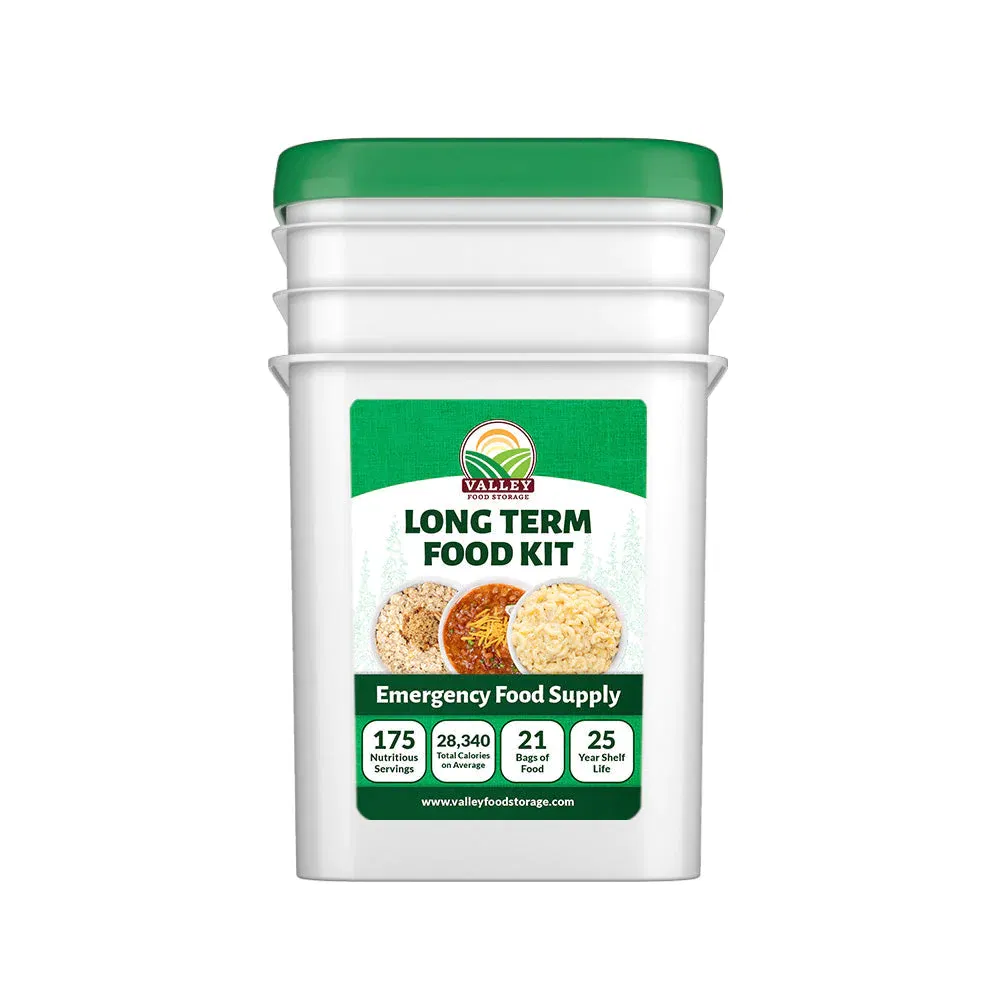
Best Long-Term Emergency Food Kit: Valley Food Storage 175 Serving Long-Term Food Kit
- Best for: Long-term emergency food storage
- Total Calories: 28,340
- Meal Variety: 18 meals
- Shelf Life: 25 years
- Preparation: Hot water
- Total Protein: 1,185 g
Why We Picked It
Valley Food Storage offers one of the best balances of meal variety and long-term usability.
Where some kits focus purely on calories, and others focus on taste, this one sits in the middle. It avoids a lot of the heavy filler you see in cheaper kits while still providing enough variety to make longer-term use more manageable.
It’s one of the more practical options if you’re thinking beyond a few days and building a more complete food supply.

Our Real-World Experience
This is one of the more consistently enjoyable kits we tested.
The meals are simple, but they feel like actual food rather than heavily processed emergency rations. Preparation is straightforward, and most dishes come together without much adjustment.
Compared to cheaper kits, the difference shows up over time. After multiple meals, there’s less of that heavy, repetitive feeling you get from carb-dense options.
The variety also helps. Having a mix of breakfasts, lunches, and dinners makes it easier to keep eating the same kit without getting burned out as quickly.
What Makes This Kit Stand Out
Valley Food Storage leans more toward ingredient quality and variety than pure calorie optimization.
You’ll find:
- a mix of meal types (not just entrees)
- fewer obvious filler items
- better balance across different dishes
It’s not perfect, but it feels more like a long-term pantry option than a short-term calorie dump.
What to Watch For
- Calories per dollar aren’t as strong as budget kits
- Meals are still fairly simple (pasta, rice, soups dominate)
- Requires hot water like most freeze-dried options
This is a balanced kit, not an optimized one. It’s okay in just about every metric. No real compromises, but no real benefits either.
How It Fits Into a Real Food System
This works well as a core storage layer. If you want something you can store long-term, rotate occasionally, and realistically eat for more than a few days, this is one of the best options.
From there, you can still improve it by adding higher-protein foods and canned goods.
But, unlike other cheaper kits, it doesn’t feel like it needs as much fixing.
Recommended For
If you’re looking to build a long-term emergency food supply, the Valley Food 175 Serving Emergency Food kit offers a strong balance of variety, shelf life, and usability.
It is especially well-suited for long-term planners and families.
PROS
Good mix of meals
Includes dinner and breakfast items
Strong 25-year shelf life
Fewer obvious filler-heavy meals
CONS
More expensive per calorie than budget kits
Somewhat carb-heavy
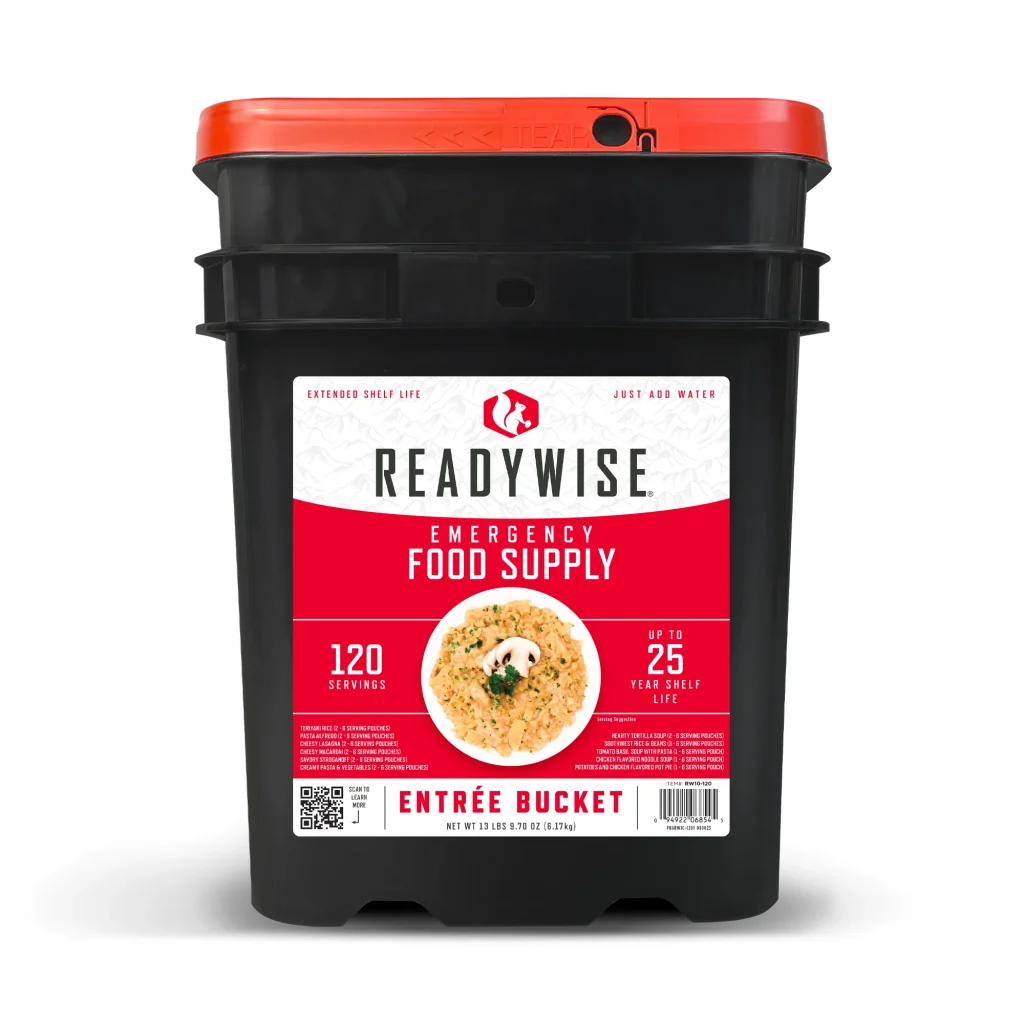
ReadyWise Entree 120 Serving Emergency Food Bucket
- Best for: Building a simple emergency food supply
- Total Calories: 24,360
- Meal Variety: 13 different meals
- Shelf Life: 25 years
- Preparation: Hot water
- Total Protein: 610 g
Why We Picked It
The Readywise Entree bucket is one of the simplest ways to get a usable emergency food supply in place quickly.
It doesn’t try to optimize for maximum calories or premium taste. Instead, it focuses on being straightforward and easy to store, which is exactly what a lot of people need when they’re just getting started.
It’s not the strongest performer in any single category, but it avoids most of the major weaknesses you see in cheaper kits.
Our Real-World Experience
This is one of the more predictable kits we tested, and that’s not a bad thing.
The meals are simple and generally consistent. Nothing stood out as exceptional, but nothing was noticeably bad either. After a few meals, you get a clear sense of what this kit is: reliable, but not exciting.

Prep is easy and repeatable. Add hot water, wait, and eat. There’s very little variation between meals, which makes it easy to use but also contributes to some repetition over time.
Compared to lower-end kits, it does a better job of avoiding obvious filler. You’re getting actual entrees instead of inflated serving counts built around drink mixes or empty calories.
Where it Fits Compared to Other Kits
ReadyWise sits in an interesting middle ground.
- More structured and easier to use than something like Augason Farms
- More affordable than premium options like Mountain House
- Less calorie-dense than bulk-focused kits like Ready Hour
It’s essentially a low-friction entry point into emergency food storage.
What to Watch For
- Meals are still heavily based on pasta and rice, so repetition builds quickly
- Protein levels are moderate, but not especially high
- Sodium is noticeable in some meals
This is another practical kit, not an optimized one. It’s okay, which is sometimes all that you need.
Where It Fits Into a Real Food System
This works well as a starting layer.
If you’re building from scratch, this gives you structure and simplicity, which can mean a lot to someone new to prepping.
From there, you can improve it with higher-protein foods and fresh rotation items.
Recommended For
If you want a simple, reliable way to get emergency food stored without overthinking it, the ReadyWise Entree Bucket is a practical and straightforward option.
It’s especially well-suited option for beginners and smaller households.
PROS
Simple and consistent
Long 25-year shelf life
Good variety of entree-style meals
Easy to store and transport
CONS
Meals can be repetitive over time
Moderate protein levels
Not the best value per calorie
Emergency Food Kits to Avoid
Not all emergency food kits are created equal. During our testing, we found that some kits look impressive on paper but fall short when you actually evaluate the calories, meal quality, taste, and practicality.
If you’re building a serious emergency food supply, here are a few red flags to watch for.
1. Kits With Too Much Oatmeal
Some emergency food kits are heavily padded with oatmeal or similar breakfast foods.
While oatmeal is fine in moderation, eating it multiple times per day for weeks quickly becomes miserable. Lack of variety is one of the fastest ways to destroy morale during an emergency.
Look for kits that include actual lunch and dinner entrees, not just breakfast foods.
2. Extremely Cheap “72-Hour Kits”
Very inexpensive emergency kits often provide far fewer calories than advertised.
Many contain less than 4,000 calories total, which is nowhere near enough food for three days for most adults.
A realistic three-day food supply should contain around 6,000 calories per person.
3. Buckets With Weak Packaging
The packaging matters more than most people realize.
Emergency food kits should include:
- durable buckets
- sealed lids
- oxygen absorbers
- heavy-duty food pouches
Cheap packaging can allow moisture or air into the food supply, shortening shelf life and increasing the risk of spoilage.
What It’s Actually Like Living on These for 3 Weeks
We didn’t just sample these kits. We tried eating them as our primary food for multiple weeks in a row.
By the end of day one, everything still felt new. The meals were easy to prepare, portions were filling, and having something hot made it feel manageable.
Day two is where things start to shift.
Even with different meal names, most of these kits rely heavily on the same base ingredients like pasta, rice, and sauces. After a few meals, you realize you’re essentially eating variations of the same thing over and over again. It’s not bad, but it starts to feel repetitive faster than you’d expect.
After a few days, the biggest issue isn’t calories. It’s fatigue. You’re still getting enough to eat, but meals start to feel heavy, and everything starts tasting the same.
The Part Most People Don’t Consider: Cleanup
One thing that stood out immediately was how much effort went into the cleanup.
Most of these meals require:
- boiling water
- using pots or containers
- stirring and serving
That creates more dishes than you’d expect, and cleaning them takes a surprising amount of water. Some meals stuck horribly to the pots and took a lot of scrubbing to get off.
Over a few days, we ended up using far more water on cleanup than we anticipated, which is a problem in any situation where water is limited.
If I were doing this again, I would avoid using our good cookware and use dedicated options where possible. I absolutely need to plan for cleanup water as part of the system.
What This Changes
Emergency food kits work. They’ll keep you fed.
But they’re not something you want to rely on without thinking through variety and cleanup. The takeaway isn’t that these kits are bad. It’s that they’re one part of a larger system, not the whole system.
How to Build a Complete Emergency Food Supply
Emergencies are more than just physical challenges. Yes, staying alive is the top priority, but an often-overlooked aspect is the toll emergencies take on our mental and emotional well-being.
Stress and hunger can cloud judgment, making it harder to think clearly or stay positive.
Imagine this: you’re facing a power outage or a natural disaster. The initial shock has passed, the adrenaline is fading, and now you’re tired, worried, and hungry. Reaching for a bland, unappetizing emergency meal can make an already stressful situation feel worse.
On the other hand, a familiar, enjoyable meal can provide a surprisingly powerful morale boost.
Anyone who has been in a stressful situation knows that the little things matter. A warm meal, a familiar flavor, or even a small comfort food can restore a sense of normalcy when everything else feels uncertain.
That’s why when I evaluate emergency food, I care just as much about taste and variety as I do about calories and nutrition. Food should fuel both your body and your mindset.
But emergency food kits alone are not enough.
While pre-packaged kits are one of the easiest ways to build a food supply quickly, they should really be viewed as the foundation of your pantry, not the entire plan.
A well-prepared emergency food supply should function like a complete pantry, with a mix of staples, protein, fats, and foods your family will actually enjoy eating. If you want a deeper breakdown of long-term food storage options, see our guide to the best survival foods to store for emergencies.
Here are the five core categories I recommend building around.
1. Long-Term Staples

Long-term staples provide the calorie foundation of an emergency food supply. Most of these staples are dehydrated, which gives them different pros and cons than freeze-dried food kits. You can learn more about these differences in our freeze-dried vs. dehydrated food comparison.
These foods store well, are versatile, and can be used in many different meals.
Examples include:
- rice
- dried beans
- pasta
- canned beans
- canned soups
These foods are inexpensive, easy to store, and can last for years when stored properly. We have a complete guide on how to store rice and beans long-term.
2. Protein Sources
Protein is one of the hardest nutrients to store long-term, but it’s essential for maintaining energy and muscle during stressful situations.
Fortunately, there are several good storage options.
Examples include:
- freeze-dried meats
- canned meats (tuna, chicken, spam)
- powdered eggs
- high-protein freeze-dried meals
Many emergency food kits include protein sources, and companies like Augason Farms also offer #10 cans of protein-rich foods that can supplement your pantry.
3. Healthy Fats
Fats are often overlooked in emergency planning, but they’re extremely important. Fat provides dense calories and helps your body absorb key nutrients.
The challenge is that many fats eventually go rancid during long-term storage.
For that reason, I often rely on:
- freeze-dried meals that include fats
- ration bars designed for long-term storage
I personally keep Survival Tabs on hand as well. They’re inexpensive and provide a surprisingly good amount of fat. Even the kids like them.
4. Fruits and Vegetables
Vitamins and minerals matter just as much as calories.
Dried fruits and shelf-stable vegetables are excellent ways to add nutrients to your emergency food supply.
Examples include:
- raisins
- dried cranberries
- canned vegetables
- freeze-dried fruits and vegetables
Augason Farms’ #10 cans of fruits and vegetables are some of the easiest ways to add long-lasting nutrition to a survival pantry.
5. Comfort Foods
One thing many preparedness guides overlook is the psychological importance of comfort foods.
Eating the same bland emergency meal day after day can wear on your morale surprisingly quickly.
Including a few treats in your pantry can make a huge difference.
Examples include:
- chocolate
- cookies
- shelf-stable snacks
- ration bars
I highly recommend keeping Grizzly Gear Ration Bars on hand. They taste surprisingly good (almost like cookies), and my kids absolutely love them.
Small Extras That Make a Big Difference
After testing and reorganizing my own emergency pantry, I’ve learned that a few small additions can make emergency food much more enjoyable to eat.
- Spice: Salt, pepper, dehydrated herbs, and shelf-stable sauces can dramatically improve basic emergency meals. Don’t underestimate the power of a bottle of hot sauce.
- Dietary Preferences: Everyone in your family has foods they refuse to eat, especially kids. Make sure your emergency food supply actually contains foods your family will eat. Kids tend to get more picky in stressful situations, not less.
- Test Your Food Supply: Don’t wait until an emergency to try your emergency food. I recommend cooking an “emergency meal” once a month so you can get familiar with preparation methods and rotate food supplies.
Don’t Forget Water and Cooking
If you stocked everything above, your emergency pantry would be almost complete.
But there are two essential things you still need:
Water
Most emergency foods require water to prepare. You should both store water and have a plan to filter water.
After all, you can survive much longer without food than without water.
Cooking Options
Many emergency meals require boiling water. During a power outage, that may not be possible with your normal kitchen.
Fortunately, there are many ways to boil water without electricity, including:
- camp stoves
- propane burners
- rocket stoves
Make sure you have at least one backup cooking method.
Keep Your Food Supply Fresh
An emergency food supply is not a set-it-and-forget-it system.
It needs occasional maintenance.
- FIFO – First In, First Out: Always use the oldest food first and place newer items toward the back. Write dates on everything. Trust me; you will not remember.
- Schedule Regular Pantry Reviews: I recommend checking your emergency pantry every six months. This helps catch items you forgot about before they expire.
- Rotate Your Food Supply: The best way to maintain an emergency pantry is to actually use some of the food. For example, one morning I ran out of milk, so I grabbed powdered milk from my emergency supply. My toddler was not thrilled, but it worked.

Variety is Key
One of the biggest lessons I learned during testing is that variety matters.
Eating emergency food regularly helps you figure out:
- which meals you actually like
- which ones you don’t
- what your pantry is missing
I now restock canned foods weekly during normal grocery trips and review my freeze-dried food supply about every six months.
I’ve even started experimenting with cooking entire meals using only shelf-stable ingredients. You can see some of those ideas in our collection of survival recipes for long-term food storage.
The first emergency food kit you buy probably won’t be perfect. But by using it and adjusting your pantry over time, you can build a food supply that actually works for your family.
If you want to go deeper, see our guide on how to build a three-month food supply.
How We Tested Emergency Food Kits
We tested emergency food kits the same way most families would actually use them, by eating them.
Over several weeks, my family of four tried dozens of emergency meals and several complete food kits from major preparedness brands. At one point during testing, we relied heavily on emergency food for nearly two weeks so we could get a realistic sense of what these meals are actually like to live with.
Some were surprisingly good. Others not so much.
Because emergency food is something you may rely on during a stressful situation, we evaluated each kit based on several practical factors that matter in the real world.
Taste
Emergency food must be something your family will actually eat.
Many kits technically provide enough calories to survive, but taste and texture can vary dramatically. Meals that are unpleasant to eat quickly become difficult to rely on during stressful situations.
During testing, we paid close attention to flavor, texture, and overall meal quality. If my kids refused to eat it, that was a pretty strong signal.
Calories per Dollar
Calories are the true currency of emergency food.
Many kits advertise impressive serving counts, but those servings can be very small. Instead of focusing on servings alone, we evaluated total calories and calories per dollar to understand the real value each kit provides.
This helps reveal which kits actually provide meaningful food storage versus those that rely on low-calorie fillers.
Meal Variety
Eating the same meal repeatedly can destroy morale surprisingly quickly.
We looked at the number of unique meals included in each kit and whether the menu included a good balance of breakfast, lunch, and dinner options. Kits that rely heavily on oatmeal or similar foods scored lower in this category.
Preparation Requirements
Some emergency food kits require cooking or boiling water, while others can be prepared simply by adding hot water.
In real emergencies, cooking fuel and clean water may be limited. We considered how easy each meal was to prepare and how practical it would be during a power outage or evacuation scenario.
Shelf Life and Packaging
Most emergency food kits advertise shelf lives of 25–30 years, but the packaging and storage design also matter.
We evaluated:
- bucket durability
- pouch quality
- oxygen absorbers
- overall storage design
Good packaging protects food from moisture, air, and temperature changes, all of which can affect long-term storage. Shelf life claims only hold up if you store food correctly. In reality, a few simple errors can cut that timeline dramatically. These emergency food storage mistakes are the ones to watch.
Real-World Practicality
Finally, we looked at how each kit fits into a realistic emergency food supply.
Some kits work best as the foundation of a pantry, while others are better suited for bug-out bags or short-term emergencies. Understanding where each kit fits helps readers build a more balanced preparedness plan.
For more information, take a look at our emergency food testing methodology explainer.
Emergency Food Kits FAQ
What is the best emergency food kit?
Based on our testing, the Heaven’s Harvest Entree Kit offers the best balance of taste, calorie density, variety, and price. It includes real meals instead of drink mixes and provides enough variety to make it practical for a family emergency food supply.
How long do emergency food kits last?
Most freeze-dried emergency food kits are designed to last 25–30 years when stored properly in a cool, dry place. MREs typically last 5–10 years, depending heavily on storage temperature. See our guide on how long MREs last for more information.
Packaging, oxygen absorbers, and storage conditions all play an important role in determining the true shelf life of emergency food.
How much emergency food should you store?
Most preparedness experts recommend storing at least three days of food per person for short-term emergencies. However, many families aim for three months of food storage to prepare for longer disruptions.
Here’s a simple breakdown:
| Emergency Scenario | Recommended Food Supply |
|---|---|
| Short evacuation | 3 days of food per person |
| Severe weather or temporary disruptions | 2 weeks of food |
| Major supply disruptions | 3 months of food or more |
Most emergency food kits are designed to cover between 72 hours and several weeks, depending on the size of the kit. Because of this, many people start with one emergency food kit, then gradually expand their food supply by adding canned goods, staples, and freeze-dried ingredients.
If you want to build a larger pantry, see our 30-day emergency food checklist.
Do emergency food kits require cooking?
Most freeze-dried emergency food kits require hot water to prepare meals. However, some options like MREs can be eaten directly from the package without cooking.
Because of this, many people keep both freeze-dried meals and MREs in their emergency food supply.
What foods last the longest for emergency storage?
Some of the longest-lasting emergency foods include:
- freeze-dried meals (25–30 years)
- white rice
- dried beans
- pasta
- canned foods
- dehydrated fruits and vegetables
Freeze-dried emergency food kits typically offer the longest shelf life and easiest preparation, which is why they are so popular for preparedness.
Are emergency food kits worth it?
Emergency food kits are one of the fastest ways to build a long-term food supply. They are compact and designed specifically for long-term storage.
However, most preparedness experts recommend combining emergency food kits with canned goods, dry staples, and other pantry foods to create a more balanced food supply.
How many calories should an emergency food kit contain?
Most emergency planning assumes about 2,000 calories per person per day. That means a three-day emergency supply should contain roughly 6,000 calories per person.
When comparing emergency food kits, it’s usually more useful to look at total calories rather than the advertised number of servings.
What’s the difference between freeze-dried food and MREs?
Freeze-dried emergency food typically lasts much longer (often 25+ years) and is lighter to store, but it usually requires hot water to prepare.
MREs are ready-to-eat meals designed for military use. They don’t require cooking, but they generally have a shorter shelf life and are heavier to store.
Many emergency food supplies include both types of food for flexibility.
Bottom Line
Emergency food kits are one of the fastest and easiest ways to build an emergency food supply, especially if you’re starting from scratch. They provide long shelf life and meals that can be prepared with minimal effort.
However, emergency food kits should not be your only food source.
The most resilient emergency pantry combines several types of food storage, including:
- emergency food kits
- canned foods
- dried staples like rice, beans, and pasta
- freeze-dried ingredients and meals
This combination gives you both calories and flexibility, allowing you to prepare a wider range of meals during an emergency.
If you’re just getting started, begin with one quality emergency food kit, then gradually expand your food supply over time. As you add staples, protein sources, and comfort foods, you’ll build a pantry that can sustain your family through both short-term disruptions and longer emergencies.
If you’re wondering whether food supply disruptions are a realistic risk, see our breakdown of whether a food shortage is coming and what it could mean for families.
