

Most comparisons between freeze-dried vs. dehydrated food focus on the wrong things.
You’ll see breakdowns of taste, brand rankings, and “best meals” lists. That’s useful for camping. It’s not how you build a food system that holds up under pressure.
In a real scenario, food is rarely the limiting factor. Water, fuel, and space are. Those are the constraints that determine whether your plan works or fails, and they change how each type of food actually performs.

This is where most people get it wrong. They optimize for convenience or shelf life in isolation, instead of asking a harder question: What role does this food play inside a complete system?
It’s easy to imagine ideal conditions: hot water, time to cook, perfectly balanced meals. It’s harder and more useful to plan for constraints.
Freeze-dried and dehydrated foods are not competitors. They solve different problems. Used correctly, they complement each other. Used incorrectly, they create gaps you won’t notice until it matters.
This guide isn’t about which one is “better.” It’s about what actually matters when you’re building a food supply that works.
If you’re just beginning to create an emergency food store, start with our survival food guide for a complete breakdown on how to keep your family fed in an emergency.
The Real Constraints
Most food guides optimize the wrong variables.
When choosing the best food to store for an emergency, most people are constrained by four different factors. Ignore one of them, and your plan will start breaking down long before your food runs out.
1. Calories
This is the baseline. Don’t look at the number of “servings” or meals, as these are often just a marketing ploy. Look at the calories.
A bucket might claim “120 servings,” but if those servings are only 150–200 calories each, you’re not looking at a serious food supply; you’re looking at a supplement.
What really matters is the total calories per container and calories per day (realistically 2,000-ish per adult).
Always calculate your emergency food based on calories, not what the packaging claims. (We discuss this even more in-depth in our emergency food kit guide, where we judged food kits based on this exact metric.)
2. Water

Water is where many otherwise solid plans quietly fail.
Freeze-dried food, in particular, depends on water to become edible. Without enough water, it’s not just unpleasant. It’s nearly impossible to digest. Freeze-dried food is a thirsty storage system.
This matters tremendously. If your water supply is limited, every meal choice becomes a tradeoff. When building your system, consider:
- Drinking water vs. cooking water
- Rehydration requirements per meal
- Climate (heat increases water demand)
3. Fuel

Food that requires cooking also requires fuel. And fuel is finite.
Dehydrated staples like rice and beans often need extended simmering. That’s not a big deal in a normal kitchen. It becomes a serious constraint in a grid-down or fuel-limited scenario. Some cheap calories may become expensive when fuel is limited.
Freeze-dried food has an advantage here. It typically only requires boiling water. But that doesn’t eliminate this constraint completely.
You need to consider how you’ll cook your emergency food and how much fuel each meal will require. Our best emergency stove guide has a few different options.
4. Space
Most people underestimate how quickly food takes over a storage area.
This is where the conversation gets more nuanced. Freeze-dried food is lightweight, but not always space-efficient. Bulk staples like rice and beans often store more calories in less physical space.
Freeze-dried saves weight. Bulk staples save space.
This matters most in apartments, small homes, and hidden storage setups.
Bringing it Together
These constraints don’t operate independently. They interact.
- High-sodium meals increase water demand
- Long-cook foods increase fuel demand
- “Convenient” meals often reduce calorie efficiency
If you ignore even one of these constraints, your plan degrades.
The Short Answer
If you just want the practical takeaway without the nuance, here it is:
- Freeze-dried food = long-term, lightweight, low-skill
- Dehydrated food = cheap, scalable, sustainable
That’s the core difference. Everything else builds from it.
- Best for long-term storage: Freeze-dried
- Best for budget and calories: Dehydrated
- Best for cooking and daily use: Dehydrated
- Best for low-fuel or no-skill scenarios: Freeze-dried
- Biggest mistake: Relying entirely on freeze-dried “meals”
Freeze-dried food is excellent for solving specific problems, like portability and shelf life. However, it is not designed to carry your entire calorie load long-term.
Dehydrated foods, like bulk staples, do the opposite. They may not be convenient, and they may require more effort. However, it scales efficiently and inexpensively.
Freeze-dried extends your system. Dehydrated sustains it.
What Actually Matters
Once you’ve moved past surface-level differences, a handful of factors determine how these two different foods perform in the real world. This is where freeze-dried and dehydrated foods start to separate. Not necessarily by quality, but by role.
1. Shelf Life
- Freeze-dried: 20–30 years (when properly packaged)
- Dehydrated: typically 5–15 years
On paper, this looks like an easy win for freeze-dried. But shelf life is often misunderstood.
It isn’t just about the type of food. It’s about oxygen exposure, packaging quality, and fat content. High-fat foods degrade very fast, no matter how you try to store them. A hot environment can cut shelf life dramatically.
This is the same issue that causes confusion with MREs and other stored foods—something we break down in our MRE shelf life guide.
2. Water Dependency

Freeze-dried foods require water to be usable, and not just a little bit of water, either. Often, they require a full rehydration cycle to be digestible.
On the other hand, dehydrated foods vary. Some foods, like oats and grains, absorb water quickly. Other foods require extended cooking, like beans.
Overall, freeze-dried foods do tend to need more water than dehydrated foods, but it does depend on exactly what you’re cooking.
If water is limited, every freeze-dried meal increases the strain on your supply. This can become potentially deadly if your supply is very stretched or if you’re living in a hot environment.
3. Fuel-to-Food Ratio
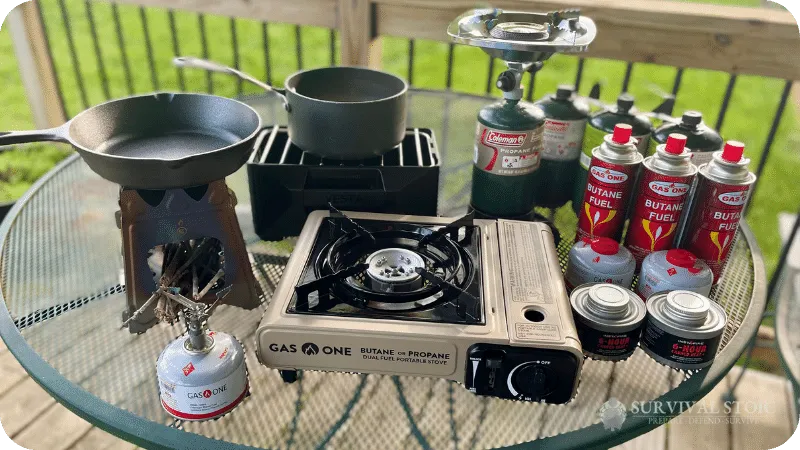
This is where dehydrated food starts to show its cost.
- Freeze-dried: boil water → ready
- Dehydrated staples: simmer 20–40 minutes
Those differences have a huge impact when you only have a certain amount of fuel. If you’re relying on propane or butane, you need to account for how much fuel your food requires, just not how much it costs.
4. Calorie Cost
- Freeze-dried food is expensive per calorie
- Dehydrated staples are extremely cost-efficient
Purchasing “survival meals” may feel like the best possible option, but they tend to deliver relatively low calories for the price. That said, there are some budget emergency meal options that you can purchase to keep costs down.
5. Calorie-to-Volume Efficiency

Storage space is a serious constraint, especially long-term. Bulk staples like white rice, beans, and oats allow you to store an enormous amount of calories in a pretty small footprint.
On the other hand, freeze-dried meals, while lightweight, are often less space-efficient per calorie.
6. Preparation & Skill

- Freeze-dried food is straightforward
- Dehydrated food requires cooking knowledge and planning
How much this matters depends on how much work you’re willing to put in now. You can plan out weeks’ worth of meals using bulk staples using our survival recipes guide. We’ve even done several days of planning for you in our 30-day emergency food list.
However, in a stressful situation, complexity can become friction. It’s easy to forget what ingredients went with what meals.
7. Satiety
This is rarely discussed, but it matters.
Freeze-dried meals are built around refined carbohydrates and high sodium. That can lead to energy spikes and crashes.
Dehydrated staples like beans and whole grains provide slower, more stable energy. In the real world, steady energy might matter more than convenience.
8. Ingredients vs Meals

Ingredients often outperform meals over time.
- Pre-made meals = convenience
- Individual ingredients = flexibility
A freeze-dried meal like stroganoff is easy to prepare, but you can only use it to make stroganoff.
On the other hand, ingredients (whether freeze-dried or dehydrated) can be used to make all sorts of different things. You can stretch them and adapt them to your needs.
A prepper pantry built on ingredients is far more adaptable than one full of meals!
So, which is better?
No single food type wins across all categories. They both have pros and cons.
This is not about choosing the “best” food. It’s about assigning the right role to each type inside a system.
Freeze-Dried vs. Dehydrated Food: Side-by-Side Comparison
This is a role comparison, not a quality comparison
At this point, the differences are clearer. But it helps to see them laid out in one place.
| Feature | Dehydrated (Foundation) | Freeze-Dried (Insurance) |
|---|---|---|
| Primary Role | Daily calories | Backup + mobility |
| Shelf Life | 5–15 years | 20–30 years |
| Cost (per 1,000 cal) | Low | High |
| Water Need | Low–Moderate | High |
| Fuel Need | High (cooking required) | Low (just boiling water) |
| Space Efficiency | Excellent | Moderate |
| Weight | Heavy | Lightweight |
| Satiety / Energy | High (slow burn) | Moderate (faster burn) |
| Skill Required | Moderate | Low |
It’s easy to look at this table and try to pick a “winner.” But I would recommend this. Each food solves a different problem.
Dehydrated food dominates in efficiency. Freeze-dried food dominates in convenience.
If you try to use freeze-dried food as your calorie foundation, you’ll run into cost and water issues.
If you try to rely entirely on dehydrated staples, you’ll run into fuel and complexity problems.
Freeze-Dried Food
Where it excels, and where it quietly creates problems.
Freeze-dried food is often treated as the gold standard of emergency storage. In some ways, that’s earned. But most people only see the strengths, not the tradeoffs.
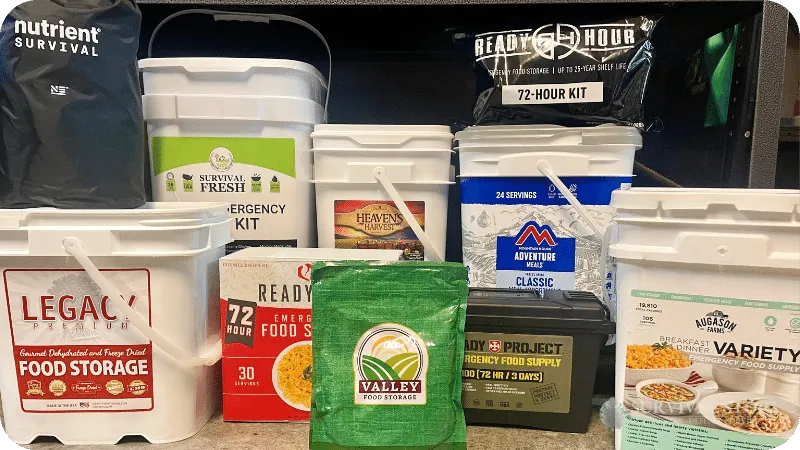
What It Does Well
- Extremely long shelf life. Properly packaged, it can last 20 to 30 years with minimal degradation.
- Lightweight and portable. Ideal for bug out bags, mobile kits, and situations where weight matters.
- Low preparation barrier. Most options require hot water and a short wait.
- Nutrient retention. Freeze-drying preserves structure and a higher percentage of vitamins compared to many dehydration methods.
Freeze-dried food works best when it’s sealed long-term as an emergency backup or for low-fuel scenarios.
Potential Downsides
- High cost per calorie. You’re paying a lot for processing, packaging, convenience, and brand name.
- Lower calorie density than expected. Many meals look substantial but don’t deliver enough calories in actuality. This is somewhat counteracted if you make your own freeze-dried food with something like the Stay Fresh Freeze Dryer.
- Heavy reliance on water. Without proper rehydration, digestion can become less efficient.
Most people overbuy convenience and underbuy calories.
The Hidden Sodium Trap
Many freeze-dried meals are extremely high in sodium. This is done for preservation and flavor. However, it does create a serious secondary problem.
High sodium increases thirst, and increased thirst increases water demand. This can put stress on your supply, even if freeze-dried meals technically require “less water.”
Simply put, high-sodium meals in a water-limited scenario accelerate dehydration.
This becomes especially risky in hot climates and high-exertion scenarios.
The “Meal Illusion” Problem

Pre-packaged freeze-dried meals feel complete. They’re often advertised to fulfill a specific daily meal, like lunch or dinner.
However, many are carb-heavy and low in protein. They may provide a nice structure, but they don’t provide much sustenance.
As I discovered while testing freeze-dried meals, I was itching to add extras to many of them. Alfredo was begging for added chicken, and the oatmeal would have tasted way better with some berries.
I actually recommend planning this sort of “sprucing up” using freeze-dried ingredients from Augason Farms, but this does require a bit of planning.
Where it Fits
Freeze-dried food works best when used intentionally:
- as a backup layer
- for mobility and portability
- in low-fuel situations
- for quick, no-skill meals
Of course, this assumes you pick the best freeze-dried emergency food kits, not those filled with powdered drink mixes.
Dehydrated Food
Dehydrated food doesn’t get the same attention as freeze-dried. It’s less convenient, less polished, and less marketable.
But this is what most good long-term food systems are built on.

What It Does Well
- Low cost per calorie. Staples like rice, beans, oats, and pasta provide a lot of energy for relatively little money.
- Scalability. You can build a meaningful calorie reserve without premium pricing and relying on a single company. With some quality mylar bags and food buckets, you can easily pack away calories.
- Storage efficiency. Bulk stales pack a high number of calories into a smaller space.
- Integration with real cooking. These foods aren’t separate from your normal life. They’re part of it.
Potential Downsides
- Shorter shelf life. Compared to freeze-dried foods, dehydrated foods have a shorter shelf life, even if you use Mylar bags correctly.
- Heavier and less portable. Not ideal for bug-out bag scenarios.
- Requires skill and routine. Without cooking knowledge and a plan, they become much harder to use under stress.
Operational Cost
Dehydrated food is efficient but not effortless. It requires time, fuel, and planning. Rice cooks relatively quickly. Beans can take much longer. Some foods require soaking before cooking to reduce time and fuel use.
In many ways, dehydrated food shifts the burden from money to effort.
That tradeoff is manageable in normal conditions. Under constraints, it becomes a real factor.
In many cases, cooking dehydrated staples means 20 to 40 minutes of heat, consistent fuel usage, and time. If your fuel is limited, you may end up with a bunch of food you can’t actually cook.
Simply put, your food plan is only as strong as your fuel plan when using dehydrated ingredients.
Coal-Soak Limitations
In a no-fuel scenario, many dehydrated foods fail completely.
Rice may soften over time, but inconsistently. Beans often remain hard, inedible, and potentially unsafe. Pasta and other staples generally don’t rehydrate at all without heat.
Without fuel, many dehydrated staples stop being usable food. You simply must have a way to boil water without electricity to cook dehydrated food.
Where It Fits
Dehydrated food works best as:
- your calorie foundation
- your daily-use storage
- your long-term sustainability layer
They’re not the fanciest option out there, but they’re reliable.
The Open-Can Problem
Shelf life ends the moment you open it.
Most shelf life discussions stop at storage timelines—10 years, 25 years, 30 years. That’s only half the story. What matters just as much is what happens after you break the seal.

Freeze-Dried Food After Opening
Freeze-dried food is extremely dry. That’s what gives it its long shelf life, but it also makes it highly reactive once exposed to air.
The moment you open the container, it begins absorbing moisture from the air. Shelf life drops dramatically, and texture starts to degrade.
In humid environments, this process happens fast. Fruits may become sticky or chewy within days. Meals lose quality, and the long-ter self life is effectively gone.
Dehydrated Food After Opening
Dehydrated staples behave differently.
While they will still degrade over time, they are less reactive to ambient humidity and more tolerant of repeated exposure. It’s easier to store them in partially used quantities.
Rice and beans can be opened and resealed without immediate loss of usability.
Why Does It Matter?
This becomes a real issue when dealing with:
- large containers (#10 cans, bulk bags)
- partial usage over time
- humid climates
If you open a large container of freeze-dried food without a plan, you risk wasting a significant portion of it or being forced to consume it quickly.
In practice, this means that I don’t open any freeze-dried meal without a plan. If something gets opened, it’s getting eaten within the next few days. For this reason, I prefer smaller containers of freeze-dried foods.
It’s important to consider how you’ll manage your food over time, not just speed-run to technically have enough calories.
Building a Functional Food System
At this point, the goal should be clear: you’re not choosing between freeze-dried and dehydrated food. You’re using both where they fit best in your system.
So, how do you actually design this system? That’s what we’ll talk about here. Our system is relatively simple and only has three layers:
Layer 1: Calorie Floor (Dehydrated)

This is your foundation. Everything else depends on it.
- white rice
- beans
- oats
- pasta
These foods provide long-term sustainability and the majority of your calories. We’re worried about efficiency, here.
This is where properly storing bulk staples matters. Be sure to read how to store food long-term to make sure your staples actually stay fresh.
Layer 2: Nutrition & Variety

This is where we’re going to start improving long-term usability. We’re going to start concerning ourselves with nutrients and flavor. For instance, you might store:
- dehydrated vegetables
- spices
- salt (used intentionally)
- powdered ingredients
- freeze-dried fruits
Flavor is important, even if it isn’t quantifiable on paper. Eating the same bland foods repeatedly leads to reduced appetite and lower calorie intake. People tend to be pickier in stressful situations, even when they’re hungry.
It’s not about boredom. It’s about being able to stomach food. Having a range of spices available and different textures can make a huge difference in how much you eat.
This is even more important when you have kids.
Layer 3: Mobility & Redundancy
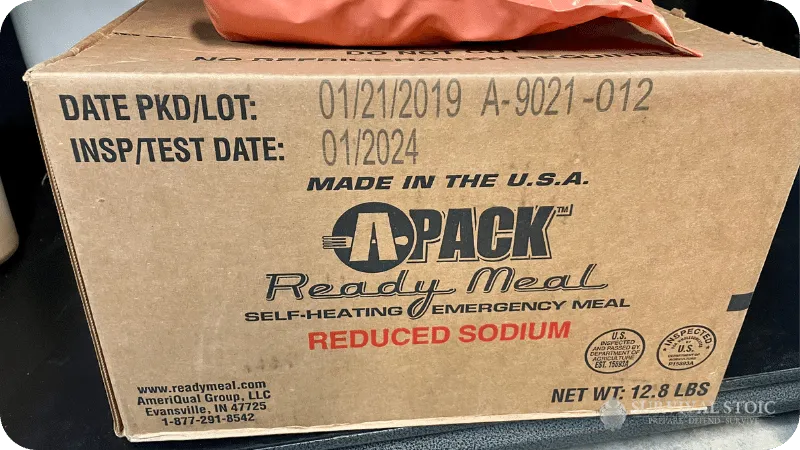
Freeze-dried food fits best here. However, you could also consider adding other food items, like rations bars or MREs. Many of the bug-out bag foods we recommend work here.
This layer provides convenience. It becomes essential when you’re low on time, fuel, or water. It works better than dehydrated food if mobility is required.
That said, you should pack mobility-focused foods in your bug-out bag, as we mention in our bug-out bag list.
How the Layers Work Together
Each layer compensates for the others:
- Layer 1 provides calories
- Layer 2 keeps the system usable
- Layer 3 provides flexibility and speed
If you remove one, the system weakens. If you rely too heavily on one, you create a bottleneck.
Most people build food storage like a collection. But you aren’t collecting food. You’re filling roles in a system.
If I Could Only Buy One…
If you had to choose just one approach, the answer is straightforward:
Dehydrated/bulk staples.
Not because they’re the best thing for every situation. But, they’re the only option that scales into a complete system. Here are some reasons why dehydrated foods typically win as a foundation:
- Cost efficiency: You can store significantly more calories for the same budget.
- Scalability: It’s possible to build weeks, months, and even a year of food without relying on specialized products.
- Sustainability: These are foods you can cook regularly and integrate into daily life more easily.
You can survive on dehydrated staples. You can’t realistically sustain yourself on freeze-dried meals alone for very long, especially if you have any sort of a budget.
However, choosing dehydrated food as your base means accepting a higher fuel requirement and more preparation time. You’ll need to store more fuel, which potentially requires you to purchase gas cans and fuel stabilizer.
You’ll also need to ensure you know recipes that can be created with the bulk staples you purchase. Our survival recipes are a good place to start.
Even if you use mostly dehydrated food as your foundation, freeze-dried still earns a place on most shelves. It solves problems that bulk staples can’t:
- rapid meal prep
- low-fuel situations
- mobility
- redundancy when conditions aren’t perfect
Common Mistakes
Most food storage problems aren’t caused by a lack of effort. They come from small issues that compound over time. Here are some of the most common ones I’ve seen over the years:
1. Building around freeze-dried meals

Many people buy buckets and assume they’re a “complete system.” It’s easy and feels like a quick win without much effort.
However, this is an extremely water-dependent system that’s often low in total caloric density. It’s also expensive. Usually, that money would be better spent on buying and storing bulk staples.
Convenience is nice. But it isn’t a substitute for calories!
2. Ignoring water requirements
Freeze-dried food increases water demand. High-sodium meals increase it even more. That creates a compounding effect:
- you drink more → your supply drops faster
- you eat → you get thirsty
Food choices can either support your water plan or work against it.
3. No fuel plan
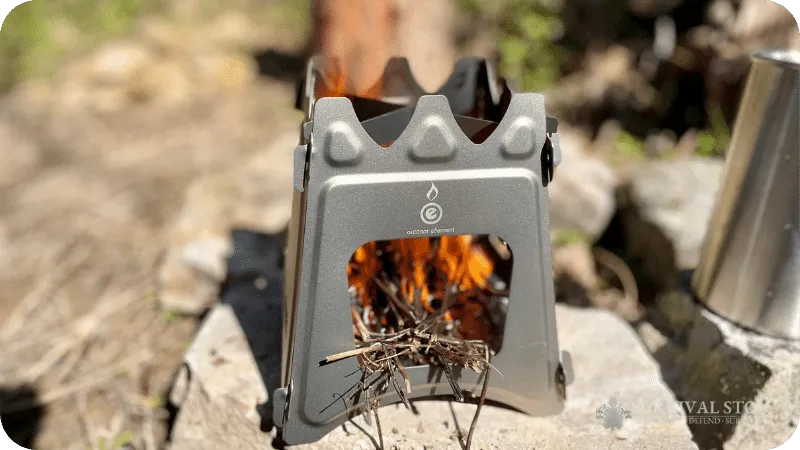
Practically all survival foods require cooking. Without a fuel strategy, you end up with a bunch of food that you can’t eat. This is especially true for dehydrated staples, like rice and beans.
Figure out how much fuel each meal actually requires to make, and then make sure you’re storing enough.
4. Not testing food
Many people store food they’ve never prepared. Under stress, this creates a lot of friction. You don’t want to be figuring out water ratios and cook times when you’re dealing with an emergency.
Use your food regularly, at least a couple of times a week. This keeps your food fresh and ensures you know how to cook it.
5. Overestimating shelf life

Shelf life is often treated as a guarantee. It isn’t.
It depends on packaging and storage conditions. Opened containers typically last only a few days to a few weeks, depending on what the food is. If the food is exposed to air often, it won’t last any longer than your “normal” food.
6. Ignoring flavor fatigue
This isn’t often considered, but it’s important. People assume they’ll eat whatever they have stored. That’s not how it works in practice.
Eating the same bland food repeatedly leads to reduced appetite and lower calorie intake. Spices can go a very long way here. Hot sauce can completely turn your day around when you’ve been eating the same few meals for weeks.
7. Treating food as a product instead of a system
This is the root behind most issues I see. People purchase buckets and kits without understanding how they interact together or with other parts of their emergency plans.
A full pantry isn’t a functioning system. All the freeze-dried food in the world won’t help you if you don’t have the water to prepare it.
Once you start thinking of your food as part of a system, everything makes more sense.
Products to Avoid
The emergency food market is full of products that look prepared, but fall apart under basic scrutiny. During our testing, we noticed some serious issues with most commercial “survival food kits.”
Most rely on a few marketing tactics:
- inflate serving counts
- obscure calorie totals
- prioritize convenience over sustenance
Once you know what these subpar products look like, they’re easy to spot.
1. “Survival Buckets” with inflated servings
You’ll see labels like “120 servings.” But “serving” simply means whatever the company wants it to mean. It can sound substantial, but it often isn’t. One “serving” might be as little as 150 calories.
In this case, the whole bucket might only contain a few days’ worth of actual food.
Servings are purely for marketing. Calories are what count.
2. Drink mixes counted as food

This happens a lot and is one of the most misleading tactics. Many of the best emergency food companies we reviewed included things like powdered drinks and flavored beverages in their kits.
These counted towards the “total servings” even though they don’t provide any meaningful nutrition and are decidedly not food.
We judged companies harshly for this and placed them at the bottom of our review. If a large portion of the servings comes from drinks, the product is padding its numbers.
3. Low-calorie “complete meal” kits
Many pre-packaged meals look substantial and sound balanced. However, some do not deliver enough calories to sustain activity.
This can become a problem if you rely on them exclusively. If you stored the meals assuming they would be “enough,” you’ll seriously struggle when SHTF.
Always check the actual number of calories per kit you purchase, not just the number of meals it’s advertised to provide.
4. High-Sodium, Low-Protein meals

This ties directly into the sodium-water loop.
- High sodium → increased thirst
- Increased thirst → faster water depletion
At the same time, many commercial survival meals have a very low protein content (because protein is expensive). This means you simply cannot live on them long-term. In the short-term, they won’t fill you up.
Basically, you end up hungrier and thirstier.
5. Products without clear calorie counts
If a product emphasizes servings and avoids total calorie counts, it’s a red flag. While companies are required to provide caloric information, some try to make it hard to do the math.
If you have to hunt for the calories, stay away.
6. Overpriced convenience as a “system”
Some products position themselves as all-in-one solutions or “complete emergency food systems.” Let me tell you, they aren’t. We’ve tested a lot of emergency food kits, and none of them have ever been “complete.”
There is nothing wrong with buying packaged food. The problem is treating it as a complete solution.
The rule is simple:
- Buy for role, not for marketing claims
- Verify calories, water needs, and fuel requirements
How We Tested
Most comparisons assume perfect conditions:
- unlimited water
- consistent fuel
- time to cook
- controlled environments
But that’s not actually how you’re going to use this food. We tested both freeze-dried and dehydrated food under conditions that reflect actual constraints.
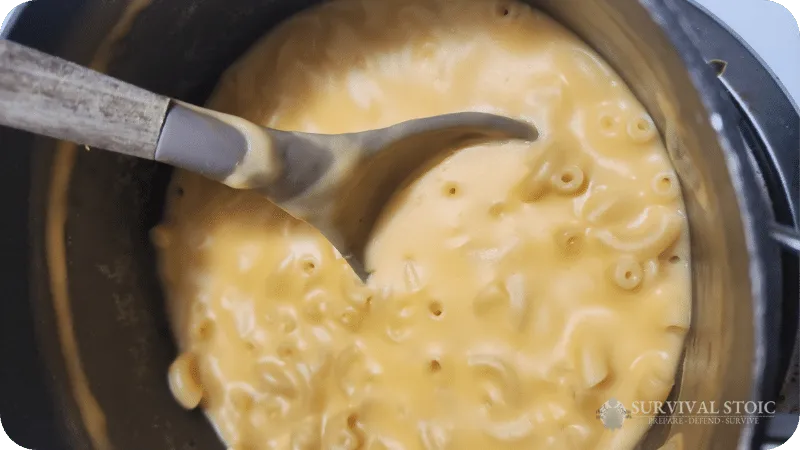
For instance, we used:
- Normal kitchen use: Standard cookware and full fuel availability. We measured cook times and ease of use.
- Low-fuel scenarios: Limited fuel and minimized cook times. We focused on efficiency and how usable the food was if we couldn’t just cook it for as long as we liked. This helped us understand what the real fuel cost of each meal was.
- Storage & rotation: We stored many of the foods we tested for years. Some were even repeatedly opened and resealed, as we tested across different conditions over several months. This helped us get a better view of how the food evolved over time as it was stored and allowed us to evaluate the real shelf life.
After experiencing an EF4 tornado, our founder understands that you typically don’t have unlimited fuel to cook with. So, we also tested rehydration with cold water only, simulating what often happens during real-world natural disasters.
Freeze-dried food typically gradually absorbs water and remains edible after extended soaking. It wasn’t ideal, but it was functional.
Most dehydrated foods remained hard and inedible. Beans were the biggest issue, as they’re potentially unsafe without proper cooking. Pasta and similar foods don’t rehydrate effectively, either.
In a true no-fuel scenario, many dehydrated staples fail completely. This doesn’t make them bad, but it does clearly define their constraints.

Across tests, we focused on:
- Water usage: How much water was really required for each meal
- Time to edible: Often different from the instructions
- Satiety: How filling the food was in practice
- Ease of preparation: Under both normal and constrained conditions
It quickly became clear that freeze-dried food performs best when fuel is limited and speed matters. Dehydrated food performs better when the total calorie count matters and systems are stable.
Both types worked, but only when used within their constraints. That’s the difference between storing food and building something that actually holds up.
FAQ
Is freeze-dried food healthier than dehydrated food?
Not necessarily. Freeze-drying preserves more of the original structure and some nutrients, but many freeze-dried meals are high in sodium and built around refined carbs. That isn’t exactly the healthiest option.
Dehydrated staples are like beans, rice, and oats. They provide steadier energy and are often more nutritionally balanced.
Health often depends more on what you’re storing than how it’s preserved.
Which one lasts longer after opening?
Based on our testing, freeze-dried food often degrades faster when opened. It absorbs moisture quickly and loses texture within days. Dehydrated staples are more forgiving.
Freeze-dried will often last longer when sealed, but when opened, dehydrated staples win.
Which is better if I have limited water?
Dehydrated food generally requires less dedicated rehydration water. Freeze-dried food depends. Some rehydrate fine with limited water, but most do require more than dehydrated foods.
This gets even worse for high-sodium freeze-dried meals (which most commercial options are), as they will increase your thirst.
If water is your primary constraint, freeze-dried food can become a liability if overused.
Which is better if I have limited fuel?
Freeze-dried food has the advantage here, as it requires only boiling water and minimal cook time. Dehydrated staples often require extended cooking, which increases fuel consumption considerably.
If fuel is limited, freeze-dried food becomes more valuable.
Can you eat dehydrated food without cooking?
Sometimes, but usually no. Oats may soften with extended soaking, and rice may partially hydrate. However, most other foods will remain hard and difficult to digest. Some are even unsafe without cooking, like beans.
Without fuel, most dehydrated staples stop being edible.
Can you cold-soak freeze-dried food?
Yes, with some limitations. The food will eventually rehydrate. However, the texture might not be “right,” and the soak time is often very long.
But it still remains usable.
Which is better for a bug-out bag?
Freeze-dried food is best for a bug-out bag. It is lightweight and compact for transportation. It also requires less preparation.
On the other hand, dehydrated staples are heavy and require too much cooking to be used on the move.
For our favorite options, check out our article on the best bug out bag food.
Which is better for long-term food storage?
Both, if used correctly.
Dehydrated food forms a great calorie foundation. Freeze-dried food provides flexibility and redundancy. For the best results, use both.
Bottom line
Build a system, not a collection.
Freeze-dried and dehydrated foods aren’t competing solutions. They solve different problems. When you try to force one to do everything, the weaknesses show up quickly, usually in the form of water shortages or fuel strain.

A functional emergency food supply is layered to solve these potential constraints. Dehydrated staples provide the calorie foundation that sustains you over time. Freeze-dried foods add flexibility when fuel is limited, time is short, or conditions aren’t ideal. Used together, they remove each other’s failure points.
The mistake isn’t choosing the wrong product. It’s ignoring the constraints that determine whether your plan actually works. Water, fuel, space, and usability will shape your outcome far more than shelf life or branding ever will.
For more on building a complete food plan, take a look at our best survival food guide.
