

Most “cheap emergency food” advice gets one thing right and everything else wrong.
Yes, calories per dollar matter. But if that’s the only thing you optimize for, you end up with a pantry full of food that looks good on paper, and gets ignored after two days of actually eating it.
That’s the part most guides miss.
In a real emergency, you’re not cooking for fun. You’re tired, stressed, possibly low on water or fuel, and making decisions with less patience than usual. If your survival plan relies on sheer willpower to choke down bland mush, your plan will fail by Day Three. Appetite fatigue is a real survival metric.

What actually works is simpler.
Cheap emergency food has to pass three tests:
- It has to be affordable enough to build in bulk
- It has to be practical to prepare with limited resources
- And it has to taste good enough that you’ll keep eating it after day two
Because the goal isn’t just to store calories. The goal is to have food you can rely on when everything else is harder.
This guide breaks down the cheapest emergency foods that actually hold up, including what works, what doesn’t, and how to build a budget food supply you won’t regret buying.
If you’re building a full food plan, start with our complete emergency food supply guide to see how everything fits together.
I spent two weeks eating only from my budget pantry to see where the breaking point was. This guide is the result of those experiments.
Quick Comparison: Cheap Emergency Foods That Actually Work
Before we get into the details, here’s the fast answer.
These are the cheap emergency foods that consistently hold up in real-world conditions, not just on paper, but after a few days of actually eating them.
| Food | Why It Works | Difficulty to Prepare | Water Needs | Calories/$ | Taste (Day 3) |
|---|---|---|---|---|---|
| Rice (parboiled) | Cheap, flexible base | Medium | Medium | High | Good with flavor |
| Beans (dry/canned) | Cheap protein | High (dry) / Low (canned) | High | High | Mixed |
| Pasta | Fast, filling, reliable | Medium | Medium | High | Good |
| Oats | Versatile, low resource | Low | Low | High | Good |
| Ramen | Extremely cheap, fast | Very Low | Low | High | Drops fast |
| Canned meals | No prep, no water | Very Low | None | Medium | Strong |
| Peanut butter | No prep, calorie-dense | None | None | High | Excellent |
| Tortillas | Ready-to-eat, versatile | None | None | Medium | Excellent |
| Budget freeze-dried (like Augason Farms) | Cheap bulk meals, easy prep | Low | Medium | High | Mixed–Good |
| Grizzly Gear bars | Zero prep backup calories | None | None | Very High | Acceptable |
| MRE components | Flexible, ready-to-eat | Low | Low | Medium | Good |
A few patterns should jump out immediately.
The cheapest foods often require the most water and effort. The easiest foods usually cost a little more per calorie. And the options that work best long-term tend to sit somewhere in the middle: cheap enough to stock up on, but practical enough that you’ll actually use them.
If you want to turn this into a real plan, see our 30-day emergency food supply breakdown to calculate exactly how much food your family needs.
We’ll break all of this down in detail next, including where each of these shines and where it quietly fails once you’re a few days in.
What “Tastes Good” Means in a Real Emergency
Most emergency food lists assume one thing: If you’re hungry enough, you’ll eat anything.
That’s only true for about a day.
In fact, studies have found that picky eating tends to worsen under stressful conditions, especially in children and teens. When choosing the best cheap emergency foods, assume your family will be pickier than usual.
After that, real-world constraints start to matter, and this is where most “cheap food” plans quietly fall apart:
1. Hunger Doesn’t Always Help
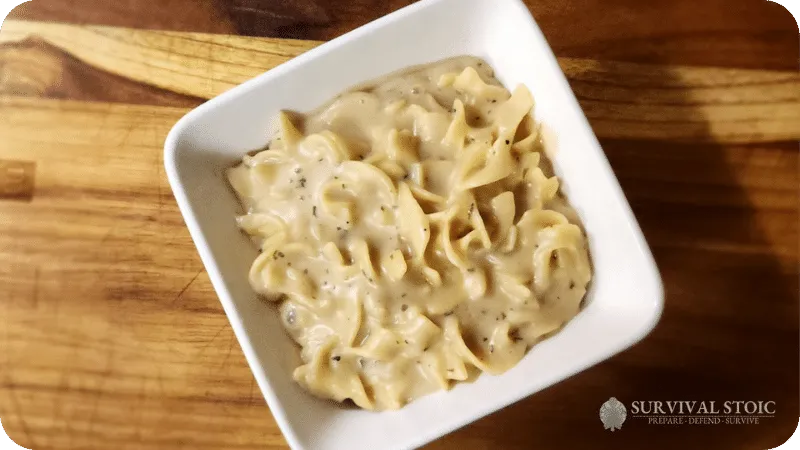
On day one, almost everything tastes fine. You’re hungry, it’s new, and you’re just glad to have food (and feel a bit proud of yourself for stocking up).
By day two or three, things don’t really work this way.
- Repetition sets in
- Texture starts to matter
- Highly salty or bland foods get harder to eat
This is where foods like plain rice or ramen start to lose their appeal fast. Not because they’re bad, but because eating them over and over wears you down. If your plan only works for one or two meals, it’s not a plan.
2. Decision Fatigue is Real

In a normal kitchen, you can improvise. In an emergency, you won’t want to. You’re dealing with stress, limited time, and fewer resources. That means complicated meals don’t happen.
Food needs to fall into one of four categories:
- Ready-to-eat
- One-pot meals
- Simple “add water” options
- Survival recipes you’ve practiced making over and over
Anything more complicated than that becomes friction, and friction turns into skipped meals or wasted food.
3. The Water Math

This is one of the most overlooked problems with “cheap” emergency food.
This is where the “Rice and Beans” strategy usually dies. Dry staples don’t just cost money; they cost liquidity.
- Water to digest: Your body needs extra hydration to process dry fibers.
- Water to cook: Most grains require a 2:1 ratio.
- Water to clean: Starchy pots require scrubbing (and more water).
In a grid-down scenario where your faucet is dry, a $1.00 can of beef stew is “cheaper” than a $0.20 serving of dry beans because the stew comes with its own liquid and requires zero cleanup. If you have 10 gallons of water, using 2 of them just to boil pasta and clean the pot is a massive strategic error.
This becomes even more important when you consider long-term storage. Here are the best water storage containers we recommend using.
4. The Sodium + Hydration Trap
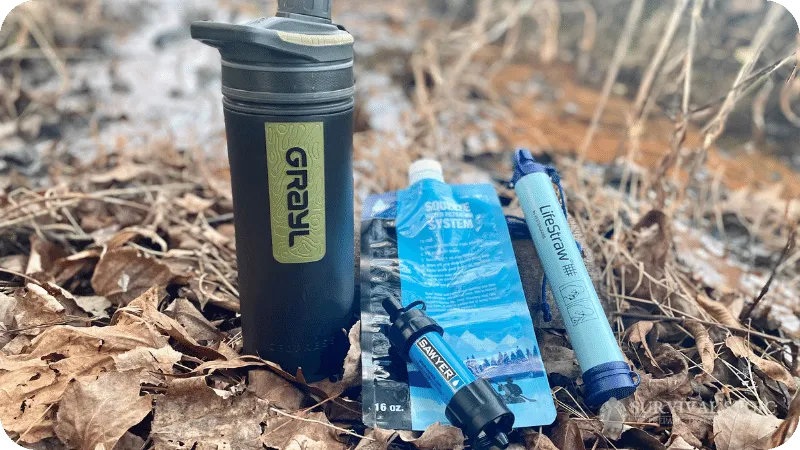
Many cheap foods rely heavily on salt for flavor and preservation. That’s not a problem on its own, but it becomes one when water is limited. High sodium increases thirst, which means more water consumption. You may find your already limited supply strained even more.
This is especially noticeable after a couple of days of eating things like ramen or heavily processed meals.
5. The Kid Standard
Adults can force themselves to eat things they don’t enjoy. Kids usually won’t.
That makes them a useful reality check.
If a child refuses to eat something during a stressful situation, that food isn’t helping you. It’s creating another problem. A good emergency food supply isn’t just technically edible. It’s food your whole household will actually eat when it matters.
We tested all the foods below with children. I have three of my own, and they’re relatively as picky as most children. So, if they like something, you can rest assured that most children will.
Once you run food through these filters, taste over time, prep simplicity, water use, and real-world acceptance, you start to see which “cheap” options actually work… and which ones only look good on paper.
Now that we’ve filtered out the ‘paper-only’ survival foods, let’s look at the winners: the calorie-dense, low-friction staples that actually taste good when the lights go out.
The Best Cheap Emergency Foods
These are the foods that actually make sense to stock. Not just because they’re cheap, but because they continue to work after a few days of living on them.
1. Rice (Use Parboiled / Instant)

Rice is still one of the cheapest calorie sources you can buy, but the type matters more than people think. Parboiled rice cooks faster than standard white or brown rice, which means:
- Less fuel used
- Less time waiting
- More practical under stress
The downside is obvious: plain rice gets old fast. This is where most people fail. They store rice, but don’t store anything to make it edible long-term.
What makes rice actually work:
- Bouillon cubes
- Oil or fat
- Simple seasonings (I like the Everything But The brand)
- Chicken or tuna packets (these last three years)
A basic “flavor kit” turns rice from survival food into something you can keep eating.
2. Beans

Beans are often paired with rice for a reason. They’re one of the cheapest protein sources available, and with rice, they form a “complete protein.” In other words, they contain all the amino acids you need to survive.
But there’s a big tradeoff. Dry beans are extremely cheap, but they require a long cook time and quite a bit of water. You also have to plan ahead for soaking, which isn’t always possible.
Canned beans cost more per calorie, but:
- Require no prep
- Use no water
- Can be eaten immediately
In a real emergency, that tradeoff matters. A mix of both is usually the most practical approach.
3. Pasta

Pasta doesn’t get as much attention as rice, but in practice, it’s often easier to live on. It flavors more easily and offers a wider range of textures. Store a couple of different kinds of dried noodles, and you can be set for days, assuming you can boil water.
Once again, basic flavor additions like oil, canned sauce, or seasoning go a long way here.
If you’re trying to avoid food fatigue, pasta tends to hold up better than plain rice over multiple days.
4. Oats

Oats are one of the most efficient emergency foods you can store. They require minimal water, can be flavored in different ways, and can even be eaten without cooking if needed.
They’re also easier on digestion than many other cheap staples, which becomes more important after a few days of limited diet variety.
5. Ramen
Ramen is one of the cheapest foods available and one of the fastest to prepare. That makes it especially useful in emergency situations.
However, it doesn’t hold up as a primary food source. After a few days, the high sodium becomes noticeable, and hunger returns quickly. It isn’t nearly as filling as other cheap staples, even for children.
Ramen does work well as a supplement, though. It’s a quick meal if you’re low on time or fuel, and it can add variety.
6. Canned Meals
Canned foods don’t always look cheap when you compare calories per dollar. But they shine in real-world conditions:
- No water required
- No prep required
- Minimal cleanup
That saves time, fuel, and effort; resources that matter just as much as money in an emergency. Foods like chili, stew, or ready-made meals often end up being more practical than bulk dry goods, especially in short-term situations.
That said, canned meals are often high in sodium, which can increase water consumption. They’re also heavy, which may or may not be an issue for you.
7. Budget Freeze-Dried Meals (Best Cheap Bulk Meal Layer)
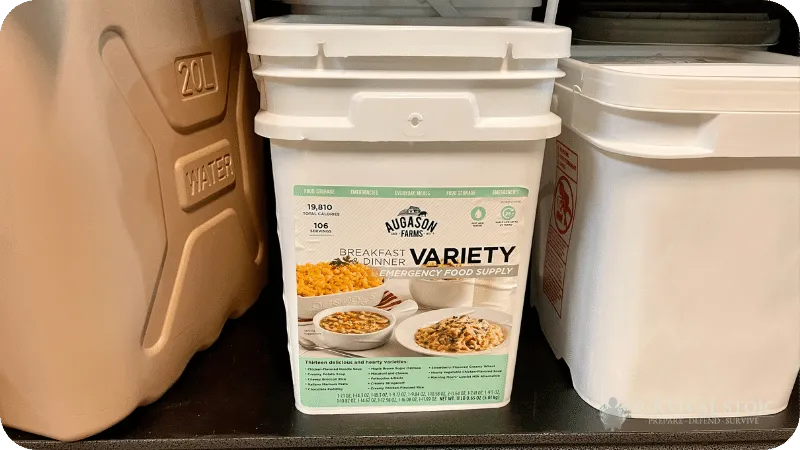
This is where budget brands like Augason Farms come in. They offer a middle ground between:
- Raw ingredients (cheap but labor-intensive)
- Premium meals (easy but expensive)
They work well thanks to their long shelf-life and ease of preparation. For practically all meals, all you have to do is add boiling water. Plus, if you shop smart, you’re getting a pretty good deal when it comes to calories per dollar.
That said, not all freeze-dried meals are made equal. Some are expensive. Some just don’t taste good. We reviewed the best emergency food kits from several different companies, if you want an overview of how they perform.
They reduce effort and add variety, but still benefit from being paired with other foods.
8. Peanut Butter
Peanut butter is one of the most reliable emergency foods you can store.
- No prep required
- High in fat and calories
- Consistently eaten, even under stress
Peanut butter can be a high thirst trigger, though. Don’t eat it if you’re low on water!
9. Tortillas
Tortillas solve several problems at once.
- Ready to eat
- No prep required
- Work with almost anything
Compared to bread, they:
- Have a longer shelf life (often 6–9 months unopened)
- Contain more fat, which helps with satiety
They also make simple meals feel more complete, which helps reduce food fatigue. While tortillas do have a longer shelf-life, we have noticed that some brands taste “soapy” after a few months, so you may need to experiment here.
10. MRE Components

Full MREs are expensive for what you get.
But individual components, like entrees or sides, can be a good middle-ground option. They don’t require any prep and come in several varieties to help you avoid flavor fatigue.
Of course, you do have to be careful with where you get MREs. We recommend purchasing MRE entrees from Army and Navy Outdoors, as they have strict storage guidelines.
MREs do store for a while, but not nearly as long as freeze-dried foods. Read our guide on how long MREs last for storage guidelines.
11. Ration Bars (Zero-Prep Backup Layer)

Grizzly Gear ration bars fall into a very specific category. They’re not meant to be your main food. They’re meant to make sure you always have calories available.
- No prep
- No water
- Extremely long shelf life
We’ve reviewed several ration bars over the years, but this brand is by far the best. I had to hide them during testing because my children kept eating them.
They work best as a backup layer for situations when you can’t cook or don’t have access to water. They also work great as a snack or morale pick-me-up.
These foods all solve slightly different problems.
- Some are cheap and scalable.
- Some are easy and immediate.
- Some are there as a backup when everything else fails.
The goal isn’t to pick one.
It’s to combine them into a system that still works after a few days, when convenience, taste, and resources all start to matter more than price alone.
Next, we’ll pull all of this together into a simple, budget-friendly setup you can actually build.
Building a Cheap Emergency Food Supply
If you strip everything down to what actually works, the goal isn’t to find the perfect cheap food.
It’s to build a simple system that covers your weak points:
- hunger
- fatigue
- limited water
- limited time
- low motivation
Here’s what that looks like in practice.
1. The Base Layer
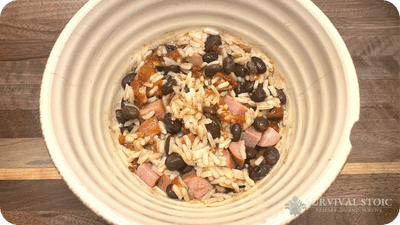
This is where most of your calories come from. Parboiled rice and pasta both work well in the category. Store a bit of both for variety.
These are still the most efficient foods for cost and storage. They’re easy to stock in bulk and give you flexibility. However, you do have to accept that these two ingredients don’t work on their own.
2. The Protein + Fat Layer
Carbs give you calories. Protein and fat make those calories last. Beans are going to be your best bet here, though peanut butter also works. Again, store a bit of both.
3. The Ready-to-Eat Layer

This is what carries you when you’re tired or short on resources.
- Canned meals (chili, stew, etc.)
- Tortillas
No prep. No cleanup. No thinking.
These foods often end up being used more than anything else early on, because they remove friction when it matters most.
4. The Bulk Meal Layer
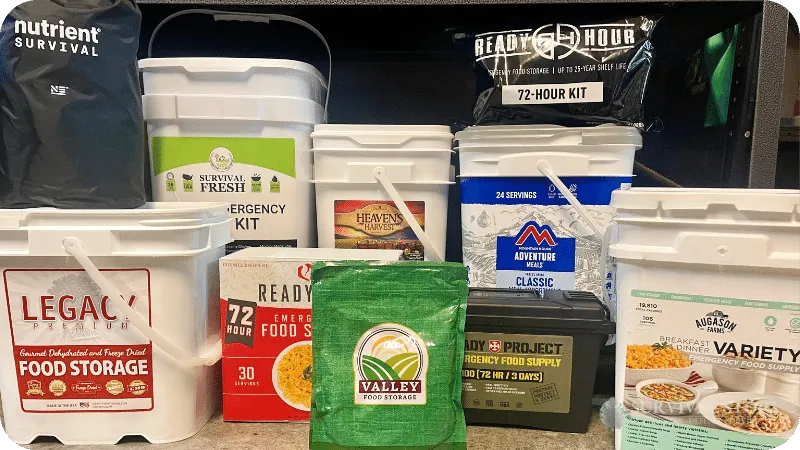
This is where budget freeze-dried meals, like those from Augason Farms, fit in. They’re not perfect, but they solve a very specific problem:
- You need a lot of food
- You don’t want to cook from scratch every time
They give you structure and consistency. You get actual meals instead of random ingredients, and you know what you’re getting every time.
Think of this as your “default dinner” layer.
5. The No-Prep Backup Layer

Grizzly Gear ration bars are your safety net. You don’t plan to rely on these or even eat them regularly. But they do make sure that you’re never without calories, even if you find yourself out of water or time.
You always have something to eat.
6. The Flavor (and Texture) Layer
This is the glue that holds everything together. Do not skip it! There might not be any calories here, but your mental state relies on this category.
- Bouillon cubes
- Oil or fat
- Seasoning packets (taco, chicken, etc.)
- Tuna or chicken packets
This is what makes your food edible long-term. Purchase a few options. Try them. Stock up on your favorites. Without this, everything else will fail.
Don’t forget texture additions, too! After three days of soft rice, beans, and canned mush, your jaw will literally crave something to crunch on. Adding seeds, nuts, or even hard crackers can prevent the psychological “mush fatigue” that the article mentions.
Why This Works
Most cheap food plans break because they focus on one category.
- All bulk → too much effort
- All ready-to-eat → too expensive
- All “survival food” → taste fatigue
This setup avoids that.
It gives you:
- cheap calories
- easy meals
- no-prep backups
- enough variety to keep eating
Plus, it is something that you can build up gradually, without spending a fortune all at once. If you want a step-by-step guide on how to build a basic emergency food supply, take a look at our 30-day emergency food supply guide.
Next, let’s look at the mistakes that cause most cheap emergency food plans to fail, so you don’t end up with a pantry full of food you won’t use.
Common Cheap Emergency Food Mistakes
Most people don’t fail because they didn’t buy enough food. They fail because they bought the wrong kind of cheap food without a plan.
These are the mistakes that look smart upfront, and fall apart fast once you actually rely on them.
1. Plain Bulk Staples with No Plan
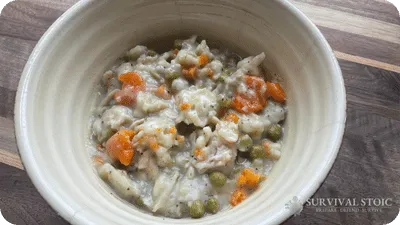
Rice. Beans. Oats.
All of these are great if you know how you’re going to eat them. What doesn’t work is stocking large amounts of plain staples with no:
- seasoning
- fat
- variety
That’s how you end up with food you technically can eat… but don’t want to. You need to have survival recipes already in place and know exactly how to turn these staples into meals.
2. Dry Beans Without a Fuel or Water Strategy

Dry beans are one of the cheapest foods you can buy. They’re also one of the easiest ways to burn through your resources. They require:
- planning ahead
- long cooking times
- significant water
If you don’t have a clear plan for how you’ll cook them or how much water you’ll use, they stop being “cheap” very quickly.
3. Cheap Buckets Filled With Drink Mixes
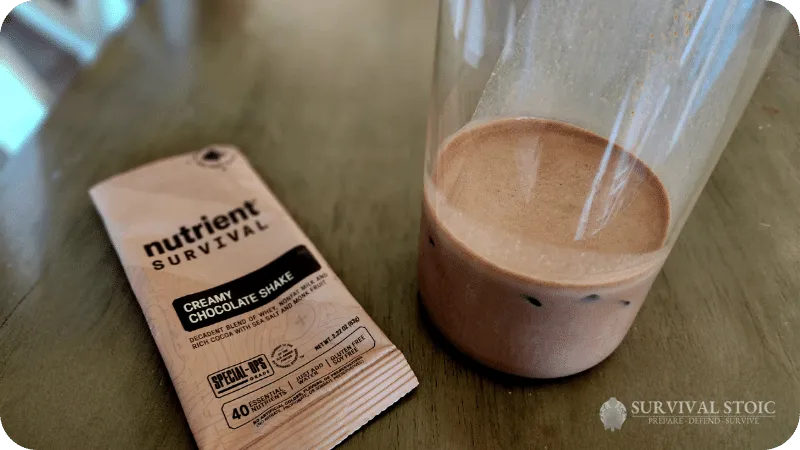
Some budget food kits look like a great deal until you check the contents. Instead of real food, they’re padded with sugary drink mixes and dessert powders. This was a huge problem when we were reviewing the best emergency food company.
These additions boost the serving count without giving you meaningful nutrition. It’s a bit of a sleazy marketing tactic.
4. Low-Quality Ration Bars

Ration bars have a place, but not all of them are usable. Many of the cheapest options end up being ignored unless you’re desperate.
If you’re going to rely on ration bars as a backup, they need to be at least tolerable. Preferably, they should have decent nutrition, too, especially if you’re going to rely on them for multiple meals (or even days).
5. Food You’ve Never Actually Tried
This is one of the most common mistakes. If you take nothing else from this article, at least remember that you should cook and eat every emergency food before you store it.
People tend to buy emergency kits and “survival meals” and never open them. The first time they try them is during an actual emergency. That’s a bad time to find out you don’t like the taste or don’t have everything you need to prepare the meals (like boiling water).
Always, always, always try the food before you decide to rely on it.
The Pattern Behind These Mistakes
Every one of these problems comes back to the same issues: they optimize for the idea of cheap food, not for the reality of using it. They end up with food that requires too much effort, too much water, and too little flavor.
Fix those issues, and most of your food choices start working again.
Next, we’ll look at how to fix the biggest problem of all: making cheap food taste good enough that you can actually keep eating it.
How to Make Cheap Emergency Food Taste Good
Most cheap foods fail because people get tired of eating them. Fixing this isn’t hard, but it does require some attention and planning. If you want your food supply to hold up past day two, you need to build in flavor and texture from the start.
1. Build a Flavor Kit
This is the single most important upgrade you can make. A small, cheap set of add-ons can completely change how your food tastes:
- Tuna or chicken packets
- Bouillon cubes (chicken, beef, vegetable)
- Oil or fat (olive oil, butter powder, etc.)
- Seasoning packets (taco, chili, garlic, curry)
2. Add Fat
Fat is where flavor comes from. So, if you want your food to be satisfying, you need to add fat. Without it, hunger returns faster, and everything just feels bland.
This is one reason why tortillas hold up so well. They’re higher in fat than bread and last longer. You can put some flavored rice and chicken packets in a tortilla and have a decent meal for cheap.
Storing more traditional fats like olive oil is a great option, too. You can use this for cooking and adding flavor.
3. Plan Your Meals
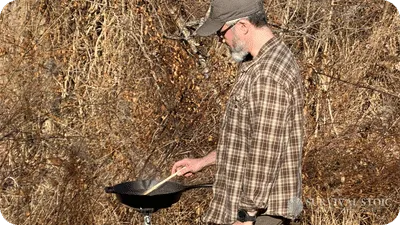
Trying to “wing it” when you’re in the middle of an emergency is not the way to go. As we explained in our 3-month food supply guide, every food you store should be linked to a meal that you can prepare.
Here are some example meals you can make using these cheap emergency foods:
- Savory rice bowls: Rice, bouillon, and a source of protein (either a tuna or chicken packet or beans). This is a great “default” meal that you can adjust with seasoning.
- Rice & beans: Rice, beans, and seasoning.
- Paste & protein bowls: Pasta, oil, and a chicken (or tuna) packet.
- Ramen: Ramen, half a seasoning packet, and a chicken packet.
- Oatmeal: Make oatmeal with either peanut butter or bouillon added.
- Tortilla wrap: Tortillas can be paired with practically anything. Try tortillas with peanut butter and dried oats, seasoning and beans, or chicken packets with rice.
- Canned meal & tortillas: Canned chili or stew on a tortilla.
The idea is that these meals use very few ingredients and require minimal prep.
4. Rotate
Don’t eat the same thing every day. Emphasis rotating textures, even if you aren’t feeling particularly tired of them. Soft foods like rice and oats become harder to eat after a few days.
Mixing textures helps. Tortillas add structure to otherwise mushy foods, and dried oats can add some crunch to practically anything.
5. Use Ready-to-Eat Foods Strategically
Not every meal needs to be cooked. Some of the best emergency foods are canned meals, ration bars, and peanut butter. These reduce effort and water use. Sometimes, that matters more than eating something warm.
6. Prioritize familiar foods
Food you already eat is more likely to be accepted (especially by kids) and feels “normal.” If you can take your usual meals and do shelf-stable versions, that’s your best option.
You can also take some of the meals suggested here and make them normal by eating them regularly. This makes them much easier to eat in an emergency and keeps your food stores fresh. Emergency food supplies should be used regularly, as part of yoru weekly meal plan, not shoved into the back of your pantry.
How We Tested
A lot of emergency food advice sounds good until you try to live on it.
So instead of guessing, we tested this the only way that really matters, by actually eating this kind of food for multiple days in a row under less-than-ideal conditions.
The “Day 3” Test
Almost everything passes on day one. You’re hungry. It’s new. Even basic food tastes fine.
Day three is where things start to break. Bland foods become hard to finish. High-sodium meals (like ramen) start to feel heavy. Texture fatigue sets in, especially with soft foods like rice and oats.
This is where a lot of “cheap” foods got thrown in the trash.
The foods that held up the best were:
- simple but flexible (rice, pasta)
- easy to improve with small additions (seasoning, fat)
- or ready-to-eat when motivation dropped (canned meals, tortillas)
The Kid Standard
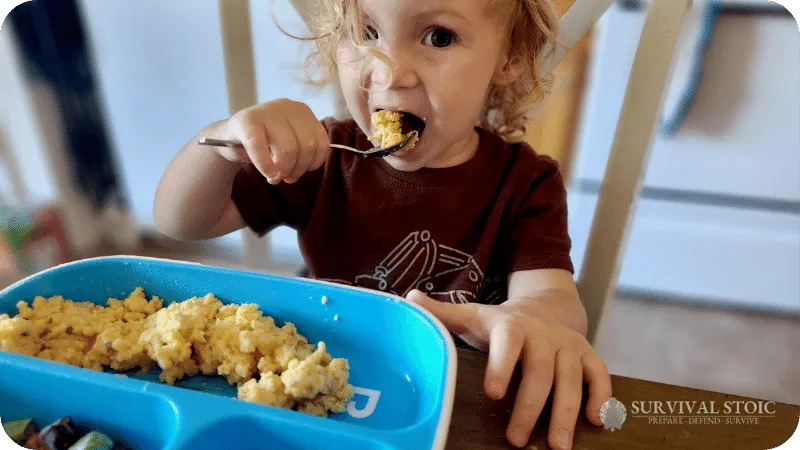
Adults can push themselves to eat when they know they need to. Kids typically won’t. This made them a solid “standard” of testing. Foods that worked well were things like peanut butter, tortillas, simple rice dishes, and some canned meals.
Foods that struggled were plain options and overly repetitive meals. Kids like repetition, but not that much repetition.
If a kid refuses to eat during a stressful situation, the food becomes a problem.
Water and Fuel Reality

You don’t often realize just how much fuel and water emergency meals require until you try to cook them in constrained situations.
Cooking quickly became a game of saving as much fuel and water as possible. Boiling water requires using both resources. Cleanup required more water than expected, especially for freeze-dried meals. What would typically just be an annoying cleanup becomes a problem.
Foods that performed well were canned meals, tortillas, peanut butter, and simple meals. Dry beans performed poorly, though planning helped.
Cleanup Friction is Real
This is something most guides don’t consider. When you’re trying to preserve water, the last thing you want is stuck-on food and complicated cleanup.
Meals that minimized cleanup or caused little to no mess were the best option. Freeze-dried meals caused more mess than I originally anticipated, especially many of the pasta dishes.
What Actually Got Eaten
This is the simplest and most important test.
Not what was available. Not what looked good in storage. What people kept reaching for:
- easy meals
- familiar foods
- things that required the least effort
And that’s what really matters.
Next, we’ll break down how to choose the right foods for your situation so you can build a supply that actually works for your home and budget.
Buyer’s Guide: How to Choose Cheap Emergency Food That Actually Works
At this point, you’ve seen the options. Now the question is: how do you decide what you should actually buy?
Because the right setup depends less on “the best foods” and more on your situation. You might have a higher (or lower) budget. You may have a different amount of storage space. Or you may be prepping for a specific emergency, like a hurricane.
Here’s how to find the best food for you:
1. Start with Calories per Dollar
Cheap emergency food still needs to be cheap. Staples like rice, pasta, and oats give you the most calories for your money, so they should form the basis of most budget plans.
However, this is where many people stop, and where the problems start. You can’t only focus on calories per dollar.
There are several other things you need to keep in mind, too. Just because something looks cheap on paper doesn’t mean it’s cheap in reality.
2. Factor in Water Requirements
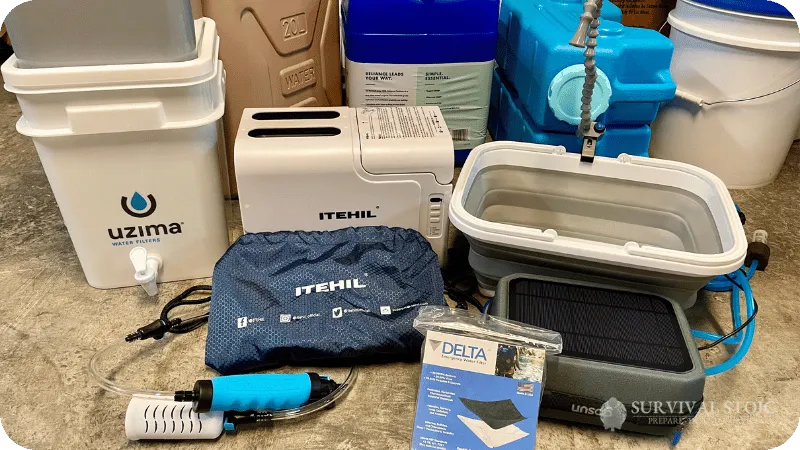
This is one of the biggest differentiators between foods that work and foods that don’t.
Ask:
- How much water does this take to prepare?
- How much water does it take to clean up?
Dry foods like beans and rice are cheap upfront, but they’re expensive in water and effort. On the other hand, ready-to-eat foods like canned meals tend to be more expensive per calorie, but they don’t require any water at all.
If your water supply is limited, this factor alone should change what you buy.
We tested emergency water filters for families that can help you stay on top of your water needs.
3. Look at Prep Difficulty

It’s important to be realistic about how you’ll actually cook. For instance, consider whether or not you have a reliable way to boil water.
Foods fall into three practical categories:
- No prep: peanut butter, tortillas, ration bars
- Simple prep: canned meals, freeze-dried meals
- Full cooking required: rice, beans, pasta
A good setup should include a little bit of everything. Full-cooking food is great if you’re going for cost-efficiency, but no-prep foods are required for times when you don’t have the resources to cook.
4. Prioritize Taste
Almost everything tastes okay once. However, the real question is whether or not you (and your children) can still stomach it on day three.
Foods that tend to hold up are:
- flexible bases (rice, pasta)
- foods with fat (peanut butter, tortillas)
- meals with built-in flavor (canned or prepared foods)
There are a lot of things you can stock up on that improve flavor, like spices and sauces. These work well with flexible bases, as they can turn the same ingredients into several meals that all taste different.
5. Consider Shelf Life
Yes, shelf life is important. However, it isn’t the only factor. Don’t overthink it or just purchase whatever lasts the longest.
Preferably, you should be using the foods in your emergency food supply a few times a week and restocking regularly. So, how long something lasts really doesn’t matter that much.
The key is balance. You don’t need everything to last 25 years, but having a few meal options only for emergencies could be helpful. Just don’t try to store only foods with an extremely long shelf life, or you’ll needlessly cut into your budget.
6. Build in Layers

The most reliable setups combine different types of food:
- Simple flavor additions
- Cheap bulk calories
- Easy, ready-to-eat meals
- No-prep backups
Our guide to survival food goes through this layer system in-depth. If you’re on a budget, your goal is to fill each of those categories in the cheapest way possible.
A Simple Way to Decide
If you’re unsure where to start, use this quick check:
- Can I afford to buy enough of it?
- Can I prepare it with limited water and fuel?
- Will I still eat it after a few days?
If the answer to any of those is “no,” it’s not the right fit. Choosing cheap emergency food isn’t just about finding the lowest price. It’s about finding the balance between cost, effort, and taste.
Next, we’ll answer some of the most common questions about cheap emergency food so you can fine-tune your plan even further.
FAQ: Cheap Emergency Food
What is the cheapest emergency food you can buy?
Staples like rice, pasta, oats, and dry beans are usually the cheapest per calorie.
But cheapest doesn’t always mean best.
Once you factor in water, fuel, and effort, foods like canned meals or budget freeze-dried options can be more practical, especially in short-term emergencies.
Can you live on rice and beans alone?
Technically, yes, for a while. But in practice, it’s harder than it sounds.
- It requires significant water and fuel
- It gets repetitive quickly
- It’s easy to under-eat because of fatigue
Rice and beans work best as a foundation, not your entire plan.
What foods require no cooking at all?
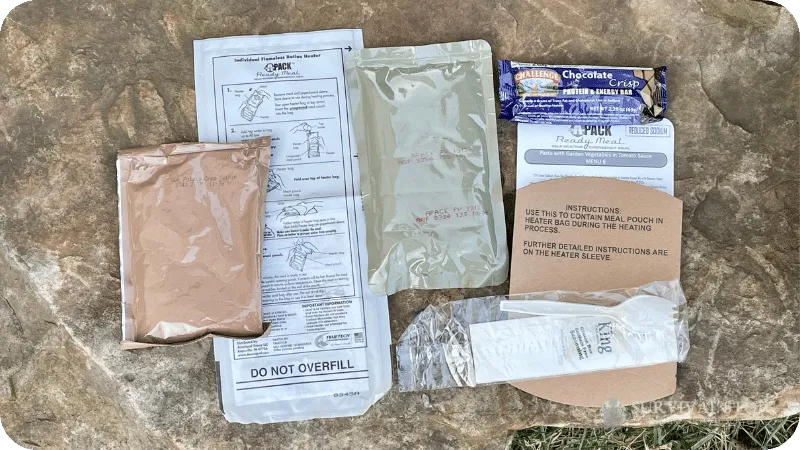
These are some of the most valuable foods to have:
- Peanut butter
- Tortillas
- Canned meals
- Ration bars
- Some MRE components
These reduce effort, water use, and cleanup, which becomes more important over time.
Are ration bars actually worth it?
Yes, but only in the right role.
Ration bars are cheap and don’t require any cooking. However, they aren’t enjoyable to eat long-term. As an occasional meal replacement, sure. But I would not plan to rely on them extensively.
Are budget freeze-dried meals a good deal?

They can be, especially for building a larger food supply quickly. We tested some of the top options in our emergency food kit review.
Options like Augason Farms offer:
- good calorie-per-dollar for prepared meals
- long shelf life
- simple “just add water” prep
The tradeoff is taste consistency and price. Some meals are solid. Others get repetitive. They’ll almost always be more expensive than bulk pantry staples. They work best as part of a larger system, not your only food.
How much emergency food should you actually store?
That depends on your goals and budget. A practical starting point for most households is:
- 3 days of no-prep food
- 2–4 weeks of easy-to-prepare food
- 1–3 months of bulk staples
You don’t need to build everything at once. Start small, test what you have, and expand over time. If you integrate these foods into your usual diet, then you can just stock up on a little bit extra each week.
What’s the biggest mistake people make with cheap emergency food?
Buying food they’ve never actually eaten. It’s easy to focus on price and shelf life and ignore taste or prep difficulty.
The first time you try your food shouldn’t be during an emergency.
Is it better to buy food kits or build your own supply?

Usually, a mix of both works best.
- Emergency food kits (like budget freeze-dried options) give you structure and convenience
- Individual foods give you flexibility and better value
Relying entirely on one or the other tends to create gaps.
Conclusion: Cheap Only Works If It’s Practical
Cheap emergency food isn’t hard to find. What’s hard is finding cheap food that still works when you’re actually relying on it. Because after a couple of days, the equation changes. Taste starts to matter a lot more, and you aren’t so concerned with what a good “deal” you got on the food.
Survival isn’t just about not dying; it’s about not being miserable while you’re at it. A bottle of hot sauce and a pack of tortillas are the difference between a “survival ordeal” and a “really long, weird camping trip.”
The good news is you don’t need anything complicated to get this right. A simple setup built around:
- a few cheap staples
- a few easy, ready-to-eat foods
- and a basic flavor kit
will carry you much further than a perfectly optimized (but unrealistic) bulk plan.

Start small.
Buy a few foods you already eat.
Add one or two items from this list each time you shop.
Actually try them.
That last step matters more than anything else. Because the goal isn’t just to have food stored away. It’s to have food you’ll use, even when you’re tired, stressed, and everything else is harder.
