

Most emergency food plans fail in real life. Here’s what goes wrong and how to build one that actually works.
Most people build their emergency food supply backward. They focus on shelf life, calories, and bulk pricing. Those things matter, but they are not what determine whether your plan works when it counts. What matters is whether you and your family will actually eat the food, whether you can prepare it with limited time and resources, and whether the system holds together after a few days of real use.
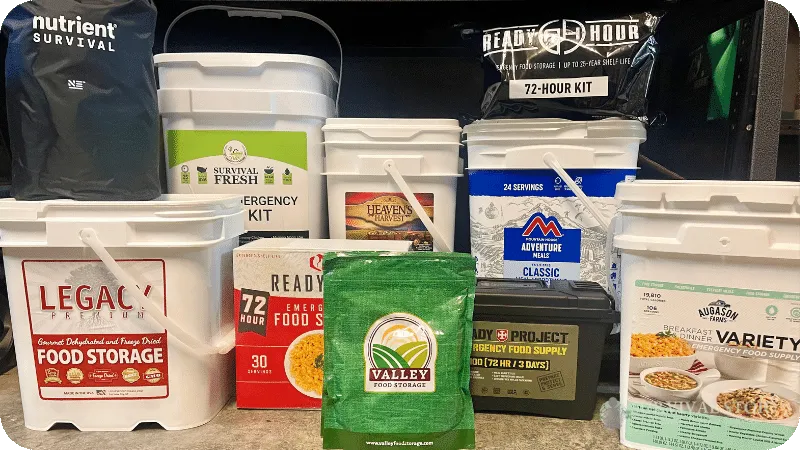
This guide is a failure analysis. It looks at where food stockpiles break down in practice, not on paper. Some of these mistakes are obvious once you see them. Others only show up after several days of eating the same meals, cooking with limited fuel, or trying to get a tired kid to take one more bite of something unfamiliar.
We are not approaching this as a shopping list. We are approaching it as a field problem.
If you are building your first supply or trying to fix one that does not feel quite right, this guide will give you a clear framework. You will understand what actually matters, where most plans go wrong, and how to build something that works in the real world.
We’ve tested dozens of emergency food products and built multiple real-world setups to see what actually holds up beyond a few days.
Why You Can Trust This Guide
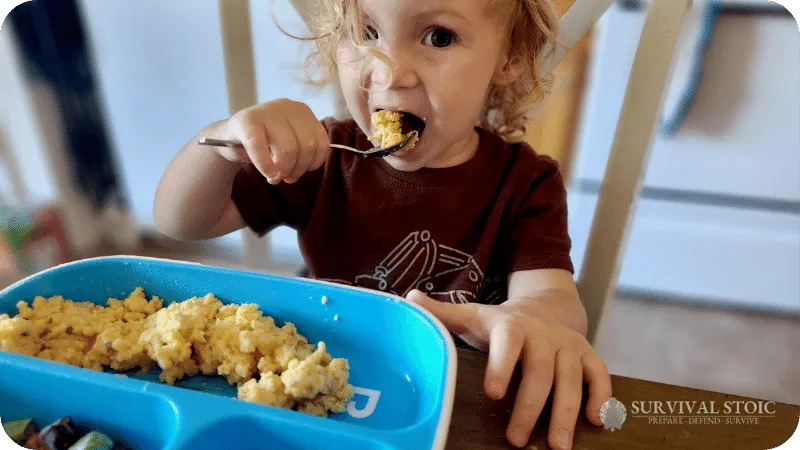
We have built and tested food setups during short disruptions and controlled “no grocery” stretches designed to expose weak points.
That testing includes:
- Eating stored food for multiple consecutive days, not just sampling it once
- Tracking where taste fatigue sets in and what foods get skipped
- Cooking with limited fuel, limited water, and limited time
- Watching how kids respond to unfamiliar meals and repetitive menus
- Rotating stored food into normal use to see what actually holds up
We treat food storage as a system that has to function under pressure. This guide reflects what worked, what failed, and what we changed after seeing those failures up close.
The 10 Most Common Emergency Food Storage Mistakes (Quick Reference)
If you fix these ten mistakes, your food supply will work better than most.
Most food stockpiles fail for predictable reasons. Not because people didn’t buy enough food, but because the system wasn’t built for real-world use.
This table gives you the high-level map. We’ll break each one down in detail.
| Mistake | The Survival Stoic Fix |
|---|---|
| Buying food you’ve never eaten | Test meals now and rotate them into normal use |
| Ignoring taste fatigue | Build real variety across flavors and textures |
| Overlooking cooking reality | Plan for low-fuel, low-water preparation |
| Forgetting kids | Stock familiar, easy-to-accept foods |
| Relying on one type of food | Layer bulk staples, ready meals, and no-cook options |
| Storing food incorrectly | Control heat, moisture, light, and oxygen |
| Not rotating your supply | Eat what you store and replace it consistently |
| Ignoring morale food | Include comfort items that stabilize routine |
| Buying everything at once | Build your supply in phases |
| Ignoring water needs | Pair every food plan with a water plan |
If you fix these ten areas, you will be ahead of most people who stockpile food.
The rest of this guide shows you what each mistake looks like in practice and how to correct it before it becomes a problem.
Mistake #1 — Buying Food You’ve Never Actually Eaten
The first time you try your emergency food should not be during an emergency.
This is one of the most common failures, and it usually starts with good intentions. People research shelf life, compare calories per dollar, and buy what looks efficient on paper. The problem is that none of that tells you whether the food actually works for you.

A food supply that looks good on a shelf can fail the moment you open it.
What Goes Wrong
Most people build their stockpile based on calorie math and marketing pictures. Very few people build it based on real use.
That gap shows up fast. Texture is off. Salt levels are higher than expected. Portions feel smaller than they looked. Meals that seemed fine in a single test become hard to finish after a few days. You do not notice these problems until you rely on the food repeatedly.
Our Testing Experience
When we started testing stored meals more seriously, a few things became obvious:
- Some meals we expected to like were hard to finish. Not terrible, just not something you want three days in a row. You’d be surprised by how many “chocolate smoothies” were absolutely unedible.
- Sodium fatigue builds quickly. After a few meals, everything starts to taste the same.
- Portions matter more than labels suggest. What looks like “2 servings” often feels like one when you’re actually hungry.
None of these issues show up in a one-time taste test. They show up when the food becomes your routine.
The Fix
Test your food before you commit to it.
That does not mean opening one pouch and calling it good. It means eating full meals for several days in a row and preparing them the way you would under constraints. If you do not choose to eat it now, you will not want to eat it later.

From there, build your system around foods that pass that test:
- meals your family will actually finish
- foods you can prepare without friction
- options you can rotate into normal life
If you want a starting point, we’ve broken down what actually holds up in our best emergency food kits guide, including which ones stayed usable after multiple days of testing.
We also go deeper on individual options like Heaven’s Harvest and Augason Farms, where the differences between “looks good” and “works in practice” become very clear.
Start with food you know works. Everything else builds on that.
Mistake #2 — Ignoring Taste Fatigue
Calories do not matter if people stop eating.
Taste fatigue is one of the fastest ways a food plan fails, and almost no one accounts for it upfront. On paper, a stockpile can look solid. In practice, repetition wears people down much faster than expected. Food that is acceptable on day one can become difficult by day four.

Stress tends to kill appetites, too. What you can eat during testing isn’t necessarily the same thing you can scarf down during an emergency.
What Goes Wrong
The pattern is predictable once you’ve seen it:
- The first couple of days feel fine. The food is new, and expectations are low.
- By the middle of the week, meals start to feel repetitive, even if they are technically different. You can only eat so many types of pasta!
- After that, people begin skipping parts of meals or eating less than they should.
It is not that the food is bad. It is that the experience becomes exhausting. We saw this most clearly with meals that leaned heavily in one direction. Too many salty dinners. Too many sweet breakfasts. Even well-made meals started to blend together.
Texture fatigue shows up alongside flavor fatigue. Soft foods, mushy foods, or anything with a similar consistency, meal after meal, become a problem faster than most people expect.
Our Testing Experience
Most stockpiles are built around efficiency. Often, this looks like:
- large quantities of the same meal
- similar ingredients across different meals
- limited texture variation
That kind of efficiency works against you over time.
Kids hit this wall first. They have less tolerance for repetition and less willingness to push through meals they do not enjoy. Once they start refusing food, the problem spreads quickly.
The Fix
Variety is not a luxury. It is a requirement. A working food supply rotates across flavors and textures. Don’t build a supply on rice and beans alone! This does not mean you need endless options. It means you need enough variation to prevent burnout.
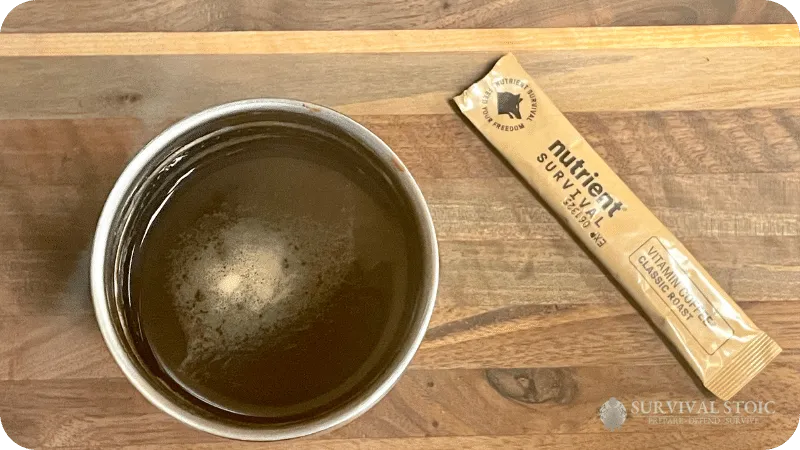
Even small changes make a difference. A different texture, a different seasoning profile, or a simple add-on can reset a meal enough to keep it usable. Spices go a long way here and often store well.
If you are building a larger supply, this is where many kits separate themselves. In our breakdown of the best emergency food kits, the difference between “good on paper” and “usable for a week” often came down to variety.
You can also solve this with a mixed approach using normal grocery items. Our 30-day food supply guide and survival food list both focus heavily on building variety without overcomplicating the system.
Mistake #3 — Forgetting the Cooking Reality
Most emergency food assumes a fully functional kitchen. That assumption fails fast. When people plan their food supply, they tend to picture normal conditions. A working stove. Plenty of water. Time to cook and clean. That is not how most disruptions actually feel.
Cooking becomes a constraint long before food runs out.
What Goes Wrong
Even short disruptions shift the equation:
- Fuel becomes limited. You start thinking in terms of burn time, not convenience.
- Water has competing priorities. Drinking comes first, then cooking, then cleaning.
- Time and energy drop. After a long day, complex meals stop being realistic.
Meals that require multiple steps or long cook times quickly become a burden.
We saw this clearly when testing meals back-to-back. Anything that required sustained boiling, multiple containers, or cleanup started to feel expensive in ways that had nothing to do with money.
Our Testing Experience
Many popular food options rely on ideal conditions, like plenty of water to clean up with and extended simmer times.
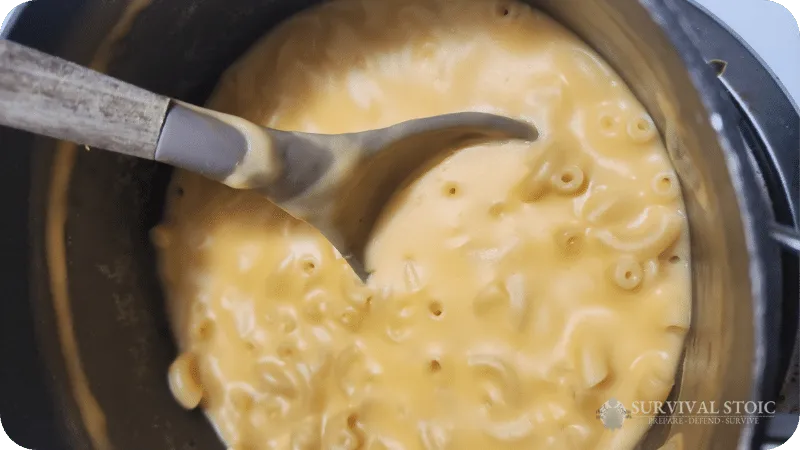
That works in a normal kitchen. It breaks down when resources are tight.
Even “just add water” meals can become a problem if they assume consistent access to hot water. Heating water repeatedly adds up in both fuel and time. It’s just another layer you have to worry about when SHTF.
The Fix
Build your food supply around preparation reality, not best-case conditions.
That means layering in options that reduce friction:
- meals that require little or no cooking
- foods that use minimal water
- options that can be eaten directly if needed
You do not need to eliminate cooked meals. You need balance. A resilient system includes food you can eat when everything is working and food you can eat when nothing is.
This is where categories matter. We rely on a mix of approaches:
- ready-to-eat options like MREs for zero-prep situations
- simple meals that only need hot water for efficiency
- basic grocery items that can flex depending on conditions
If you want a deeper breakdown, our best MREs guide focuses on no-prep options, while our bug out bag food guide prioritizes food that works with minimal resources. For longer-term setups, options like Mountain House kits strike a balance between simplicity and usability.
Mistake #4 — Not Accounting for Kids
Kids are the stress test of your food plan.
Most stockpiles are built around adult assumptions. Adults will tolerate repetition. Adults will push through meals they do not enjoy. Kids usually will not. And, if you have kids, if your plan doesn’t work for them, it does not work.

What Goes Wrong
The gap shows up in a few predictable ways:
- Unfamiliar meals get rejected. New textures, new flavors, and anything outside their normal routine create resistance.
- Repetition hits faster. Even foods they normally like can become a problem after a few days in a row.
- Portion expectations don’t match reality. Kids eat less per meal, but snack more often. Most plans are not built for that pattern.
A plan that looks solid on paper can fall apart when kids simply stop eating it.
Don’t expect your kids to just be hungry enough to eat whatever you put in front of them. Kids tend to become pickier when put in stressful situations. It’s best to play it safe and assume your kid’s palette will be even more restricted than usual!
Our Testing Experience
We saw this almost immediately once we started running longer food tests at home.
- Some meals we expected to be “safe” were ignored completely. Texture was often the issue, not flavor. Mac and cheese meals were a huge issue here.
- Snacks became more important than meals. When meals were repetitive, kids leaned heavily on anything familiar and easy. Our Grizzly ration bars were some of the first snacks our kids ate through. (I will be storing more from now on!)
- Resistance builds quietly. It starts with picking at food, then skipping parts of meals, then refusing entire dishes.
Once that pattern starts, it is hard to reverse without changing the food.
We ended up adjusting faster than expected, not because the food was bad, but because it was not familiar enough to hold up over multiple days.
The Fix
Build your food supply around what your kids already eat.
Start with familiar meals and recognizable ingredients. Then layer in variety slowly.

Do not rely on your kids adapting to your plan. Build a plan that already fits them.
This is one area where certain brands and approaches stand out. In our testing, options like Heaven’s Harvest held up better with kids because the meals were closer to normal, recognizable food. On the other hand, some bulk or heavily processed options created more resistance over time.
You can also solve much of this with grocery-based planning. Our survival food list and 30-day food supply guide both prioritize foods that families already use, which makes long-term adherence much easier.
Whenever possible, cook meals with shelf-stable ingredients. We have several emergency food recipes that are made with only ingredients you can store long-term. Get your kids used to these meals before an emergency so that food stays as “usual” as possible.
Mistake #5 — Relying on a Single Type of Emergency Food
No single type of food solves every problem.
This is one of the most common structural mistakes. People find one approach that seems efficient and scale it up. All freeze-dried meals. All canned goods. All rice and beans. Just more of the same thing.
This kind of simplicity makes planning easy and can look nice on a shelf. However, it creates weak points. You’re putting all your eggs in one basket.

What Goes Wrong
Every category of food has tradeoffs:
- Freeze-dried meals are lightweight and long-lasting, but depend on water and heat
- Canned food is easy to use, but heavy and limited in shelf life
- Bulk staples are efficient, but require time, fuel, and skill to prepare
When you rely on only one type of food, you’re inheriting all its weaknesses. This can turn a relatively small problem into a very serious one. Limited water makes freeze-dried meals harder to use. Limited fuel makes bulk staples less practical. Mobility makes canned goods a liability.
A one-dimensional stockpile struggles the moment conditions turn against it.
Our Testing Experience
We’ve run variations of this without intending to. Early on, we leaned heavily in a few directions at different times.
- A freeze-dried heavy setup worked well until water became a constraint. It was efficient, but not flexible.
- A grocery-based setup with mostly canned food felt easy at first, then became limiting. Weight and variety became issues quickly.
- Bulk staples looked great in theory, but required more effort than expected when used repeatedly.
Each approach works, but only within a narrow set of conditions. The issue is a lack of balance, not the foods themselves.
The Fix
Build your food supply in layers, not categories.

A resilient system includes:
- Base calories that are efficient and long-lasting
- Ready meals that simplify preparation
- Immediate food that requires no cooking at all
Each layer covers a different constraint and ensures you always have something to cook. You should set out to choose the best kind of food. You should be choosing the best foods from all these categories.
Our emergency food hub lays out exactly what categories you need to cover and the best ways to cover them. Start there.
Mistake #6 — Storing Food Incorrectly
Shelf life is not a guarantee. Most people assume that once food is stored, it is handled. In reality, storage is where a lot of food quietly degrades or fails long before its expected lifespan.

The environment matters as much as the food itself.
What Goes Wrong
Food breaks down faster when it is exposed to:
- Heat which accelerates degradation and reduces shelf life
- Moisture which leads to spoilage and contamination
- Oxygen which drives oxidation and nutrient loss
Even small issues compound over time. A slightly warm storage area or poorly sealed container can cut shelf life dramatically.
We discuss these factors in-depth in our guide to MRE shelf life. While this article covers MREs specifically, the basics apply to practically all foods.
Many “25-year foods” only reach that lifespan under ideal conditions.
Our Testing Experience
We’ve seen this play out in smaller ways during normal storage and rotation.
- Foods stored in warmer areas aged noticeably faster. Texture and flavor changed well before expected timelines. Fats tend to degrade first.
- Improperly sealed items lost quality quickly. Even when they looked fine, they did not hold up once opened.
- Packaging matters more than most people think. The difference between factory-sealed and re-packaged food is significant if not done correctly.
Storage mistakes don’t always show up right away, and they aren’t always apparent until you actually try to eat the food. That’s what makes this mistake so sneaky. You might not actually know you made a mistake until an emergency happens.
The Fix
Control the variables you can. Focus on storing the food in a consistent, cool temperature in a dry environment. Use proper sealing and oxygen control when appropriate. You don’t need a perfect setup, but you do need a deliberate one.

Good storage extends shelf life. Poor storage shortens it without warning.
If you are storing bulk foods, proper packaging becomes critical. Our best Mylar bag kits guide walks through setups that actually hold up over time, including oxygen absorbers and sealing methods.
For a broader system, our long-term food storage guide breaks down how to store different types of food based on their needs and limitations.
Mistake #7 — Not Rotating Your Emergency Food Supply
A stockpile that sits untouched is a stockpile that slowly fails. This is where a lot of well-built plans break down. The food is good. The quantities are right. Storage is handled correctly. Then it sits for months or years without being used.
When you finally need it, it’s unfamiliar and outdated.

What Goes Wrong
Most people treat food storage as a one-time project. You buy it in bulk, stack it away, and forget it exists until you need it. However, this creates tons of problems when emergencies do pop up:
- You lose familiarity. You do not remember how to prepare certain foods or how they fit into meals.
- Food expires or degrades unnoticed. Even well-stored items have timelines.
- Your system drifts out of sync with your actual habits. What you stored years ago may not match what you eat now.
- Packaging degrades unnoticed. You didn’t realize seals were broken because the food was left forgotten,
A static stockpile will slowly become less usable, even if the food is technically still safe. Worse, you won’t realize how unusuable the food is until you actually need it.
Our Testing Experience
Rotation changed everything for us once we committed to it.
- Meals we regularly used stayed familiar and easy to prepare. There was no learning curve when we relied on them more heavily.
- Weak points showed up quickly. Foods we avoided in normal life were the same ones we avoided during testing. Foods got swapped.
- Waste dropped significantly. We stopped discovering expired or questionable items buried in storage. When we kept up with what we had and used it, we spent less money overall.
Rotation turns your stockpile into part of your normal system instead of something separate from it. It simply is what you eat.
The Fix
Eat what you store and replace it as you go. That is the entire system.

If you already meal plan, simply add a few meals made with shelf-stable ingredients into your weekly rotation. That’s it. Replace what you use during normal shopping. Adjust what doesn’t work.
If you do not use a food consistently, do not keep adding more of it. If you don’t want to eat it now, you won’t want to eat it later, either.
This is also where scaling becomes easier. Instead of building a large stockpile all at once, you grow it over time while keeping everything active and familiar. Just buy a few extra ingredients every time you go to the store. Splurge on an emergency food kit every now and then.
Think of your food supply as a system you maintain, not a bunch of items you keep in your basement.
Mistake #8 — Ignoring Morale Food
Food is fuel. But it is also stability. This is one of the quieter failures in most food plans. People optimize for calories and shelf life. They build a system that works on paper, but feels cold and repetitive in practice.

Over time, that wears people down.
What Goes Wrong
When every meal is purely functional, a few things start to happen:
- Meals feel like a chore instead of a reset point in the day.
- There is nothing to look forward to. Every meal blends into the next.
- Small frustrations build faster. Hunger combined with monotony creates tension, especially in a household setting. Kids quit eating, which just adds more stress to parents.
The problem isn’t nutrition or food quality. It’s psychological, but that doesn’t make it any less important.
Our Testing Experience
This showed up more clearly than we expected.
- Coffee became non-negotiable. Not for energy, but for routine. It anchored the morning. It became our “emotional support drink.”
- Something small and sweet made a difference. Even a simple treat broke the monotony of repetitive meals. For kids, this is extra important.
- Meals with familiar elements were easier to finish. Even if the rest of the meal was basic, one recognizable piece helped. Having one thing you really love can go a long way.
You don’t have to make huge changes. This might look like seasoning freeze-dried chicken with your usual chicken seasoning. It might be having a few bottles of hot sauce lying around.
Without them, meals felt like something to get through. With them, meals felt more normal.
The Fix
Include a small layer of comfort in your food system. This could be coffee, tea, something sweet, or familiar snacks. You might store small bags of chips for your kids, for instance.

You don’t need a lot, and you don’t need to plan for every meal to be morale-boosting. But have enough to break the repetition.
Morale food should not be considered a luxury. Your mind often starts hitting the wall far before your body does.
This is easy to layer into a grocery-based approach. Our survival food list has a whole section on simple foods that can serve this role without taking up a bunch of room.
Mistake #9 — Buying Everything at Once
Rushing your food supply is one of the fastest ways to waste money and build a system that does not work. There is a strong urge to “solve the problem” in one trip. Buy the biggest kit you can (like the 510-serving Mountain House pack).

This feels efficient and done, but it locks in mistakes at scale.
What Goes Wrong
When you build everything at once, a few issues show up quickly:
- You commit before you understand your system. You have not tested meals, cooking methods, or variety yet. You end up with a bunch of meals you dislike.
- You overbuy the wrong things. Foods that looked good on paper may not hold up in practice.
- You create complexity too early. Large quantities of unfamiliar items become harder to manage and rotate.
Speed just makes all your errors cost more. What would have been a small mistake becomes a large (and expensive) one.
Our Testing Experience
We’ve taken both approaches, and the difference is clear.
- Early bulk purchases locked us into foods we would not choose again. We ended up working around them instead of relying on them. I can’t tell you how many random freeze-dried meals I have in my basement that probably won’t get eaten.
- Smaller, phased builds gave us flexibility. We could adjust based on what actually worked. Buy more of our favorite things.
- Testing before scaling changed our decisions. Meals that seemed fine initially did not always hold up over time.
Yes, it’s really tempting to just get it all done right now, but that only leads to extra mistakes.
The Fix
Build your food supply in phases. Start with a short, functional baseline. Pick out a few shelf-stable meals to try and stock up on ingredients for the ones you like. Buy a sample pack from an emergency food company or a dozen MREs.
Once you have a few days of reliable food, extend that to a couple of weeks and slowly build towards a full 30-day system. At each stage, keep testing and adjusting. Try out new meals, add your favorite foods, get rid of things you no longer like.
You are building a system, not just buying a bunch of food.
Mistake #10 — Ignoring Water Needs
Food and water are a single system. You cannot plan one without the other. Most types of emergency food require water to cook.
This is one of the most overlooked gaps in food storage. People build a solid food supply, then assume water will be available when needed, or they forget that clean water can go away.
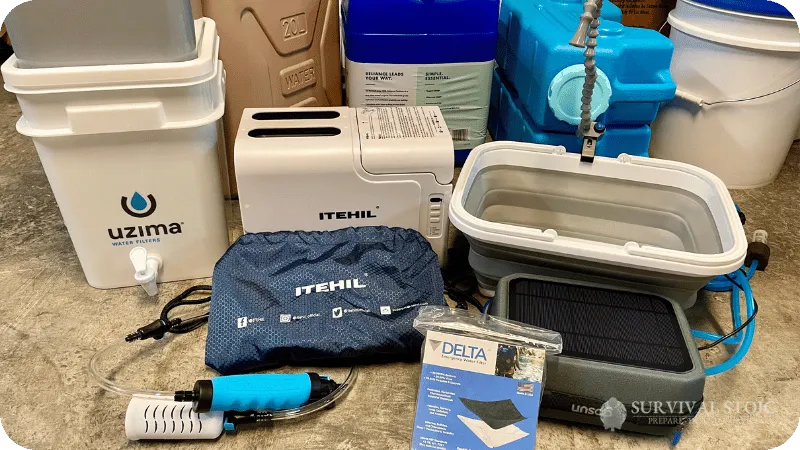
That assumption breaks quickly under real conditions.
What Goes Wrong
Many common food options depend on water:
- Freeze-dried meals require it to be edible.
- Bulk staples require it to be cooked.
- Even basic preparation and cleanup use more water than expected.
At the same time, you’re using water for tons of different activities. Drinking, hygiene, cooking, and cleaning. You need water for a lot. Just storing enough to drink isn’t going to cut it.
If you don’t have enough water, food will need to be rationed, even if you have plenty of it. All the food in the world doesn’t help you if you can’t prepare it.
Our Testing Experience
This showed up clearly when we paid attention to how much water we were actually using.
- Meals that seemed simple required more water than expected. Between preparation and cleanup, it added up quickly. Some meals made a huge mess that required extra water to clean up.
- Water use had to be prioritized. Drinking always came first, which meant less flexibility for cooking.
- Certain foods became less practical under constraints. Not because they were bad, but because they depended too heavily on water.
Restricting water changed how every meal worked within our system. Some recipes that were great before suddenly became not-so-great.
The Fix
Pair every food decision with a water decision. This means measuring how much water your meals require and storing enough water to support how much you need for preparation. Add foods that require little or no water to your system.

A resilient system includes food you can prepare when water is abundant and food you can use when it is not.
This is one reason we emphasize balance. No-prep options like those covered in our bug out bag food guide reduce water dependence. At the same time, efficient meals can still work well when paired with a solid plan.
We’ve reviewed both water storage containers and the best water filtration systems for emergencies to help you round out your plan here.
How to Build a Food Supply That Actually Works
A working food supply is not defined by how much you have. It is defined by how reliably it performs under pressure.
At this point, the pattern should be pretty clear. Most failures are not about missing food. They are about systems that look complete but do not hold up in real use.
The goal isn’t just to stockpile more. It’s to build something that actually works when you need to rely on it.
The Survival Stoic Framework
We use a simple framework to evaluate every part of a food system:
- You will eat it. The food is familiar enough and varied enough that you will actually finish it.
- You can prepare it. It works with limited time, limited fuel, and limited water.
- It stores correctly. It holds up under your actual storage conditions, not ideal ones.
- It rotates consistently. It stays part of your normal life instead of sitting untouched.
If a food fails any one of these, it weakens the system.
How the Pieces Fit Together
A reliable setup is layered, not optimized around a single idea. You’re combining
- foods that are efficient to store
- meals that are easy to prepare
- options that require no preparation at all
Each layer solves a different problem. Together, they have enough flexibility to overcome constraints that might pop up in an emergency.
This is why we consistently recommend a mixed approach. Bulk foods stored properly using methods from our how to use Mylar bags provide long-term stability. Ready-to-use meals from our best emergency food kits guide simplify preparation. No-prep options like those in our best MREs guide cover the moments when cooking is not realistic.
The Practical Standard
When you look at your current setup, ask a few simple questions:
- Could I eat this for several days in a row without forcing it?
- Could I prepare this if fuel and water were limited?
- Would my family actually eat this without resistance?
- Do I use and replace this regularly?
If the answer to any of these is no, that is where your system needs some adjusting.
If I Could Start Over
I would build a working system first. Not a full stockpile.
It is easy to get pulled toward volume early. More food feels like more security. In practice, the opposite is often true. The more you buy before you understand your system, the more you lock in mistakes.
If I were starting at zero again, I would focus on usability before quantity.
What I Would Do First
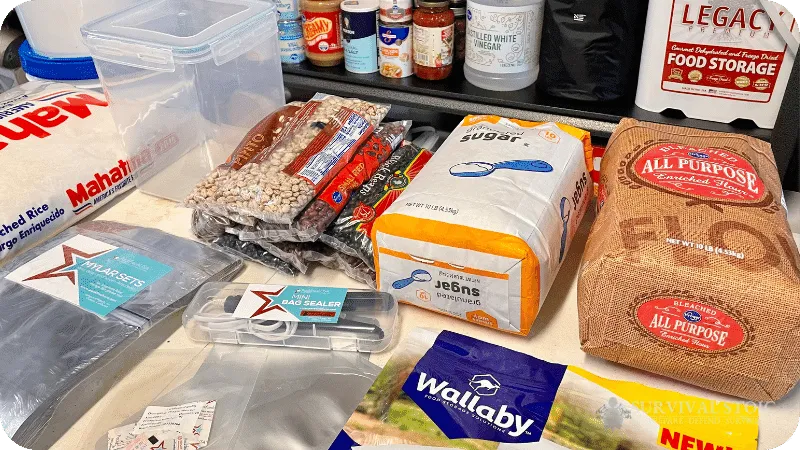
I would start at the grocery store.
Not because it is perfect, but because it is familiar. You already know how to use the food, how your family responds to it, and how it fits into normal routines.
From there, I would build a few days of shelf-stable meals I know we will actually eat and choose foods that require minimal effort to prepare. I’d actually prepare the food for my family and pay attention to what they actually ate.
Once that baseline is working, I would extend it gradually. A couple of weeks. Then a full month. Always testing, always adjusting.
What I Would Add Next
After the basics are solid, I would layer in convenience. This is where ready-made options start to make sense. They aren’t the foundation, but they work as a support.
- meals that simplify preparation
- options that reduce fuel and water demands
- a few no-prep foods for when nothing else is realistic
Convenience becomes valuable once I know the system is already working.
What I Would Do Differently

There are a few things I would avoid early on:
- I would not start with large quantities of bulk staples. They are useful, but only once you are set up to use them consistently. Now, I regularly store rice and beans long-term. But if you don’t know how to prepare them, this is a waste of time.
- I would not rely on a single type of food. It creates blind spots that show up later.
- I would not buy a large kit without testing smaller portions first. It is too easy to commit to something that does not hold up. I’ve bought plenty of large kits full of meals that I just don’t like.
The Core Shift
The biggest change would be how I think about the process. I would treat food storage as a system I use, not a reserve I avoid touching. This shift helps you waste less and build something that actually works.
Bottom Line
Most food stockpiles do not fail because of a lack of food. They fail because they were never built for real use.
The problems are consistent. Food that was never tested. Meals that become exhausting after a few days. Plans that assume unlimited water, fuel, and patience. Systems that sit untouched until they are needed, and then feel unfamiliar or difficult to use.
A working food supply is built around reality, not assumptions.
If you focus on a few core principles, most of these mistakes disappear. Choose food you will actually eat. Build in variety. Plan for limited resources. Keep your system active through rotation. Make sure it works for your whole household, not just on paper.
You are not trying to build the biggest stockpile. You are trying to build one that holds together when everything else does not.
If you want a structured path to build this out, our survival food hub follows the same system step by step.
Join our email list, and we’ll send you practical guides, tested setups, and real-world lessons as we refine our own systems. No fluff. No hype. Just what actually works.
Get the next step delivered to you.
