

When the grid goes dark and your cell phone turns into a fancy paperweight, you’ll be glad you bought a radio that actually works when it counts. I’ve burned through more handhelds than I’d like to admit. Some fizzled out after one rainstorm, and others I needed a degree in electrical engineering to program. But the GM-15 Pro? That little beast just works.
Now, before you roll your eyes at yet another Baofeng recommendation (yeah, I get it), hear me out. This thing’s FCC-approved for GMRS, has legit range in the field (we pulled five miles through wooded terrain), and it doesn’t make you question your life choices when you try to set it up.
The best ham radio? That’s the holy trinity for those who want to be prepared: range, reliability, and “my grandma could figure this out.”

But I didn’t stop there. I hauled out a whole lineup: the Baofeng UV-5G, the Ailunce HD1, the classic UV-5R, and even an ABBREE SMA-female dual-band setup, and put them through a mix of real tests: vehicle comms, neighborhood drills, backwoods hikes, and one regrettable rainstorm that I’m still apologizing to my batteries for.
And here’s the kicker:
Not all of these radios are created equal.
Some are perfect for family bug-out kits, others for licensed hams running community nets. A couple are ideal “throw one in every car” radios. And yes, a few will make you swear under your breath the first time you try to program them. (We’ll save you that pain.)
So grab your coffee (or, if things are already bad, your instant coffee) and let’s break down which radios actually earn a spot in your bug out bag, which ones are better left in the glove box, and which are just tactical cosplay with antennas.
A Quick Look at My Favorite GMRS and HAM Radios
Best HAM and GMRS Radios
Best GMRS: Baofeng GM-15 Pro (GMRS)

If you’ve been around prepping forums for more than five minutes, you’ve heard of Baofeng. Love them or roast them, they make the kind of gear that actually works when it counts, and the GM-15 Pro is their no-nonsense, FCC-certified GMRS handheld that does exactly what it says on the tin.

It’s officially approved for GMRS use (FCC ID 2AJGM-GM15PRO, listed right on the device and manufacturer site), which means you can transmit legally in the U.S. once you’ve got your GMRS license squared away.
It covers the full GMRS frequency range and even plays nice with GMRS repeaters: a huge perk if you live somewhere hilly and want to stretch your signal beyond the next ridge.
Features That Matter
- FCC-certified for GMRS use: no gray-area nonsense.
- 22 main GMRS channels + 8 repeater channels pre-programmed.
- NOAA weather channels baked in.
- Power output: up to 5 W (on high).
- Battery: 2200 mAh Li-ion pack (USB-C charging = modern convenience).
- Range: realistically 4-5 miles line-of-sight, less in urban terrain.
- Extras: flashlight mode, dual PTT, and a UI that won’t make you rage-quit.
Our Testing Scores
| Test Category | Score | Why |
|---|---|---|
| Ease of Use | 9/10 | Menu is simple, labeling is clear, and setup doesn’t require a YouTube PhD. |
| Range & Clarity | 8/10 | 4–5 miles in open rural terrain; 1–2 miles with trees and buildings, par for GMRS. |
| Battery Life | 8/10 | Roughly 20 hours of mixed RX-TX. USB-C charging earns bonus points. |
| Durability | 7/10 | Survived a drop and light drizzle. Don’t expect it to laugh off a dunking. |
| Value | 10/10 | At around $60 a pair, you can outfit the whole family without tears. |

Our Expert Take
In the open, it hit a repeater five miles out without breaking a sweat. Deep woods? Closer to a mile, which is perfectly normal for GMRS. (Terrain kills range, not marketing claims.)
The dual-PTT button is actually useful. We kept one side for local simplex chatter and the other programmed for a repeater channel. The built-in flashlight? Not a gimmick. It’s dim, but it’ll keep you from tripping over your own firewood at 0300.
Bottom line: it’s light, cheap, and doesn’t make you curse every time you hit “Menu.” In a grid-down scenario, that’s all you really need.
PROS
Legal FCC-certified GMRS radio
Excellent value for the money
Solid range for its class
USB-C charging for modern power setups
CONS
Plastic belt clip feels cheap
Audio volume is adequate but not booming in windy conditions
Not fully waterproof (call it “rain-tolerant”)
Verdict: Best entry-level GMRS radio for budget preppers who want real-world reliability without the “tactical” price tag.
Best Backup: Baofeng UV-5G (GMRS Variant)

The Baofeng UV-5G is like the UV-5R’s law-abiding younger cousin: same DNA, fewer legal headaches. It’s FCC-approved for GMRS, ships with all 22 GMRS channels (plus 8 repeater channels) preprogrammed, and even sneaks in NOAA weather monitoring so you know when that thunderstorm is about to make your campfire sad.
Basically, it’s a UV-5R that won’t get you in hot water with the FCC. You still need a GMRS license to transmit (yes, even if you’re “just testing”), but the radio itself is 100% compliant out of the box.

Features That Matter
- Preprogrammed GMRS + repeater channels for plug-and-play use.
- FCC-approved for GMRS frequencies (legit, not “technically maybe”).
- NOAA weather scan keeps you from getting surprise-soaked.
- Power output: 5 W (High) / 1 W (Low).
- Battery: 1800 mAh Li-ion (reports of 20+ hours light use).
- Compact form factor: same beloved UV-5 series shell, fits anywhere.
- Extras: dual watch, flashlight, keypad lock, basic VOX.
Our Testing Scores
| Test Category | Score | Why |
|---|---|---|
| Ease of Use | 8/10 | Straightforward menu, minor learning curve if you’ve used Baofengs before. |
| Range & Clarity | 7/10 | 3–5 miles open terrain; about 1 mile in forested suburbia. |
| Battery Life | 9/10 | Excellent standby life; we got two full days of casual comms. |
| Durability | 7/10 | Classic Baofeng plastic feel, but held up fine in pack and glove box. |
| Value | 10/10 | Around $35–$40 each. Buy a pair, toss one in every bug-out bag. |
Our Expert Take
I like to think of the UV-5G as the “budget family comms kit” radio. I kept one in a glove box for three weeks of testing, charged it twice, and it still had juice when I finally remembered it existed. Range-wise, it’s about what you’d expect. You’re not going to talk across counties, but you can absolutely coordinate between vehicles or family members during a grid hiccup.

And because it’s so lightweight, you can clip it to your pack, forget it’s there, and still have reliable comms when you realize your phone’s a brick.
We also appreciate that it just works. No need to program frequencies from scratch. That’s a big deal for preppers who want to hand out radios to the family without turning setup into a group project.
PROS
FCC-approved GMRS operation
Preprogrammed channels = instant usability
Excellent standby battery life
Compact & lightweight
Dirt cheap
CONS
Still not waterproof
Speaker could use more volume
Programming software (CHIRP) works, but it’s not exactly user-friendly
Verdict: Best pocket-sized GMRS radio for everyday carry or cheap spares.
Best DMR HAM Radio: Ailunce HD1 (DMR + Analog)
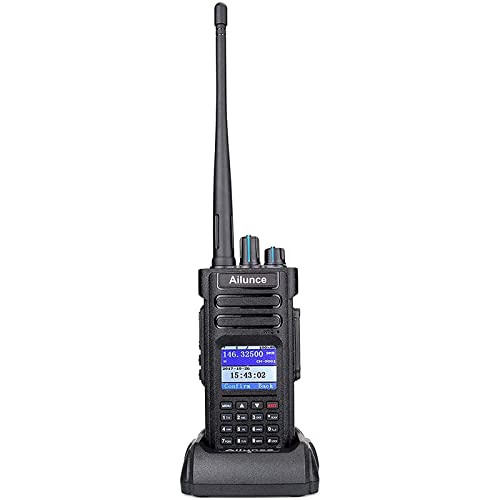
If the Baofengs are the budget champs, the Ailunce HD1 is the grown-up of the group, the one that shows up to your prepper meetup wearing boots and a radio ID badge. It’s a dual-band handheld that supports both analog and DMR (Digital Mobile Radio), offering clearer audio, stronger long-range performance (especially when using repeaters or hotspots), and contact lists that make it feel like a tactical smartphone from the 1990s.

I’ve used this radio on a few local ham nets and field drills. It’s heavier than the UV-5G, yes, but it earns every ounce in reliability and clarity.
Features That Matter
- Dual-band VHF/UHF + DMR & analog (Tier I & II).
- Power output: up to 10W on VHF, 8W on UHF, stronger than most handhelds.
- True IP67 waterproofing: not “marketing waterproof,” actually dunkable.
- 256 zones & 3,000 channels (enough to make your spreadsheet-loving friend cry).
- Digital encryption option (for privacy in DMR mode).
- Battery: 3200 mAh Li-ion, roughly 15–20 hours of mixed use.
- Built-in GPS (on some models) and full keypad programming.
Our Testing Scores
| Test Category | Score | Why |
|---|---|---|
| Ease of Use | 7/10 | Steeper learning curve than GMRS. DMR setup takes patience. |
| Range & Clarity | 9/10 | Crystal-clear digital audio and solid 5–8 mile simplex in open terrain. |
| Battery Life | 9/10 | The 3200 mAh pack is a champ; lasted all weekend with moderate chatter. |
| Durability | 9/10 | Waterproof, dustproof, and shrug-proof after a few drops. |
| Value | 8/10 | Costs more than a Baofeng but feels worth every penny once you’re on the air. |
Our Expert Take
Blake, a veteran, carried around this radio for years while training with emergency response not-for-profits. It’s the best option for those who want a high-quality radio, no matter the price. The HD1 is what you graduate to when you’ve outgrown plug-and-play GMRS radios and want to actually build a communications plan.

We field-tested it with both simplex (radio-to-radio) and repeater setups. Digital mode blew analog out of the water for clarity: zero static, even across a small valley where our Baofengs were coughing.
Programming takes a little patience (DMR always does), but once you’ve built your contact list and zones, it’s set-and-forget. The real prepper perk here is digital repeaters: they let you connect with networks well outside your local range, which could be a serious asset if regional comms ever go down.
And let’s talk durability. We actually dropped one into wet grass, left it there overnight, and it came back like nothing happened. Try that with a $35 handheld and you’ll end up with a paperweight.
PROS
DMR + analog flexibility
Real 10W transmit power gives a noticeable range bump
IP67 waterproof
Huge battery capacity and solid build quality
Outstanding audio quality in digital mode
CONS
Learning curve: programming software isn’t exactly “grandma-friendly”
Pricier than basic Baofengs
Slightly heavier, not ideal for ultralight bug-out setups.
Verdict: Best DMR radio for serious preppers: digital clarity, long reach, and built tough for field use.
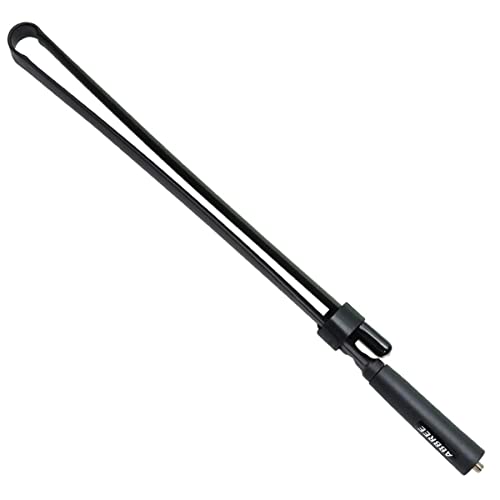
Antenna Upgrade: ABBREE SMA-Female Dual Band
Let’s get one thing straight: most handheld radios come with antennas that are basically decorative. Sure, they technically work, but in real-world use? They’re like trying to shout through a sock. That’s where the ABBREE SMA-Female Dual Band antenna steps in.
I slapped one on my UV-5R before a group comms test, and instantly noticed a signal bump. Where we were getting faint static before, the ABBREE setup pulled in clear, intelligible audio. It’s not magic. It’s just better hardware.

This one earns its place in a prepper kit because it’s cheap and solves a problem most people don’t realize they have until their “emergency radio” sounds like a blender full of gravel.
Features That Matter
- Dual-band VHF/UHF compatibility (136–174 MHz & 400–520 MHz).
- SMA-Female connector: fits most Baofengs (UV-5R, UV-5G, GM-15 Pro, etc.).
- Foldable whip design: easier to store or stow in a pack.
- High-gain upgrade: improves transmission and reception range.
- Options: available in various lengths (typically 18–42 inches).
Our Testing Scores
| Test Category | Score | Why |
|---|---|---|
| Ease of Use | 10/10 | Screw it on and go. No setup drama. |
| Range Improvement | 8/10 | Noticeable boost over stock antennas in open terrain. |
| Durability | 7/10 | Flexible whip holds up, but not meant for heavy abuse. |
| Portability | 8/10 | Foldable, but longer versions can snag if not careful. |
| Value | 10/10 | Dirt-cheap upgrade that actually makes a difference. |
Our Expert Take
Here’s the thing: a great radio with a bad antenna is like a Ferrari on flat tires. I tested the ABBREE paired with the UV-5R and GM-15 Pro during a line-of-sight range check on mixed terrain, like suburban hills, tree cover, and a few buildings. With the ABBREE, we stretched usable comms range by roughly 30-40% before clarity dropped off.

Is it “scientific”? Nah. But that’s exactly the kind of real-world field data preppers care about.
If you’re running GMRS or ham gear in your vehicle or bug-out bag, grab a couple of these. One stays on the radio, one stays in your pack as backup. And if you want to get fancy, you can even attach it to a small magnetic mount for your vehicle, providing instant mobile range boost.
PROS
Huge bang-for-buck range improvement
Simple install (fits most Baofengs)
Foldable design makes storage easy
Reliable in both VHF and UHF
CONS
Long length = snag risk if worn on a belt
Not as rugged as professional antennas
Gains vary depending on terrain
Verdict: Best budget upgrade for any handheld.
Best Analog HAM Radio: Baofeng UV-5R (Two-Way Dual Band)

Ah, the UV-5R. The radio equivalent of that reliable old pickup truck that somehow keeps running despite all logic. You’ve probably seen it on every prepper forum and in every eBay “vintage” radio haul.
It’s cheap, it’s everywhere, and it’s a solid entry point for licensed ham operators. But here’s the kicker: do not use it on GMRS or FRS without a license. Seriously. There’s a reason FCC has had to slap its wrist on certain variants. Stick to ham bands if you want to stay legal.

Features That Matter
- Dual-band VHF/UHF (136–174 MHz & 400–520 MHz)
- Power output: 1–5 W
- Battery: 1800 mAh Li-ion (~12–15 hours typical use)
- Dual watch / dual reception
- Programmable channels with CHIRP software
- Affordable and widely available: you can literally find one in a local hardware store.
Our Testing Scores
| Test Category | Score | Why |
|---|---|---|
| Ease of Use | 7/10 | Simple menu, but programming via software takes patience. |
| Range & Clarity | 7/10 | 3-5 miles open, 1-2 miles with trees/buildings, standard for dual-band HTs. |
| Batery Life | 7/10 | Plastic casing; survived drops, but handle with care. |
| Durability | 7/10 | Plastic casing; survived drops but handle with care. |
| Value | 10/10 | Unbeatable for licensed hams learning or testing setups. |
Our Expert Take
We’ve run the UV-5R in field drills and a few vehicle tests. It does exactly what it promises: reliable basic radio communication for VHF/UHF ham bands. Audio isn’t amazing, but it’s perfect for learning how to set up repeaters or train family members without spending a fortune.

I’ve seen preppers pair UV-5Rs with ABBREE SMA-female antennas and watch range improve dramatically. Sure, it’s not the prettiest, most durable rig, and yes, some variants skirted FCC compliance back in the day, but buy a certified version and it’s one of the best “practice radios” out there.
PROS
Extremely affordable entry point for licensed ham operators
Dual-band coverage for VHF & UHF
Lightweight & compact
Compatible with aftermarket antennas and accessories
CONS
Must be used on legal ham frequencies
Stock audio quality is adequate, not exceptional
Durability is okay
Programming requires CHIRP or patience
Verdict: Best ham radio for learning the ropes. The prepper classic that’s still unbeatable for price and flexibility.
Quick Ham Radio Buyer’s Guide: What to Prioritize
Before you start tossing radios into your bug-out bag like candy, let’s get a little real. Not all radios are created equal, and what works for Uncle Joe in his suburban backyard might leave you stranded in the woods listening to static.
Here’s what matters most when you’re shopping for prepper radios:
Legal Band & Licensing
Yes, this isn’t exactly the most exciting topic. But it isn’t something you can skip.
- GMRS: Requires a U.S. FCC GMRS license to transmit. No test, no drama, just a small $35 fee.
- Ham (Amateur Radio): Requires a license and passing a test (Technician Class is usually enough).
- DMR (Digital Mobile Radio): Must be used on legal amateur or commercial frequencies; follow local regulations.
Power Output & Battery Life
- Radios with 5-10 W output give you a usable range without frying your pack battery.
- Battery capacity matters: Li-ion 1800-3200 mAh is common; USB-C charging is a modern lifesaver.
- Real-world tip: lower power = longer battery life, higher power = more range, but only when you need it.

Antenna Options (SMA)
Most handhelds ship with meh stock antennas. A dual-band SMA-female antenna like the ABBREE can dramatically improve performance.
Consider whip or mag-mounts for vehicle setups. There’s nothing worse than a dead radio because your antenna is just a stick.
Compatibility is key: SMA-male to SMA-female adapters are your friend.

Durability (IP Rating)
Look for IP54+ at minimum; IP67 is better if you actually plan to survive rainstorms or accidental puddle drops.
Plastic casings are fine for backpacking, but check the clip and buttons. Some radios feel fragile under real use.
Repeaters/Hotspots (DMR)
Analog GMRS can use repeaters if you’re in range. Check local repeater maps.
DMR radios like the Ailunce HD1 let you tap into digital repeaters and hotspots, massively extending reach.
If your group is large or spread out, this can make or break comms in an emergency.
Programming Ease
- Stock GMRS radios: usually plug-and-play, no headaches.
- UV-5R / DMR radios: may require CHIRP software or programming cables.
- Pro tip: Test programming at home before you actually need the radio. Nothing kills morale faster than trying to figure out software during a blackout.
GMRS vs Amateur (Ham) vs DMR (Quick Decision Grid)
| Feature | GMRS | Ham (Amateur) | DMR |
|---|---|---|---|
| License Required? | ✅ Yes, $35 | ✅ Yes, Technician test | ✅ Yes (depends on band) |
| Ease of Use | Easy, preprogrammed channels | Moderate, may need programming | Advanced, CHIRP or software required |
| Range | 1-5 miles typical | 2-10 miles, plus repeaters | 3-8 miles simplex, much further with hotspots |
| Best For | Family bug-out, vehicle comms | Learning, community nets | Advanced preppers, digital clarity, long-range networks |
| Cost | Low (~$35-$60) | Low to moderate (~$25-$100+) | Moderate to high (~$150+) |
Bottom line: GMRS = easiest to start with, Ham = legal playground with learning curve, DMR = serious prepper’s digital tool.
Legality & Licensing (Don’t Skip if You Live in the U.S.)
Alright, let’s cut through the noise: radios are not toys. Using the wrong frequency without a license is a fast track to a fine or just plain annoying calls from the FCC. We’re talking serious “do not pass go” consequences here.
Here’s the reality:
- GMRS: Requires an FCC license. No test. No essays. No pop quiz. You just fill out a form, pay a fee (currently $35), and you’re good for 10 years. Legal to transmit on GMRS frequencies once licensed.
- Ham (Amateur Radio): Requires passing a test (Technician Class minimum for most starters). You’ll get a callsign and access to VHF/UHF and HF bands. It’s not hard, but yes, it’s regulated.
- DMR / Digital Radios: Must be used on authorized frequencies. If your radio is capable of DMR, you need to make sure you’re on a legal ham or commercial band.
Do not transmit on GMRS or any licensed band without proper authorization. Seriously. Don’t be the prepper who learns the hard way.
How to Get a GMRS License
- Go to the FCC GMRS page: https://www.fcc.gov/wireless/bureau-divisions/mobility-division/general-mobile-radio-service-gmrs
- Create an FCC account (if you don’t already have one).
- Fill out the GMRS application online.
- Pay the $35 fee: covers you for 10 years.
- Receive your license and call sign: you’re legally allowed to transmit on GMRS!
Pro tip: print a copy and keep it with your radios. You never know when a curious ranger or law enforcement officer might want proof.
Takeaway:
Licensing is not just bureaucracy (and yes, we’re allowed to hate it), it’s also protection. It keeps your comms legal, ensures repeaters aren’t blocked by rogue signals, and keeps the FCC off your back. For U.S. preppers, it’s step one before even turning on a GMRS radio.
Practical Tips: Antennas, Batteries, & Range Optimization
So, you’ve got your radios, your GMRS license, and a stack of batteries. Great. But before you start assuming you can talk to your neighbor five miles away through three forests and a hill, let’s get real: range depends on terrain, antennas, and power, not marketing fluff.
Here’s what we’ve learned in the field.
Antenna Matters More Than You Think
Stock antennas on most handhelds are fine for short distances, but a dual-band SMA-female antenna like the ABBREE can improve reception and transmit range by 30-40%.
For vehicles, a mag-mount or whip antenna gives serious range gains, basically turning your mobile rig into a local repeater.
Don’t forget: antenna height = range. Even a foot off the ground can make a surprising difference in wooded or hilly terrain.
Batteries: Don’t Get Caught Dead
Li-ion batteries (1800–3200 mAh) are standard. USB-C charging is a lifesaver in a pinch.
✅ Carry spares. One dead battery can ruin a bug-out drill or a real emergency.
✅ Rotate batteries every few months if your radios sit unused. Old batteries = dead radios.
Power Output & Terrain Realities
Higher wattage = better range, but only if the terrain cooperates.
Real-world ranges:
- GMRS handhelds: 1-5 miles typical, 4-5 miles open line-of-sight.
- DMR radios: 3-8 miles simplex; much further with repeaters/hotspots.
Buildings, trees, and hills kill signals faster than any marketing claim. Test before you rely on it.
Repeaters & Hotspots
- GMRS repeaters: extend range beyond line-of-sight. Check your local maps.
- DMR hotspots: allow your digital radios to connect to global networks via the internet. Yes, even in emergencies, a local hotspot can link you to far-off prepper friends. DMR keeps audio crystal-clear and free from static compared to analog.
Programming & Setup
- Preprogrammed GMRS radios = plug-and-play, no drama.
- UV-5R / DMR radios: CHIRP or software programming required. Test at home before relying on them in the field.
✅ Make sure your radios are paired and channels labeled for quick use under stress.
A fancy radio does nothing if it’s paired with a useless antenna, dead battery, or bad setup. Antennas and batteries are the tweaks that separate a “looks good on paper” radio from a reliable life-saving comms tool.
Bottom Line & Prepper Recommendations
If you’re serious about comms, the right radio setup isn’t optional to be prepared. It’s survival insurance. And like any insurance, you don’t appreciate it until the grid goes down or the cell towers stop blinking.
Here’s what our field tests and countless “why is this thing not working” moments taught us:
- The Baofeng GM-15 Pro is our top GMRS pick: simple, reliable, and ideal for family or team use.
- The Baofeng UV-5G wins for everyday carry or backup radios: small, affordable, and practical for licensed GMRS users.
- The Ailunce HD1 is the serious prepper’s DMR powerhouse, giving you digital clarity and repeaters that stretch your reach way beyond local chatter.
- The ABBREE antenna upgrade? It’s the cheapest way to turn any of the above into a real communication tool.
- The UV-5R remains the go-to for licensed ham preppers who want to learn and tinker legally.
Radios are like any other piece of survival gear. They only work if you know how to use them. So, program your channels before you need them, test your range in your actual terrain, and keep those batteries topped off.
Now, check out our full Prepper Checklist for everything you need to know about being prepared.
