

A good survival watch can be the difference between finding your way home and getting completely turned around in unfamiliar terrain.
Over the past 25 years, I’ve owned and used most of the major watch brands on this list while hiking, traveling, and testing new models as they’re released. For this guide, we reviewed more than 30 watches to find the best survival watches available today, balancing navigation capability, durability, battery life, and real-world value.
The Garmin Instinct 2 Solar still stands out as the best overall option for most people, but depending on how you plan to use your watch, another option here may suit you better.
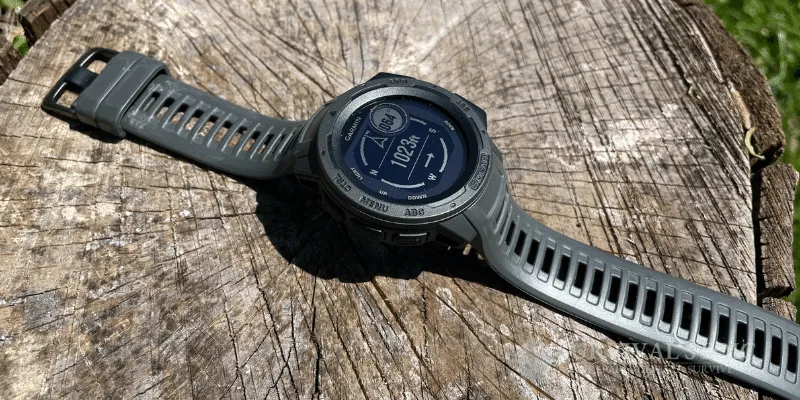
In this update, we added the Suunto Vertical 2, which quickly became one of our favorite options for off-grid navigation. We also reviewed pricing and availability across all models to make sure our recommendations still make sense today. Some watches that used to be top-tier options are no longer the best value as newer models have improved battery life, GPS accuracy, and mapping features. Of course, we’ll continue to update as new models come out.
Quick Comparison of Our Favorites


If I Could Only Buy One Survival Watch
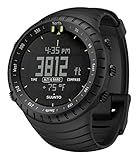
If I had to choose just one survival watch to wear every day, it would still be the Garmin Instinct 2 Solar.
It strikes the best balance between navigation capability, battery life, durability, and price. The built-in GPS, ABC sensors, and trackback navigation give me confidence I can always find my way back, while solar charging means I rarely have to think about battery life.
It’s also comfortable enough to wear daily, which matters more than most people think. The best survival watch is the one you’re actually wearing when something goes wrong.
There are watches on this list with better maps or more advanced features, but they usually cost significantly more or sacrifice battery life. For most people, the Instinct 2 Solar gives you everything you realistically need without overpaying.
If maps directly on the watch are your top priority, the Garmin Fenix series may be better choices. But as an everyday survival watch, the Instinct 2 Solar remains the most practical option for most people.
Best Survival Watch Reviews
Garmin Instinct 2 Solar – Best Overall
- ABC Sensors: Yes, 3-axis electronic compass
- GPS Systems: GPS, GLONASS, Galileo
- Maps: No
- Water Resistant: 100 meters
- Smartwatch Functionality: Yes
- Battery Life: 30 hours in GPS mode
- Solar Charging: Yes
- Size: 40mm, 45mm, 50mm
- MSRP: $399 (typical price $299)
This watch is packed with features. It is built and tested to military standards, so it is durable. Along with ABC sensors for navigation, it has built-in GPS. I like the trackback feature that shows me how to get back to a waypoint the same way I came. It is also a solar watch, so recharging the battery is never an issue.
It checks all our boxes, and the great price makes it our top pick.
The Instinct 2 Solar introduces more features and better battery life over the original Instinct Solar watch. I have been testing the original model since it came out, and it is still the watch I wear daily.
While it may seem like a small detail, I like that I can change the information displayed on the watch’s “Home” screen. There are many options to choose from, even the current temperature outside.
Quality
Garmin is known for its quality and durability and is a pioneer in GPS technology. They manufacture aviation products that can not fail and bring this knowledge to their watches.
Durability
This watch has a lightweight fiber-reinforced polymer case and beefy strap pins built to military standards. The lens is chemically strengthened and recessed, surrounded by a hefty bumper. The buttons are flat, low profile, and lower on the case near your arm for protection. It is also water resistant down to 100 meters.
Navigation
This watch has ABC sensors, a 3-axis electronic compass, and full GPS capability with GPS, GLONASS, and Galileo systems. You can store waypoints and utilize the “trackback” feature. This will guide you along the same route as you return to your vehicle, home, or trailhead.
The watch also includes a reference point mode that tells you your heading and distance to any known waypoint. There is even a hunting and fishing mode where you can store your hunting blind location or favorite fishing spot.
Smartwatch Capability
The Garmin Instinct 2 Solar has full smartwatch capability when paired with your smartphone. This includes smart notifications, access to your calendar, and automatic incident detection. The Garmin Connect app also connects to the watch for full access to health and movement data such as workout data, heart rate graphs, Pulse OX, and various specific sports applications.
It even has a golf mode to show you the hole you are on and the distance to the green.
Some people have quirky issues with the smartwatch notifications and the outside temperature depending on their phone model. Going into the Garmin Connect app and resyncing seems to help this issue. I have experienced this a few times, it seems to happen when my phone is away from my watch for awhile.
After using this watch for nearly one year, I still get strange notifications sometimes from Facebook for example. I have found that I need to power it down every so often and then it syncs back up fine.
Battery Life
This watch is a solar watch and can also be charged by a special cable that connects to a standard USB port. In smartwatch mode, the battery can last up to 28 days. The battery life is unlimited after about 3 hours of sun exposure daily. This is a great feature for a survival watch; it never needs to be charged. In my experience I find that my watch has about a 25% charge left after two weeks.
GPS mode does use more power than smartwatch mode. Depending on the time the GPS is active and the mode used, the battery will last at least 48 hours. Numerous power-saving modes are available, with an Expedition GPS Activity mode with unlimited battery life with solar charging.
Size
The Garmin Instinct 2 Solar now comes in three sizes, 40mm (2S), 45mm (2), and 50mm (2X). Since most survival watches in our list are fairly large, the smaller 40mm size is a great option for people that prefer a smaller watch.
Recommended for:
The Garmin Instinct 2 Solar is a great all-around watch packed with features at an affordable price. Solar charging allows unlimited battery life, and the smartwatch features make this a watch you can use daily. The size and color options allow you to choose one that fits your preferences. A Tactical and Surfing version is also available, so something for everyone.
There is a learning curve to understanding all the menus and what the buttons do. It is fairly intuitive, but putting a lot of info on the screen is impossible on a watch. Plan to spend some time with the manual and practice with the watch before using it.
I purchased the original Instinct Solar before this one came out. It is still going strong and is a great watch. With even more battery life and the added sports features, I do not hesitate to recommend the Instinct 2 Solar. At a similar price to a basic smartwatch, it is a no-brainer.
It is also one of the primary items we recommend in our Survival Gear List Strategy Guide.
PROS
GPS Capability
Battery Life
Smart Features
Good Value, Affordable
CONS
Learning Curve
No Touchscreen
Notification Issues
Coros Vertix 2S – Best Battery Life
- ABC Sensors: Yes, 3-axis electronic compass
- GPS Systems: GPS, GLONASS, Galileo, Beidou, QZSS
- Maps: Yes
- Water Resistant: 10 ATM
- Smartwatch Functionality: Yes
- Battery Life: 118 hours in GPS mode
- Solar Charging: No
- Size: 50mm
- MSRP: $699
The Coros Vertix 2 is a full-featured adventure and survival watch with a color touch screen, GPS capability, built-in maps, and health monitoring. What sets this watch apart from all the others is the battery life. Even with these features, it will last up to 118 hours in standard GPS mode.
The GPS in this watch is one of the best and can connect to all five satellite systems in dual frequency. This lets you get a GPS signal under heavy cover or in a deep mountain valley.
I particularly like the scroll function using the button on the watch’s right side. You simply roll the button, like using the crown button to wind an old watch. You can do this easily with one finger; it is quick and intuitive.
The large screen is also nice at 1.4” and 280×280 resolution. It can display up to 8 data items simultaneously, so you don’t have to flip between screens to find what you need.
Quality
Coros is a fairly young company, but they have been dedicated to building the best GPS watch for outdoor enthusiasts and athletes. They offer a 2-year warranty, are based in the US, and are known to have great customer support.
Durability
The Coros Vertix 2s has a Titanium Alloy case and bezel. The strap is a tough nylon/silicone combination, and the buttons are recessed into guided tubes. The main scroll button worries me since it is exposed, but most people have not had an issue with it. This watch feels like it could take a beating with no issue.
Navigation
This watch has a full ABC sensor array along with GPS. It can communicate with all 5 GPS systems (GPS, GLONASS, Galileo, Beidou, QZSS), so it will function anywhere in the world. It also has dual frequency capability, so satellite reception is better than most GPS watches.
A full global landscape map comes preloaded on the watch, and you can display the map on the 1.4” color screen. You can zoom in with the scroll button or pan the map on the touch screen. This setup is very easy to use and intuitive, much like your phone or PC. Topographical maps can be downloaded by region for free.
Smartwatch Capability
Full Smartwatch capability includes notifications, health monitoring, sleep and activity tracking. There are also multiple workout modes so you can monitor your training.
Battery Life
Battery life is where this watch shines. In standard smartwatch mode, under daily use, it will last for 46 days. In normal GPS mode, it will last for 118 hours; in Dual frequency GPS mode, it will last up to 43 hours. It does not have solar charging capability but can be fully charged with the included cable in less than 2 hours. In an extended power outage, you must have the cable and a power source to charge it.
Size
This watch is 50mm in diameter, so on the larger end of the other watches we have on the list. The screen is nice and large to display maps. Because of this, you sacrifice some compactness. Some people with smaller arms feel this watch is too big for them.
Recommended For:
The Coros Vertix 2 is for someone looking for a full GPS watch with maps and great battery life. This watch is on the higher end of the price range, but with all the features, there certainly is value. It could have been our top choice if it had solar charging capability and multiple sizes.
PROS
Battery Life
On-Board Maps
Dual Freq GPS
CONS
No Solar Charging
Large Size
Price
Garmin Fenix 7 Pro – Best Maps
- ABC Sensors: Yes, 3-axis electronic compass
- GPS Systems: GPS, GLONASS, Galileo
- Maps: Yes
- Water Resistant: 10 ATM
- Smartwatch Functionality: Yes
- Battery Life: 57 hours in GPS mode
- Solar Charging: Yes
- Size: 42mm, 47mm, 51mm
- MSRP: $899 (typical price $649)
The Garmin Fenix 7 Pro is the next step above our top pick. It includes all of the same features that the Instinct 2 has but adds a beautiful color touchscreen. It is still tested to military specs for shock, temperature, and water resistance, so the screen does not compromise durability.
The screen allows the watch to display standard, topographical, and even golf course maps in color. At a glance, you can see exactly where you are and where you are headed. This is an advantage over other survival watches since no external map is needed to plot a course or find your position.
Three sizes are available: 42mm, 47mm, and 51mm. Multiple colors and bands are also available, making this watch fully customizable to your preferences.
Durability
The Garmin Fenix 7 Pro is tested to military specs, so you know it is durable. The case is a fiber-reinforced polymer, and the round guided buttons are guarded with metal tubes to prevent damage. The strap is interchangeable with Instinct 2.
Navigation
This watch includes ABC sensors, GPS, GLONASS, and Galileo satellite capabilities. Full-color maps can be directly downloaded to the watch without a smartphone connection. Basic maps, topographical maps, and even satellite imagery are available. Remember that you have to download these when you have Wifi reception and before you need them.
I think it is nice that you don’t have a phone or computer to download the maps (although you do have to purchase them on a computer first). Note that there is no zoom-in or out function while using the maps, only pan.
Smartwatch Capability
This watch has every smartwatch function you can think of. From smart notifications to your heart rate, it will display the chart of your 50 favorite stocks. The number of workouts and sports functions is as long as my arm. If you are a golfer, it has the maps of 43,000 courses preloaded and a built-in scorecard. This watch is like having a laptop computer right on your wrist.
What I think is cool is that you can download different watch faces from the Garmin Connect store. There are many to choose from, and you can instantly make it look like a different watch. Some have analog watch hands for those that like a classic look.
Battery Life
Since this is a solar watch, the battery life is great. The screen takes more power than the other Garmin watches, you do not have unlimited battery life. There are various power saver modes, so you can manage the battery life more than the Instinct 2 solar in a survival situation. This is the tradeoff of having full maps right on your watch.
In smartwatch mode, it will last 22 days with 3 hours per day of solar charging or 18 days with no solar charging. Like all Garmin watches, you can also charge it with a special cable that is included.
In GPS mode, it will last up to 48 hours with solar charging. In Expedition GPS mode, it will last up to 74 days. Remember that these are just guidelines, and you may experience more or less depending on how much you use them.
Size
The Garmin Fenix 7 Pro has three sizes. The standard model has a 47mm case, the S model has a smaller 42 mm case, and the X model has a 51mm case. With the larger case, you get a larger screen, which is helpful when using the built-in maps. The smaller size is great for anyone with a smaller arm and who does not like a big watch.
Recommended For:
The Garmin Fenix 7 Pro is great for anyone looking for that extra feature of maps right on their watch. If you are into any outdoor activity, from horseback riding to paddleboarding, using your watch for navigation instead of your phone is a great feature.
During a survival situation, the maps will allow you to see what is around you and where you need to go. While not a must-have, the maps are a great feature if you have the extra budget. The battery life is not unlimited, but it is enough even if the power grid is down if you manage how much you use it.
PROS
Touch Screen
Multiple Sizes
Displays Maps
CONS
Battery Life
No Map Zoom
Price
Suunto Vertical 2 – Best Offline Maps for Off-Grid Navigation

- ABC Sensors: Yes (altimeter, barometer, compass)
- GPS Systems: Dual-band GPS (L1 + L5)
- Maps: Yes (full offline topo maps)
- Water Resistant: 100m
- Smartwatch Functionality: Yes
- Battery Life: Up to 65 hours in GPS performance mode (real-world: about a week+ per charge with normal use)
- Solar Charging: No
- Size: 49mm
- MSRP: $599 (steel) / $699 (titanium)
The Suunto Vertical 2 is one of the most capable navigation-first watches I’ve ever worn, and it’s the one I’d pick if offline maps are your top priority but you don’t want to pay premium Garmin Fenix prices.
What makes it special is the combination of full offline maps + a bright AMOLED screen. A lot of watches technically “have maps,” but the Vertical 2 is one of the easiest to actually use in the field because the map detail is clear and readable at a glance. If you spend time hiking, scouting, traveling off-grid, or you simply want a navigation tool you can wear every day, this watch gives you real capability without relying on cell signal.
It also works well as a daily watch. I’ve used it for training, sleep tracking, heart rate, and general daily wear, and it’s comfortable enough that I forget I’m wearing it. The built-in flashlight is another one of those features you think you won’t use until you start using it constantly.
The main downside is that it doesn’t have solar charging, so if your #1 concern is indefinite power during a long grid-down situation, the Instinct 2 Solar still wins. But for anyone who wants the best off-grid navigation experience under $700, the Vertical 2 is a strong pick.
Also see our full detailed Suunto Vertical 2 Review!
Recommended for:
We recommend this watch for hikers, hunters, and anyone who needs off-grid navigation.
PROS
Excellent offline topo maps
Dual-band GPS is fast and accurate
Big, easy-to-read AMOLED display
CONS
No solar charging
Large case (49mm)
Sleep tracking can be inconsistent
Suunto 9 Peak Pro

- ABC Sensors: Yes, digital compass
- GPS Systems: GPS, GLONASS, Galileo, Beidou, QZSS
- Maps: No
- Water Resistant: 100m
- Smartwatch Functionality: Yes
- Battery Life: 40 hours in GPS mode
- Solar Charging: No
- Size: 43mm
- MSRP: $349 (typical price $249)
The Suunto 9 Peak Pro is built with the outdoor adventurer in mind. With over 95 sport modes, it can track any outdoor activity you can think of. With built-in GPS and smartwatch capabilities, it checks all the boxes.
I like the looks of this watch. The slim case and simple design make it one of the cleanest-looking watches on the market. But don’t let the clean design fool you; it is still tested and meets Military spec MIL-STD-810H.
This watch also has a nice touchscreen. This and the intuitive button layout and interface make this watch easy to use.
Quality
Suunto watches are designed and have been made in Finland since 1936. The company started making compasses originally, and are legendary in Europe for building quality products. Later they made the world’s first watch-sized dive computer.
Durability
This watch has a glass fiber-reinforced polymer case and a stainless-steel bezel. The strap is a tough silicone rubber. Since this watch meets military specifications, durability is not in question.
Navigation
With ABC sensors and GPS capability, this watch can get you where you need to go (or not go). It is compatible with GPS, GLONASS, GALILEO, QZSS, BEIDOU systems, so it will work anywhere in the world.
Using the Suunto smartphone app, you can set up routes and plan your day, ensuring you never get lost.
Smartwatch Capability
The Suunto 9 peak pro has full smartwatch capability, including notifications and health tracking. Along with the Suunto app, it is a full training system. For example, you can pair external sensors for running or biking for even more training data.
Battery Life
This watch has a rechargeable battery but no solar charging capability. In smartwatch mode, it will last for 21 days without charging. In GPS mode, it will last at least 40 hours. Charging time is very fast. Most find they can almost fully charge the watch in just 30 minutes.
Size
The smaller size is appealing at 43mm in diameter and is one of the thinnest GPS watches on the market. This is great for anyone with a smaller arm that doesn’t like big, bulky watches.
Recommended For:
The Suunto 9 Peak Pro is great for athletes and anyone who enjoys outdoor sporting activities. This is a watch you can wear every day. It has a superior screen and interface and is a full sport training solution.
As a survival watch, it will help you navigate safely in an emergency. Not having solar charging capability is a big negative for this watch in a survival situation. To rely on this watch for an extended time, it must be paired with an external solar charging power pack.
Update – Suunto has released the new Suunto Vertical that has a 50mm screen. This is a larger watch, but the maps look amazing on it. Take a look at this one if maps are important to you.
PROS
Small Size
Charging Time
Athletic Modes
CONS
No Solar Charging
No Maps
No Screen Bumper
Garmin Tactix 7 Pro
- ABC Sensors: Yes, 3-axis electronic compass
- GPS Systems: GPS, GLONASS, Galileo
- Maps: Yes
- Water Resistant: 10 ATM
- Smartwatch Functionality: Yes
- Battery Life: 89 hours in GPS mode
- Solar Charging: Yes
- Size: 51mm
- MSRP: $1299 (typical price $1049)
The Garmin Tactix 7 Pro is Garmin’s ultimate survival watch. Not only does it have a supreme 1.4” touch screen and full navigation capabilities, but it also includes special tactical features. Features like stealth and night vision modes allow you to read the screen while wearing night vision goggles. It even has a kill switch mode that will wipe the device of all user memory if your security is compromised.
It also includes an aviation mode that allows you to navigate an aircraft straight to a location or waypoint in the worldwide aeronautical database. When paired with your smartphone, you can review aviation weather, including radar, wind, visibility, and more.
It includes all of the advanced features of the Garmin Fenix 7, including over 30 built-in sports apps. You can pair the watch to external sensors for a full training system.
It even has a built-in flashlight that has both white and green LEDs.
The things this watch can do are amazing, and way too much to list here. If you are looking for the ultimate, this is it.
Durability
Built to military specification MIL-STD-810, this watch has a fiber-reinforced polymer case and a titanium rear cover. It is water resistant down to 10 atmospheres. The buttons are metal and guarded to prevent damage. The bezel is titanium and surrounds the recessed lens.
The strap is beefy. 26mm wide and made from braided nylon and tough silicone rubber. Some people have found the included silicon rubber strap uncomfortable and changed it to the Nylon strap that Garmin offers.
Navigation
This watch has full ABC sensors, GPS, GLONASS, and Galileo capabilities. It also has a special Garmin SatIQ mode that automatically identifies the best satellite band depending on the location to save battery life.
You can download full topographical or satellite image maps to the Garmin Tactix Pro. For hunters, you can download public land boundaries to see exactly which zone you are in when you harvest an animal.
Smartwatch Capability
All the smartwatch functions you would expect on a high-end watch are included, with additional apps and widgets you can download from Garmin Connect. Advanced Heart Rate, Pulse Ox, and respiration tracking are logged to give you an overall health snapshot.
It will even give you a report each morning of how you slept, how you are recovering from training and the current weather. This can also be customized.
Battery Life
The Tactix 7 Pro is a solar watch that can recharge in sunlight. In smartwatch mode, it can last up to 28 days before you must recharge it with the included cable. This can be extended to 37 days if exposed to sunlight for 3 hours each day.
In GPS mode, it can last up to 89 hours or 122 hours with solar charging. In expedition GPS mode, it can last up to 139 days.
A full power management widget is included on the watch, and you can turn on and off various features to maximize battery life. In a survival situation, you could manage the battery life to last as long as needed.
Size
This watch is fairly large at 51mm and is only available in this size. If you have smaller arms, this may feel too big for you.
Recommended For:
The Garmin Tactix 7 Pro is for the person that wants it all. Full tactical and aviation capabilities with maps and a hardcore training smartwatch. Instead of buying multiple watches for different activities, just get this one.
But what if you are a long-range shooter and need a built-in ballistics calculator? Sorry, the Garmin Tactix 7 Pro doesn’t have that. But the Garmin Tactix 7 Pro Ballistics Edition does!
However, the price of this watch is the highest on our list. If you are on a budget, the added features may not be worth your investment.
PROS
Many Features
Displays Maps
Touchscreen
CONS
Large Size
Price
Wide Strap
Casio GGB100-1A G Shock Mudmaster

- ABC Sensors: Yes
- GPS Systems: None
- Maps: No
- Water Resistant: 200m
- Smartwatch Functionality: Limited
- Battery Life: 2 Years
- Solar Charging: No
- Size: 55mm
- MSRP: $380 (typical price $315)
As the Casio G-Shock Mudmaster‘s name suggests, this watch is made to take punishment. This is the most durable watch that we could find. It is a legendary G Shock with even more built-in protection from mud, dust, and abuse.
It has built-in ABC sensors to help you navigate and will connect to a smartphone to review watch data in the G-shock app. It has the standard analog watch hands for a classic look. However, the small digital display on the bottom of the watch can be hard to read and is obscured by the watch’s hands.
If you are looking for a tough survival watch, this is it.
Quality
Casio watches are one of the most reliable watches you can own. I have a Casio tough solar that is over 15 years old and never had any issues. The battery has never been replaced, either. It is beaten up and looks like crap, but still works just as well as the day it was new.
Durability
This G-shock watch has a rigid carbon fiber case that keeps it from deforming under pressure. It also has extra filters to protect the internals from the ingress of mud and debris. The bezel resembles a jerry can and has three epoxy and carbon fiber layers to protect the lens.
The case back is stainless steel and is covered with a fiber-reinforced polymer cover for two layers of protection. Finally, the buttons are guarded, guided, and sealed for protection from damage.
Navigation
This watch has an ABC sensor and thermometer. When paired to a smartphone, you can record your current position and input a destination. The watch will then show you the correct bearing with the second hand, and the distance to your destination will be shown on the LCD.
This is a nice feature to have when finding your way back to your home, camp, trailhead, or vehicle. But your phone must be available to use this feature.
Alternatively, you can use this watch alongside a topo map if you don’t have your phone. This watch does not have a built-in GPS. Also, note that you must calibrate the compass periodically.
Smartwatch Capability
While this watch does have a smartphone app with some cool features, it does not have the normal smartwatch features like notifications or health monitoring.
Battery Life
The Mudmaster does not have solar charging capability. However, it uses a standard CR2025 battery that will last about two years. I recommend setting a calendar alert and changing the battery every 18 months to stay prepared. It is easy to lose track of time, and you don’t want a survival situation to occur at the 2-year mark.
Size
Similar to the other G-Shock watches, this one is larger at 55m.
Recommended For:
If you are looking for a tough watch that can survive anything, the Casio G-Shock Mudmaster is it. The Mudmaster is a great-looking watch with analog watch hands and a carbon fiber bezel. The ABC sensors will help you navigate, and the G-shock phone app is a bonus.
It has no rechargeable or solar charging capability, so you must keep a spare battery available. If you don’t like large watches, this one may not be for you.
PROS
Super Durable
Phone App
Battery Life
CONS
Large Size
No GPS
Digital Hard to Read
Casio GW-9400-1CR G-Shock Rangeman
- ABC Sensors: Yes
- GPS Systems: None
- Maps: No
- Water Resistant: 200m
- Smartwatch Functionality: No
- Battery Life: Infinite
- Solar Charging: Yes
- Size: 55mm
- MSRP: $249 (typical price $210)
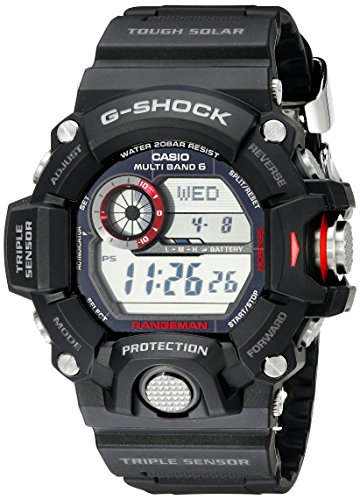
Almost everyone in the military wears the Casio G Shock series of watches. It is one of the first things that most privates buy after basic training (right after they buy their Mustang, of course!) Why do they choose G-shocks? They are legendary for their durability. Add solar charging capability and ABC sensors, and the G-Shock Rangeman makes a great survival watch
Durability
There is a reason the military loves these watches; they are durable. If they can hold up to a private going through boot camp, then a survival situation will be a breeze.
The Rangeman takes this one step further with a Resin shock-resistant case. The buttons are guarded and housed in a cylindrical metal pipe. This protects them from damage from side impacts, the most common failure mode of watches. The button shafts have O-rings that provide water resistance down to 200 meters of pressure.
Navigation
This watch has a triple ABC sensor that measures altitude, barometric pressure, orientation, temperature, and direction at high speed. The large sensor button on the right of the watch provides an easy way to quickly bring up the data of each sensor. The watch makes a distinct audible tone at each sensor display, so you can easily cycle through them without looking at the watch.
This watch has no built-in GPS, so you need a topographical map to pinpoint your position.
Smartwatch Capability
The Rangeman has no smartwatch capabilities and will not pair with your smartphone.
Battery Life
The battery life of this watch is infinite since it has built-in solar recharging capabilities. The specifications say the watch will run for eight months without sunlight exposure. If you have not seen sunlight for eight months, you are probably in Zion and about to enter the matrix anyway – no watch needed.
Size
Most of the G-shock watches are larger. This one is about 55mm in Diameter, one of the largest watches on our list. If you have a smaller arm and are not sure if you like larger watches, this may not be the watch for you.
Recommended For:
The Casio Rangeman GW9400 is for someone looking for a super tough survival watch and doesn’t care about smartwatch capabilities or GPS positioning.
You should be comfortable finding your location on a topographical map with an altitude and a heading. Remember that Casio recommends calibrating the compass each time you use it (which can be a pain). If you don’t want to worry about battery life, this watch is for you.
PROS
Durable
Sensor Tones
Battery Life
CONS
Large Size
No GPS
Needs Calibration
Garmin Instinct Crossover Solar

- ABC Sensors: Yes, 3-axis electronic compass
- GPS Systems: GPS, GLONASS, Galileo
- Maps: No
- Water Resistant: 10 ATM
- Smartwatch Functionality: Yes
- Battery Life: 25 hours in GPS mode
- Solar Charging: Yes
- Size: 45mm
- MSRP: $449 (typical price $349)
The Garmin Instinct Crossover Solar is very similar to the Instinct 2 Solar. However, it has one feature that Instinct 2 doesn’t have and one that some people love – Analog Watch hands.
I love analog watch hands. There is just something about the classic look.
This watch has all of the great features that the Instinct 2 has but is only offered in the 45 mm size. A Tactical version is available, although the extra cost probably doesn’t make sense for most people.
Durability
This watch is thermal and shock resistant and built to military standards. The case is similar to other Garmin watches made from a fiber-reinforced polymer. The strap is the same as the Instinct 2, with beefy pins and a vented, tough Silicone rubber band. It is also water resistant to 10 Atmospheres.
Navigation
Navigation capabilities resemble Instinct 2, with ABC sensors, full GPS capability, and waypoint/trackback features.
Smartwatch Capability
The Garmin Instinct Crossover has the full gamut of Smartwatch features. It includes many sport tracking modes and 24/7 health and wellness features.
I think it is cool that the watch hands move to the center when you cycle through the menus. This lets you see the screen better as you move through the options. Like the Instinct 2, you can change what data is displayed on the home screen.
Since the time is displayed with the analog hands, there is more room on the screen for other data. I like that you can customize this to your preferences and are not stuck with the default widgets.
Battery Life
The battery life of the Instinct Crossover is slightly less than the Instinct 2 since it has to drive analog hands. It has solar charging capabilities, and the life is unlimited in battery saver mode if exposed to at least 3 hours of sun per day. In smartwatch mode, it can last up to 70 days. Even without any solar exposure, it can last up to 28 days.
GPS modes take more power, with at least 25 hours of battery life without solar exposure. In Expedition GPS mode, it can last 327 days with 3 hours of solar charge time per day. That is pretty close to unlimited if you ask me.
Most people find the watch will last 2-3 weeks under normal use while using GPS for a few hours per week for fitness tracking.
Size
The Instinct Crossover only comes in one size, 45mm. This is a standard size for a watch of this type. If you want a smaller watch, look at the Instinct 2 Solar. This watch is a little thicker than others, so if you have tighter cuffs on your shirt, it may not fit under them.
Recommended For:
The Garmin Instinct Crossover Solar is for someone looking for a classic type analog watch with all of the GPS and smartwatch features of a digital watch. It is a good-looking watch; with all the features you could need for health and fitness tracking. Its navigation capabilities could also save your life and lead you to safety.
PROS
Analog Hands
GPS
Smartwatch Features
CONS
Battery Life
Learning Curve
One Size
Suunto Core
- ABC Sensors: Yes, digital compass
- GPS Systems: None
- Maps: No
- Water Resistant: 30m
- Smartwatch Functionality: No
- Battery Life: 1 Year
- Solar Charging: No
- Size: 49mm
- MSRP: $219 (typical price $199)
The Suunto Core is a basic survival watch with a full digital screen. The screen is the great part of this watch. It is large and has plenty of room to display the time, pressure graphs, altitude, and compass data. With adjustable contrast, you can also adjust it to your preference.
If you are looking for a basic survival watch, this is it. With Suunto’s quality, you don’t have to worry about it failing when you need it most.
Durability
This watch has a composite case and an aluminum bezel to protect the mineral crystal lens. It is water resistant down to 30 meters, so you don’t have to worry about it getting wet. It has a depth meter for snorkeling, and Suunto is known for building high-quality diving watches. They have plenty of experience in building durable devices.
Navigation
The Suunto Core has ABC sensors and a thermometer. The large digital display makes the sensor data easy to see with large numbers and graphs. This watch does not have GPS capability.
The compass and altimeter need to be calibrated, and some users find the accuracy off depending on where they calibrate it. Big weather changes and traveling in an airplane can also affect it.
The watch has a storm alarm to alert you to incoming weather when it sees a quick pressure drop. This is a great feature, especially when you’re outdoors without a phone.
Smartwatch Capability
This watch does not have any smartwatch functions.
Battery Life
This watch runs on a standard CR2032 battery and does not have solar charging capability. The expected battery life is one year. Many users have noted that they only get about six months of battery life. Since time can pass quickly, keep spare batteries and make a note in your calendar to change it every six months.
Size
The Suunto Core is a 49mm watch, which is a bit large. The large screen is a tradeoff with the size of the case. It is a thinner watch, so it does not feel as bulky as other large watches.
Recommended For:
The Suunto Core is for someone who likes a full digital watch that is easy to read. This watch is the most affordable on our list and looks great. The full ABC sensors and storm warning feature can get you to safety during a survival situation.
Update: Suunto also has the Suunto Core Alpha model that has a low profile red display that works great for hunting or with night vision goggles.
PROS
Price
Large Screen
Weather Warnings
CONS
Battery not Rechargeable
No GPS
Needs Calibration
Casio PRW-3510Y-8CR Tough Solar Pro Trek
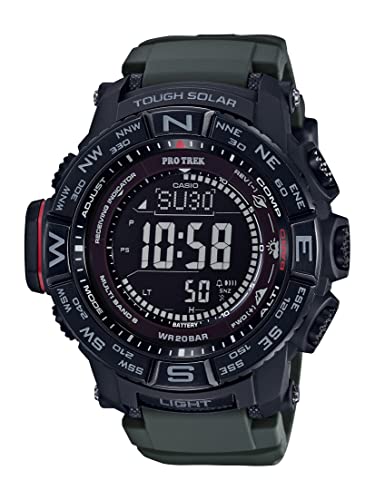
- ABC Sensors: Yes
- GPS Systems: None
- Maps: No
- Water Resistant: 200m
- Smartwatch Functionality: No
- Battery Life: Infinite
- Solar Charging: Yes
- Size: 57mm
- MSRP: $350 (typical price $259)
If you are looking for Casio quality and ruggedness but don’t like the look of the larger G-shock watches, the Casio Tough Solar Pro Trek is for you.
This watch has an STN LCD screen with great contrast and is easy to read. It is a tough solar watch, so the battery life is infinite. I have a tough solar watch that I have used for over 15 years, and I have never had to change the battery.
With Casio’s triple ABC sensor, you can navigate your way to safety. The Barometer will also alert you to quick changes in atmospheric pressure, which usually means a storm system is approaching.
Durability
Casio is known for rugged watches. While this is not a G-shock, it does have a polymer resin and stainless-steel case. It is water resistant to 200 meters, has guarded buttons, and a bezel to protect the recessed screen.
Navigation
The built-in ABC sensor can help you navigate and pinpoint your position on a topographical map. The watch will sound a weather warning alarm if it detects a significant change in pressure. Note that the compass must be calibrated, especially near where you plan to use it. This watch does not have a built-in GPS and does not have smartphone connectivity.
Smartwatch Capability
This watch does not have any smartwatch features.
Battery Life
This watch is solar-powered and will last indefinitely. Casio claims it will run for seven months without being exposed to sunlight. In my experience, I believe them.
Size
The Pro Trek is 57mm long and 43mm wide on the large side. The case has more of a lower profile than the traditional G-shock watches.
Recommended For:
The Casio Tough Solar Pro Trek is recommended for someone who wants a simple, reliable digital survival watch. With this watch, you never have to worry about the battery. If you like the legendary Casio ruggedness but don’t like the look or the size of the G-shock watches, this is the watch for you.
PROS
Price
Battery Life
Easy to Read Screen
CONS
No Smartwatch Functions
No GPS
Needs Calibration
Timex Expedition North Tide-Temp-Compass

- ABC Sensors: No, Compass Only
- GPS Systems: None
- Maps: No
- Water Resistant: 100m
- Smartwatch Functionality: No
- Battery Life: Years
- Solar Charging: No
- Size: 43mm
- MSRP: $249 (typical price $145)
Timex is known for “takes a licking and keeps on ticking,” so we had to include one. The Timex Expedition North is a full analog watch has a built-in compass, tide tracker, and thermometer.
This watch is one of the smallest on our list, so if you don’t like big digital watches, this classic Timex is for you.
Quality
Timex has been building watches for more than 150 years. They have a long history of being one of the most reliable timepieces you can buy.
Durability
The case of this watch is made from 316L stainless steel. The buttons are guarded, and the strap is made from heavy-duty Nylon webbing. It is water resistant down to 100 meters.
Navigation
The Timex has an analog compass, indicated by a 4th hand on the watch face. No altimeter is included with this watch, so pinpointing your location will not be as easy with a topo map. This watch does not have GPS capability.
This watch has a tide tracker, so if you live near or visit the ocean regularly, this could be useful.
Calibrating the compass can be challenging and should be done away from large metallic objects. There is a specific process to follow that takes some time.
Smartwatch Capability
This watch does not have Smartwatch capability. It is strictly a standalone analog watch.
Battery Life
This watch has a non-rechargeable watch battery. While Timex does not indicate the expected battery life, most claim they last for years. Timex recommends that the battery only be replaced by a Timex watch dealer. If you go with this watch, you should have some sort of backup or schedule battery changes regularly.
Size
This watch is 43mm in diameter and on the smaller end of the spectrum.
Recommended for:
The Timex Expedition North watch is another option for someone who doesn’t like larger digital watches and prefers a classic analog watch that is smaller in size. While this watch only has a compass and no altimeter, it is the minimum in what I would consider being a survival watch.
PROS
Simple Design
Tide Tracker
Long Life
CONS
No ABC Sensor
Not Solar
No GPS
How We Tested Survival Watches
Over the years, I’ve owned and used most of the watches on this list in real outdoor situations, not just around town. For this guide, I compared more than 30 watches, focusing on the features that actually matter if you find yourself navigating in remote areas or dealing with an emergency.
Rather than just relying on manufacturer specifications, I evaluated how these watches perform in normal daily wear as well as during hiking, camping, training, and travel. A survival watch has to be something you actually wear every day, not something that stays in a drawer until you need it.
The main things I focused on during testing were navigation capability, battery life, durability, and overall usability. I paid attention to how quickly GPS locks onto satellites, how accurate the compass and altimeter readings are, and how easy it is to set and navigate back to waypoints.
Battery life was another big factor. Watches that need constant charging are not practical in survival situations, so I looked at how long each watch lasts under real-world use, especially when GPS tracking is active.
I also considered comfort and day-to-day practicality. If a watch is too bulky or uncomfortable, people won’t wear it consistently. In an emergency, the watch you’re wearing is the one that matters.
Finally, I looked at overall value. Some watches offer incredible features but at a price point that doesn’t make sense for most people. Others provide nearly the same capability for much less money.
New watches come out every year, so we regularly update this guide as new models are released and older ones become outdated. As we continue testing new watches, this list will keep evolving to reflect the best options currently available.
What is a Survival Watch?
A survival watch is a watch with features that can help you navigate and make better decisions in an emergency. The most important of these features is survival navigation.
Many people rely on their phones for directions, weather updates, and timekeeping, but phones have two major weaknesses: battery life and signal dependence. Batteries often last less than a day, and cellular service may not be available in remote areas or during large-scale emergencies.
A survival watch works without cell service and stays on your wrist at all times, which means you still have critical information available if you become separated from your gear.
At a minimum, a survival watch should include a compass. Even better is a full ABC sensor, which stands for:
- Altimeter – helps determine your elevation and position on a map
- Barometer – warns you about incoming weather changes
- Compass – keeps you traveling in the correct direction
With altitude and heading information, you can pinpoint your location on a topographical map and avoid traveling in circles if you become lost.
Higher-end survival watches add GPS capability, allowing you to store waypoints and navigate back to camp, your vehicle, or home. Some watches also store and display maps directly on the watch, removing guesswork entirely.
Other helpful features include sunrise and sunset times, which help you plan travel and shelter before darkness arrives, as well as storm warnings triggered by rapid pressure drops.
Knowing the time may seem simple, but it also matters in survival situations. It helps you track travel pace, coordinate meeting times, and manage cooking or rest periods.
In short, when things go wrong, you can’t rely on your phone. A survival watch gives you navigation and environmental awareness in a device you are likely already wearing. In many situations, it can be the tool that guides you back to safety.
Tips for Choosing a Survival Watch
When choosing a survival watch, focus on the features that actually help in an emergency. Many watches add extra functions that look impressive but don’t help when you’re trying to navigate or stay safe outdoors.
Here are the features that matter most.
Quality
Quality matters, especially with survival gear. Many cheap copies of name-brand watches exist, and they often fail when you need them most.
If a deal seems too good to be true, it probably is. Stick with reputable brands and purchase from sellers with solid return policies. Older models of good watches can sometimes be excellent values, but avoid knockoffs.
Durability
A survival watch must survive rough conditions. It may become your primary navigation tool, so it needs to withstand impact, water, and daily abuse.
Look for:
- Polymer or stainless steel cases
- Strong rubber or nylon straps
- Heavy-duty strap pins
- Recessed or protected screens
- Guarded or recessed buttons
- Water resistance of at least 100 meters
A cracked screen or damaged button can make a watch useless when you need it most.
ABC Sensor
At minimum, a survival watch should include a compass. A full ABC sensor is even better.
These sensors allow you to:
- Determine direction of travel
- Estimate location using altitude
- Detect incoming weather changes
Even though direction can sometimes be estimated using the sun and a traditional watch, that method doesn’t work at night or during cloudy conditions.
GPS
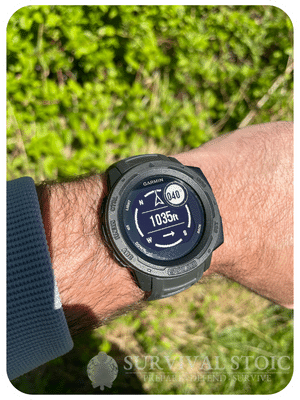
The next step above ABC sensors is built-in GPS.
GPS allows you to:
- Save waypoints
- Navigate back to camp or your vehicle
- Mark hunting or fishing locations
- Find your way home during emergencies
It’s also handy for everyday use, like finding your car in a crowded parking lot.
The best watches connect to multiple satellite systems for better accuracy in mountains, forests, and valleys.
Maps
Higher-end survival watches store maps directly on the watch.
This allows you to see terrain, trails, roads, and landmarks without needing a phone. While not strictly necessary, built-in maps greatly simplify navigation when you’re in unfamiliar terrain.
Just remember maps must be downloaded before heading off-grid.
Smartwatch Capability
Smartwatch features are optional but useful for many people.
Modern watches may include:
- Notifications
- Heart rate monitoring
- Fitness tracking
- Sleep tracking
- Workout tracking
If you wear the watch every day, you’ll have it with you when an emergency happens, which makes these features worthwhile for many users.
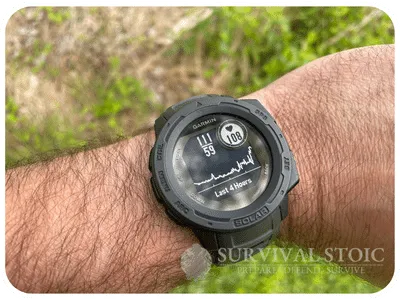
Battery Life
Battery life is critical. A watch that needs daily charging is not practical for survival use.
We generally recommend:
- At least one week of battery life or,
- Solar charging capability
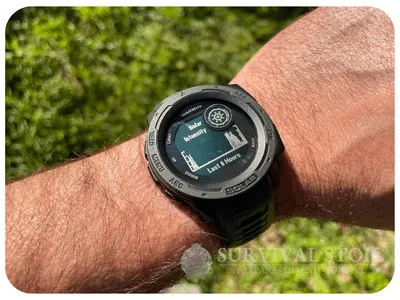
GPS and maps use more power, so watches with power-saving modes are helpful. Even solar watches sometimes need occasional charging, but proper power management can allow them to run for very long periods.
Most higher-end watches have a power-saving mode. If you do find yourself in a situation where you need it long-term, you can set it to power save mode when you are not using it. During the day, you can ensure it has direct sunlight to charge as much as possible. Under this scenario, you could theoretically never have to charge your watch externally, depending on how much you use it.
Size and Comfort
Most survival watches are large. Make sure the watch is comfortable enough to wear daily.
If a watch is uncomfortable, you won’t wear it consistently, and the watch at home in a drawer won’t help you in an emergency.
Some models offer multiple case sizes, which can help if you prefer a smaller watch. Sleep tracking can also be affected by comfort, so keep that in mind if that feature matters to you.
Why Have a Survival Watch?
A survival watch could be argued as one of the most critical items to have during an emergency. If you are unexpectedly separated from others in a remote area without any of your gear, what are you likely to still have with you? Your EDC (Everyday Carry), the items in your pockets, and the watch on your arm.
A regular watch during an extended survival situation is invaluable. By knowing the time, you know how long you have cooked your food and how long you have been walking. You can use it to meet others at a specific time.
If your everyday watch is a survival watch, it can prove to be a critical tool when you need it most. It can be the single device that can lead you back to safety or keep you away from unsafe areas. The navigational features, from just a compass to a full GPS with maps, are far worth it. Add smartwatch features, and buying a regular smartwatch at a similar price makes no sense.
Survival Watch Navigation Tutorial
Get Prepared
Our top pick, the Garmin Instinct 2 Solar has a great balance of features at an affordable price.
A survival watch is one of the few pieces of survival gear you’re likely to have with you at all times. If you choose one that fits your daily life, you’ll have navigation capability available when you need it most.
Once you’ve picked your watch, the next step is making sure the rest of your preparedness gear is squared away. Building a bug out bag or get home bag ensures you’re ready to move safely if an emergency happens unexpectedly.
Prepping doesn’t have to be overwhelming. Check out our Prepping for Beginners guide for priority and gear suggestions.
Survival Watch FAQ
Do I really need GPS in a survival watch?
Not necessarily, but it makes navigation much easier. A watch with ABC sensors and a compass can still help you determine direction and estimate your position on a map.
GPS adds the ability to save waypoints and navigate back to camp, your vehicle, or home automatically. If you spend time in remote areas or unfamiliar terrain, GPS is a major advantage.
Is solar charging necessary on a survival watch?
Solar charging isn’t required, but it can be very helpful in long-term emergencies. Solar watches reduce how often you need to recharge and, in some situations, can run almost indefinitely with enough sunlight.
However, many modern watches still last a week or more per charge, which is more than enough for most situations as long as you manage battery use.
Can a survival watch replace a compass and map?
No. Electronics can fail, batteries can die, and screens can break. A survival watch is an excellent navigation tool, but you should still carry a paper map and a physical compass in remote areas.
Think of the watch as your primary convenience tool, with map and compass as reliable backups.
Are ABC sensors accurate enough to rely on?
Yes, but they must be calibrated occasionally, especially when traveling long distances or after major weather changes.
Barometric pressure changes can also affect altitude readings, so understanding how your watch works and recalibrating when needed is important.
What size survival watch should I buy?
Most survival watches are large because they need space for sensors and readable displays. If you have smaller wrists or dislike bulky watches, look for models offered in multiple sizes.
Comfort matters. The best survival watch is the one you actually wear every day.
How long should a survival watch battery last?
We recommend at least one week of battery life in normal use or solar charging capability. Watches that need daily charging are not ideal for preparedness use.
GPS tracking and maps consume more power, so learning how to use power-saving modes is important if you rely on the watch in emergencies.
Is a smartwatch good enough as a survival watch?
Most standard smartwatches are not ideal for survival use because battery life is short and they depend heavily on phones and cell service.
Some newer smartwatches add GPS and longer battery life, but dedicated outdoor watches are still more durable and practical for navigation and emergency use.
