

If I could only carry one flashlight into a blackout or bug-out situation, it’d be the Streamlight ProTac 2L-X.
It’s brutally tough, runs on either common AA-sized rechargeable or CR123A batteries, and it’s simple enough to use when your hands are shaking and the power’s been out for two days.
That’s not just a theory, either. We’ve tested this flashlight extensively. It’s been dropped in a frozen creek, left to bake on a dashboard in July, and used to navigate several power outages. It’s still kicking, and it’s the flashlight I trust when it counts.

Here’s the thing:
Most flashlight guides obsess over lumens. But in a real emergency, brightness is just one piece of the puzzle, and honestly, it’s not even the most important one. What you need is a dependable and practical flashlight.
In this guide, I’ll take a look at exactly what you need to look for in a survival flashlight (no fluff or mall-ninja nonsense). Just real gear, tested in the real world, for people who prefer being ready over being trendy.
A Quick Look at Our Favorite Survival Flashlights


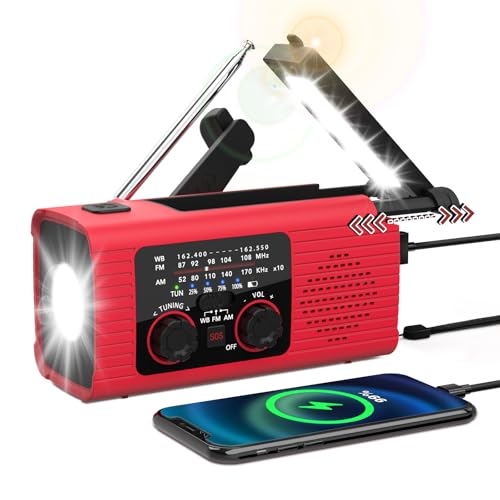
Nitigo Weather Radio Flashlight
Unlimited runtime w/ crank
Battery + Solar + USB + Crank
200 Lumens
MSRP: $33
Best Survival Flashlight: Streamlight Pro Tac 2L-X
- Lumens: 500
- Runtime: 3.25 hrs high, 30 hrs low
- Battery: Rechargeable 18650 or CR123A (included)
- Waterproofing: IPX7 (submersible up to 1 meter for 30 minutes)
- Modes: High / Low / Strobe via TEN-TAP programming
- Size: 5.14 inches long, 0.9 inches diameter
- Weight: 4.4 oz as tested
- Warranty: Lifetime
If you’re looking for a no-nonsense, incredibly durable flashlight that can pull double duty as your everyday carry and a survival staple, the Streamlight Pro Tac 2L-X is the best option. This is my personal EDC flashlight, and it has lived in three different bug-out bags, two glove compartments, and one very angry river.

It’s got a “built to last” vibe and was very reliable during our testing, even if it isn’t the brightest flashlight around.
It’s rugged enough to survive blunt force trauma (ask me how I know) and compact enough to fit easily into my bug-out bag or pocket.
The beam is focused enough for long-range spotting, but not so narrow that it’s useless indoors. And unlike some USB-only flashlights that panic if you don’t feed them daily, this one can run off CR123As you stash and forget about for five years.

Plus, it’s pretty inexpensive, making it great for prepping on a budget.
It doesn’t scream “tacticool.” It just works. Every. Single. Time.
Our testing scores
| Test Category | Score (out of 10) | Why It Scored That Way |
|---|---|---|
| Battery Flexibility | 9 | Dual-fuel options = big survival win. |
| Durability | 10 | Built like a little tank. Survives just about everything. |
| Ease of Use | 8 | One button, multiple modes. Learning them all can take a minute, but it’s dead simple. |
| Size & Weight | 9 | Pocket-sized and lightweight. |
| Brightness vs. Runtime | 8 | 500 lumens is plenty, and low mode sips power. Could be brighter. |
Recommended for:
- Want flashy? Look elsewhere.
- Want something that actually works whether you’re prepping for a power outage or the end of the world? The Streamlight ProTac 2L-X is the best option in my humble opinion.
PROS
Dual-fuel battery options
Extremely durable and waterproof
Compact
Bright enough for signaling or sweeping
CONS
Not the absolute brightest on the market
Slight learning curve for mode setup
Brightest Survival Flashlight: Olight Warrior 3S
- Lumens: 2,300 (Turbo)
- Runtime: 2.5 mins (Turbo), 13 hrs (Low), 55 days (Moonlight mode)
- Battery: USB magnetic rechargeable (custom 21700 battery)
- Waterproofing: IPX8 (fully submersible)
- Modes: 6 brightness levels + strobe
- Size: 5.47 inches long, 1.16 inches diameter
- Weight: 6.2 oz as tested
- Warranty: 5 years
If you want maximum brightness with a great build quality (and don’t mind the occasional tech quirk), I highly recommend the Olight Warrior 3S. During our testing, I was surprised by the number of modes it has. Plus, it’s incredibly bright. This thing could spotlight raccoons in the next county.

But don’t let the sleek, sci-fi exterior fool you. This is a serious survival tool, especially if your strategy leans more towards bugging in vs. bugging out.
It’s got six brightness levels, a proximity sensor to keep it from coming on accidentally in my survival pack, and a magnetic USB charger that makes topping off super easy. Just don’t lose the proprietary cable!
During testing, it was easily the brightest flashlight in the lineup, but also one of the most complicated. I had to spend a minute getting used to the UI and sensor behaviors. It’s absolutely not a flashlight you could grab and go without a little practice.

It’s not a flashlight I carry daily, but it is absolutely the one I want when I need to light up a field or scan for threats or find my way home.
Our testing scores
| Test Category | Score (out of 10) | Why It Scored That Way |
|---|---|---|
| Battery Flexibility | 5 | Proprietary battery and charger. No AA backup. |
| Durability | 9 | Rock-solid construction. Took a beating without blinking. |
| Ease of Use | 6 | Lots of modes + touch-sensitive sensor = steep learning curve. |
| Size & Weight | 7 | A bit chunky for EDC. Fine in a pack or kit. |
| Brightness vs. Runtime | 8 | Insanely bright, but Turbo mode drains fast. Lower modes perform great. |
Recommended for:
- Home preppers who want a blackout buster or security spotlight
- People with backup power banks who prefer USB recharge
- Anyone who says, “Give me all the lumens. I want to cook my eggs with it.”
PROS
Blindingly bright on Turbo
Magnetic USB charging
IPX8 waterproof and very durable
Built-in proximity sensor adds safety
CONS
Proprietary battery and charging cables
Overcomplicated UI for emergency use
Best Solar Survival Flashlight: Journey 300 Solar Flashlight
- Lumens: 300
- Runtime: Up to 50 hours on low
- Battery: Built-in rechargeable lithium with solar panel and USB input
- Waterproofing: IP67 (dustproof and waterproof up to 1 meter)
- Modes: High / Low / Flashing
- Size: 6.1 inches long, 1.6 inches diameter
- Weight: 5.2 oz as tested
- Warranty: 1 year
If the grid goes down and stays down or I am lost in the woods, the Journey 300 is the flashlight I’ll be glad to have on hand. It’s not a high-lumen tactical flamethrower, but that’s the point. It’s solar-powered, waterproof, and doubles as a phone charger.

In other words:
It was designed with the end of the world in mind.
It floats. It charges itself in sunlight. It’ll top off your phone in a pinch. And when you inevitably forget to charge all your other “tactical” lights, this one will still be sitting there, quietly collecting solar juice like the humble prepper MVP it is.

The beam is plenty functional. It’s bright enough for close tasks or walking, but don’t expect it to cut through fog or signal aircraft. That’s not what this light is for. It’s a survival workhorse, not a tactical showoff.
During testing, we left it outside for three days straight in light rain and mixed sun. Still worked. Still charged. Still floats in the lake.

It’s not flashy, but it’s exactly the kind of tool you’ll be thankful for on Day 4 at camp.
Our testing scores
| Test Category | Score (out of 10) | Why It Scored That Way |
|---|---|---|
| Battery Flexibility | 10 | USB, solar, and self-contained. No disposable batteries needed. |
| Durability | 8 | Fully waterproof and impact-resistant. Plastic body scuffs but holds up. |
| Ease of Use | 9 | One button, three modes. Your grandma could figure it out. |
| Size & Weight | 8 | Not tiny, but light and floats. Easy to pack. |
| Brightness vs. Runtime | 7 | Lower lumens, but excellent runtime. Prioritizes longevity over intensity. |
Recommended for:
- Long-term blackout kits, off-grid cabins, and survival kits
- Preppers who value solar redundancy and utility over tactical flash
- Anyone who tends to forget to charge their flashlight or check the batteries
PROS
Solar + USB Charging
Floats and survives rain, snow, and neglect
Simple & durable
Bonus: charges your phone
CONS
300 lumens won’t light up the forest
Solar charging is slow
Best Multi-Use Flashlight: Nitigo Weather Radio Flashlight
- Lumens: ~200
- Runtime: Varies by mode; crank for unlimited short-term use
- Battery: Built-in lithium battery, solar panel, USB input, USB output, hand crank
- Waterproofing: IPX3 (splash-resistant)
- Modes: High / Low / SOS
- Size: 6.2 inches long, 2.4 inches tall, 3.1 inches wide
- Weight: 10.6 oz as tested
- Warranty: 1 year
This isn’t your average flashlight. It’s a disaster dashboard that fits in your hand.
The Nitigo Weather Radio Flashlight is part flashlight, part NOAA emergency radio, part USB charger, and part “peace of mind in a plastic shell.”

It’s not winning any lumen contests based on my testing, but that’s not its job. This is the flashlight I want when a hurricane’s on the way and the grid just went down. I tested it during a stormy weekend (on purpose) and was impressed by just how many things it replaces: a crank light, a power bank, a weather alert system, and a flashlight, all in one.
No, it’s not pocket-friendly. No, it won’t blind intruders. But if you’re building a home blackout kit or a long-term survival kit, this should absolutely be in it.

The Nitigo Weather Radio Flashlight is about redundancy, not portability (but it is still compact), and it earns its place in any serious emergency plan.
It also has a USB output, so it can charge other devices. With the hand crank, it becomes an emergency power bank that I can charge no matter if the sun is out or not.
Our testing scores
| Test Category | Score (out of 10) | Why It Scored That Way |
|---|---|---|
| Battery Flexibility | 9 | Solar, crank, and USB. Can’t beat that for grid-down redundancy. |
| Durability | 6 | Splash-resistant, not fully waterproof. Don’t drop it in a lake. |
| Ease of Use | 8 | Flashlight is simple; tuning the radio takes a little finesse. |
| Size & Weight | 6 | Bulky compared to standard flashlights, but worth it for the features. |
| Brightness vs. Runtime | 7 | Not bright, but lasts forever and recharges easily. Tradeoffs. |
Recommended for:
- Home emergency kits and blackout setups
- Backpackers who may face harsh weather
- Anyone who values NOAA alerts as much as battery backups
PROS
Solar, crank, and USB charging
Built-in radio with NOAA alerts
Can charge your phone
SOS mode + flashlight all-in-one
CONS
Bulkier than a standard flashlight
Not fully waterproof
What Makes a Survival Flashlight (And Why It’s More Than Just Brightness)
A survival flashlight isn’t just “the brightest one you can afford.” That’s a great way to end up with a tactical paperweight that dies before you can even find your spare socks.
It’s also a bit different from a tactical flashlight.
Real survival gear needs to be reliable, versatile, and idiot-proof when you’re stressed and half-awake at 3AM. And yes, that includes your flashlight.
Here’s what actually matters when picking a flashlight for survival (and what we kept in mind during our hands-on testing). And no “turbo strobe laser beam” isn’t on the list.
Sustained Output > Peak Lumens
That “blinding 2,000-lumen” spec on the box? Marketing nonsense. Most flashlights only hit that for a few seconds before dropping to a lower level to avoid overheating (or eating through the battery like a kid with Halloween candy).
What you really want is a consistent beam that lasts for hours. Not a brief light show that sounds good on a box.
We prefer lights with realistic high modes (400–600 lumens) that can last for hours. Not ones that briefly turn into a handheld sun before begging for a recharge.
Battery Chemistry (The Boring Detail That Really Matters)
Yeah, I know. Nobody gets excited about battery chemistry. But this one’s a big deal. In a survival situation, your light is only as good as what powers it.

18650 / 21700 (Li-ion)
- High capacity, high efficiency, stable voltage
- Rechargeable with solar panels, car adapters, or power banks
- Ideal for high-output lights that need that steady juice
These are the batteries I prefer when the grid’s down. One 18650 can power a decent flashlight all night. And, if you have a solar panel or crank charger, you’re golden.
I really like Pale-Blue Earth’s rechargeable batteries. See my full Pale Blue Earth Battery Review for more.
AA / AAA (Alkaline or NiMH)
- Widely available (in normal times)
- Lower capacity, prone to leakage
- OK for basic lights, but not great for high-drain flashlights
Sure, grabbing some AAs from the store is convenient, until the store’s closed (or looted or underwater). Personally, I’d rather have a rechargeable setup that’s part of my survival plan than relying on AA batteries.
Durability and Weatherproofing
Your flashlight doesn’t need to survive a warzone (hopefully), but it does need to survive you.
Look for at least an IPX7 rating (submersible for 30 minutes) and solid drop resistance. Because you will drop it. Probably more than once.
If it can’t survive a storm or five-foot drop, it isn’t survival gear.
Aluminum bodies, sealed switches, and O-ring construction aren’t overkill. They’re what keep your flashlight working in the real world.

Bonus Features That Might Just Save Your Butt
A survival flashlight isn’t just for seeing in the dark.
Look for extras like:
- USB charging (or the ability to charge your phone)
- SOS or beacon modes for signaling
- Built-in radios or weather alerts
- Window breakers or magnetic bases for hands-free use
Are these mandatory? No
But are they extremely useful in a real-world emergency? Absolutley.
Especially that phone-charging features, because your phone is probably your map, notepad, comms, and emergency contact list.
Simple UI = Usable Under Stress
Here’s a fun test: take your flashlight outside at night, turn it on, then hand it to someone who’s never used it. See if they can switch modes without cursing.
(That’s exactly what we did during one phase of our testing.)
If they look like they’re entering cheat codes on a Sega controller, it’s too complicated.
In survival mode, you don’t have time for a 12-mode dance recital. You want:
- One-click high
- One-click low
- Maybe an SOS if you’re feeling fancy
No menus. No double-long-press-hold-for-moonlight nonsense. Just light.
Light Modes That Matter (And Ones to Avoid)
Many flashlight companies add light modes to their flashlights just to claim they have more. But, in the end, many of these modes don’t actually help.
Here’s what matters when it’s dark and things are going sideways.
A lot of flashlights these days come with more modes than a microwave. Some are useful. Most are just there to pad the box copy. Let’s break down the must-haves, the nice-to-haves, and the please-stop-including-these.
Must-Have Survival Modes
Low-Light Modes (or moonlight mode)
This is your best friend for preserving night vision or making batteries last as long as humanly possible.
I’m talking 1 to 20 lumens here. Just enough to read a map or find the zipper on your tent without waking up everyone within a 3-mile radius.
SOS / Beacon Flash Mode
In a real emergency, this could be the only way someone finds you. Bonus points if it’s a true SOS signal (… — — — …) and not random blinks.
A slow, repeating beacon mode can also help rescuers or friends locate you without draining the battery in an hour.
Nice-to-Have Modes
Red or Green LED
Red is gold for night vision. It doesn’t wreck your eyes the way white light does and it’s less visible from a distance. It also tends to spook animals less.
Green LEDs work well for map reading and show blood trails better if you’re into that sort of thing.
If a flashlight we tested had one of these (without sacrificing simplicity), we counted it as a boon.
Adjustable Brightness (3-5 Levels Max)
Being able to scale brightness between tasks is useful, but more is not better. At some point, you’re just making things overly complicated.
High, Medium, Low = perfect.
Ultra-high, high-turbo, low-mid, moonlight, eco-saver, turbo++? Hard pass.
Modes to Avoid
Strobe Mode (aka Police Disco)
This is a controversial one, but all of our experts highly recommend against it.
Some people swear by it for self-defense. That’s fine in theory. But in practice, it usually just results in disorientation for you (and telling the intruder exactly where you are).
Plus, this mode was incredibly easy to activate by accident during our testing. And, it can seriously burn through your battery.
Hidden Menus, Secret Button Presses, and Morse Code Combos
If you have to hold for 1.2 seconds, then triple-click, then whisper a secret phrase to get to low mode, it’s just not going to work.
Some survival flashlights try to be “cool” by making things complicated. Stick with simplicity.
TL;DR: Keep it Simple
You don’t need a flashlight with 12 brightness levels and 9 disco settings.
You need:
- A bright setting for scanning/searching
- A low setting for preserving battery and stealth
- A flash/SOS mode in case you need to call for help
- (Maybe) a red light
Everything else?
Just more buttons to press when you should be focusing on staying alive.
How We Tested These Survival Flashlights
You can’t judge survival gear by reading Amazon reviews and shining it on your living room wall. So we didn’t.
We tested these flashlights like we’d actually use them: in the dark, in the rain, and in more than one questionable situation. We’ve had many of these flashlights for months if not years. So, we’ve been around the block with them a few times.
Testing Scenarios
We ran each flashlight through a series of tests meant to simulate real survival situations, including:
- Blackout Test: Used each light for a full evening during a simulated power outage (including dinner prep, navigation, and minor home tasks).
- Storm Conditions: Exposed flashlights to wind, rain, and 30+ minutes outdoors during active storms.
- Hiking Test: Took each on a 2-3 mile night hike, checking for grip, beam shape, and comfort over time.
- Waterproof Test: We submerged these flashlights in water for 30 minutes.
- BOB Simulation: Loaded each one into a bug-out bag and then yanked it out after 48 hours to simulate real carry/storage conditions.
- Vehicle Emergency Kit: We have carried the Streamlight and the Hybridlight in our vehicle for the past 5 years. They both still work great.
And yes, we dropped them (a lot).
From about five feet onto concrete, because that’s what happens when you’re fumbling around in the dark. Most survived with minor scuffs. One cried a little. (Spoiler: it wasn’t the Streamlight.)
Battery Life & Real-World Runtime
We ran each flashlight on a full battery (factory-charged or fresh cells) and timed how long it lasted on both high and low modes. This wasn’t a lab bench with voltage meters.
It was the “did it keep working until I went to bed?” method.
What We Prioritized
- Reliability: Did it turn on every time? Did it survive water, dirt, and drops?
- Ease of Use: Could you operate it with cold hands and zero patience?
- Battery Flexibility: Could you recharge it easily or swap cells in the field?
- Survival Utility: Would we actually put this in a bug-out bag or blackout kit?
Quick Testing Summary Table
| Flashlight | Drop Test | Blackout Runtime (High/Low) | Ease of Use | Survived Storm |
|---|---|---|---|---|
| Streamlight ProTac 2L-X | ✅ | 3.25 hrs / 30 hrs | 👍 Simple | ✅ Dry & working |
| Olight Warrior 3S | ✅ | 2.5 mins Turbo / 13 hrs Low | 😐 Clunky | ✅ Passed |
| Journey 300 Solar | ✅ | ~4 hrs / 50 hrs solar low | 👍 Very easy | ✅ Floated |
| Nitigo Radio Flashlight | ❌ Cosmetic scuffs | ~5 hrs / indefinite w/ crank | 👍 Straightforward | ✅ Mostly (not waterproof) |
What Survival Flashlight Should You Get?
If you’ve made it this far, congrats! You now know that brightness isn’t everything, and reliability matters more than “tactical” flair.
So, what survival flashlight should you get?
It’s simple and dependable. It works when you’re tired and soaked. And it doesn’t scream “look at me.” It just works!
- Grab the ProTac 2L-X if you want one flashlight that can handle blackouts and living in a bug out bag.
- Pair it with a solar-charging backup (like the Journey 300) for grid-down peace of mind.
- Avoid the lumen trap. Focus on reliability and runtime.
Just don’t fall for getting the flashiest gear. Get the stuff that works when it actually matters.
When you have your lighting system set up, check out my Survival Gear List and our other Survival Guides and Gear Reviews for your next steps.
