

Surviving a power outage isn’t just about stocking up on candles and canned goods—it’s more like navigating a sinking ship in the dark. You can’t just patch the holes; you need to steer yourself to safety while staying calm amid the chaos.
A checklist is your compass, but a basic one won’t get you through a storm that lasts days. In our experience, having an expert-level plan is what truly makes the difference.
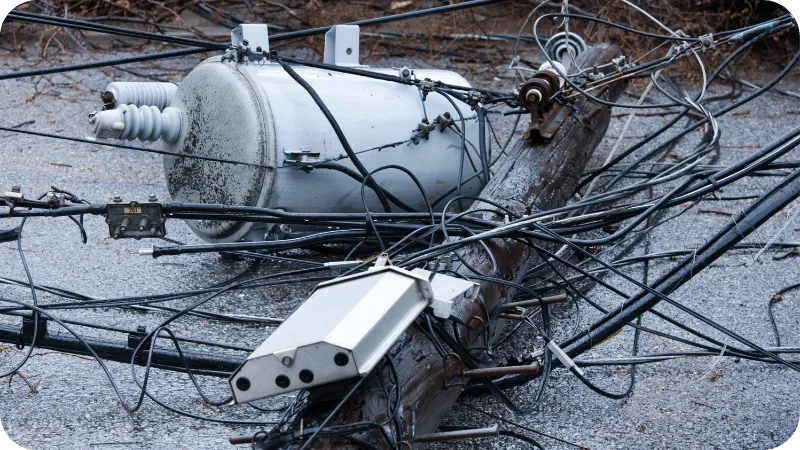
After all, the average power outage lasts 5.6 hours and that’s without any major events. After a hurricane or earthquake, that can easily reach to days. According to FEMA, the number of customers experiencing long outages is increasing.
But there is good news:
It isn’t all that difficult to prepare for a power outage, even one that lasts several days.
In this article, I’ll go beyond the usual “buy batteries” advice. These expert strategies below will help you meet your survival needs and maintain your mental clarity during extended outages.
By the end, you’ll have a battle-tested plan to weather any power loss, whether it lasts hours or weeks.
1. Basic Power Outage Preparedness
In any power outage, you need to focus on your basic survival needs first: water, food, shelter, heat, and first aid. These are the foundation of your emergency plan (and here is also where most advice stops).
Here’s a quick rundown of what you need:
Food
Most people have a few days of food in their homes that they can live on if they have to. Non-perishable foods like canned vegetables, soups, and meats are the basics of preparing for just about anything.
But I recommend aiming beyond the basics in case of a longer term outage. It’s fine to have a few meals’ worth of canned food, but also consider dehydrated emergency meals. Eating cold food from a can and sandwiches is not good for morale after a couple days. These emergency meals taste more like a home cooked meal and will be better for your mental state of being.
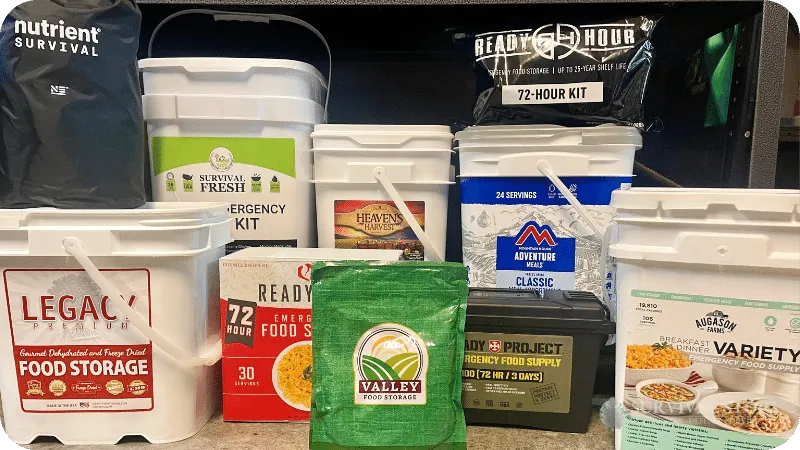
Also, don’t forget that you need a way to heat water and food. Take a look at our Best Emergency Stove guide for some ideas.
Pro tips:
- If you have children, make sure you have something for them! Children tend to get pickier during an emergency.
- It’s a good idea to serve your emergency rations regularly to get your kids used to the taste (and this also helps ensure you use the food before it expires).
- Also, make sure you have some paper plates and disposable silverware. It is a pain trying to wash dishes without power, especially if you don’t have any running water!
Shelter and Heat
Staying warm becomes especially critical during winter outages. While blankets and extra layers are helpful, having an alternative heat source can be literally life-saving.
We like the small Mr. Buddy heater that runs off of 1 lb propane bottles. We also keep an adapter hose to hook up to the larger 20lb propane tanks. We used this to keep a few rooms in our house warm during an ice storm outage a few years ago.

But, don’t underestimate the heat in the summer either. Homes today are not built for natural cooling, so a few battery-powered fans can go a long way. If you are in a hurricane zone, this is a must.
Water
While our water systems tend to be more reliable than the power grid, it is possible to lose your municipal water supply during a widespread power outage (just look at Hurricane Helene).
The general rule is to have one gallon of water per person per day, but in our experience, relying on stored water alone can leave you vulnerable in long outages like those experienced in the recent hurricanes. Even if you have water stored up in the proper water storage containers, you need a backup.
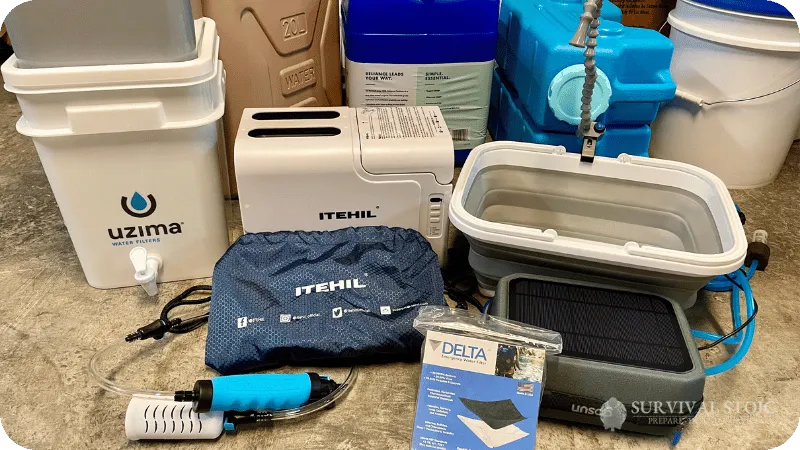
Consider investing in one of the best emergency water filtration systems for families. We tested all of them and provide our recommendations.
First Aid
A power outage is one of the worst times to get injured, and that’s exactly why it’s important to be prepared. I recommend having several first-aid kits in different places, on top of stocking up on regular medications like Tylenol and Benadryl.
The best first aid kit should keep you alive enough during an emergency for help to arrive.

This is just the start, though. Stockpiling bottled water and canned goods may seem sufficient, but what happens when your supply runs out?
2. Advanced Gear & Tools
Once your basic needs are covered, it’s time to think about advanced gear and tools that can truly set you up for long-term resilience. This isn’t just about getting through the first few days! It’s about thriving as the situation drags on.
Solar Panels and Generators
Here’s the thing:
You don’t really need a generator; they are more of a luxury item. But, if you have a freezer full of food as part of your 3-month food supply, you definitely do not want to lose that food.
Most people rely on gas-powered backup generators, but they have a major flaw—fuel.

Once you’re out of gas, you’re left with a large, useless box. Solar panels, on the other hand, provide renewable energy. They allow you to charge devices and power small appliances.
With solar power generators, you don’t have to stock up on fuel or worry about running out. You have the sun instead! (Check our deals page for discount codes!)
See our full Oupes Exodus 1500 portable power station review and our Bluetti Elite 100 V2 review for two great options.
That said, solar panels require sunlight, which isn’t always easy to find! They also tend to generate less energy than a generator.
In my experience, the best option is to pair a generator with solar panels. For smaller devices, you can purchase rechargeable batteries with a solar panel charger and rely on a generator to keep your freezer going.

Also, don’t buy the biggest gas generator you can find. They consume more fuel per hour, and if you don’t need the power, you will run out of fuel quicker. See our Generator Sizing Guide for a calculator and tips.
A standard 6,500-to-8,500-watt generator will run for approximately 8 hours on five gallons of gasoline. Keep in mind that a freezer will stay cold for hours without power, so you don’t have to run the generator all day and night. Run it to chill the freezer, charge devices, make coffee, and then turn it off!
See some of our favorite small emergency generators. We included both gas and solar power stations. Don’t forget to have plenty of extension cords that are 100′ to 150′ long. We also recommend to keep Fuel Stabilizer on hand to treat new fuel for storage or to treat old fuel.
Also check out our Best Gas Can Guide for tips on choosing the best way to store fuel long term.
Pro Tip:
If you have a freezer full of food, fill the empty spaces with water bottles. Not only will these help keep the freezer cold, but you can also use them as emergency drinking water.
Portable Power Banks
Communication is vital in an emergency, and dead electronics can leave you completely disconnected. This is where portable power banks come in.
Based on our testing, we recommend skipping the basic models. Most of them do not charge very fast and are not very helpful.

We recommend the Survival Frog QuadraPro Solar Charger. It has built-in solar panels for recharging and also has wireless charging for my phone, so I don’t have to worry about cables.
We also like the Battarix SOS Charge Cards. They have an 8-year shelf life and can provide up to 3 hours of charge time in a credit card-size package. They also have built in cables for iPhone and Androids.
For the ultimate resource without spending much more money, consider a hand crank emergency radio. These work anywhere, allow me to charge devices, and provide critical information. See our full review of the Best Emergency Radios for our favorites.
Emergency Lighting
Flashlights and candles are the first things that come to mind when thinking about emergency lighting. But there is one big problem with them: they only last so long.
Most candles and battery powered lights will only last for a couple evenings at best. One solution we have found are Pale Blue Earth Rechargeable batteries. However, these only work with regulated lights like we explain in our Pale Blue Earth Battery review.
Another solution we like are the lights from HybridLight. They have a built-in solar panel that charges a built-in battery during the day, and then they work all evening. I can also use them to charge other USB devices, so they have multiple uses, which I love. I have both their lantern and their flashlight.

Headlamps are great as well since they free up your hands. Ever try putting gas in a generator in the dark? A headlamp makes it much easier.
See our review on the Best Survival Flashlights for more flashlights that we tested and like.
3. Mental Resilience Techniques
Here at Survival Stoic, we understand the importance of mental resilience during an emergency. It’s why we were founded!
In high-stress situations, it’s easy to spiral into panic, but staying calm and focused is your greatest asset. Don’t assume that you’ll stay calm and don’t need to practice any of these techniques.
Spoiler alert:
Without practice and preparation, we all crumble under stress.
Here are two key techniques that will help you and your family manage anxiety.
Stoic Principles
One of the most powerful mental tools we recommend is Stoicism. This ancient philosophy gives us tons of principles that can help us thrive during an emergency, such as:
- Focusing on what we can control. In a crisis, that means shifting your energy away from worst-case scenarios and toward the practical steps you can take now. You can’t control if a disaster happens, so there is no point in stressing about it. What you can control is how prepared you are.
- Mental rehearsals. An easy way to prepare for anything is to run through possible scenarios in your mind. This doesn’t mean stressing about those situations. It means considering the possibilities and taking steps you can now to make those possibilities easy to handle.
I’ve written extensively on practical stoic principles that you can use during an emergency like a power outage. Learn and practice these now before an emergency strikes.
Keeping Family Members Calm
As a parent, I was very disappointed with how little children seem to be considered in preparedness advice. Most of us have families with children, and preparing with them is a bit more complicated than a bachelor living alone!
In our experience, having a pre-prepared list of family activities is key. For small children, you may want to have a few coloring and activity books put away for power outages and similar emergencies. A pack of cards can go a long way for families with older children!
Try to maintain your schedule as much as possible, too. This is especially important for younger children, but a sense of normalcy can help everyone stay calm.
As your children get old enough, teach them the Stoic Principles, too. You’d be surprised by how well young children can grasp these principles.
4. Long-Term Survival Strategies
When a disaster hits, it’s very easy for communities to stay cut off for days or even weeks. (A quick look at what Hurricane Helene did in North Carolina, Tennessee, and surrounding states will show you just that.)
In these situations, sustainability becomes crucial.
Address Sanitation
Sanitation tends to be one of the first things that goes during an emergency. However, that’s exactly how everyone gets sick.
One of our preparedness experts, Blake, emphasizes stocking up on contractor style trash bags. These are large, thick, industrial trash bags that fit 40-gallon drums. They
can be used for trash, or even cut open for tarps or used as ponchos.
A clean living space is particularly important during emergencies when antibiotics and other medicines aren’t available.
Bleach and Vinegar are two items that last forever and have many uses. Bleach can be used to purify water and sanitize surfaces, while vinegar can be used as a cleaning agent as well.
Don’t neglect bathing just because you don’t have hot water. Our top pick for emergency water filters can also double as a solar powered shower. Wet wipes are also great for keeping clean when water is scarce.
Alternative Heating Methods
As the temperature drops and utility services become unreliable, you’ll need alternative heating methods to stay warm. Wood stoves or propane heaters are some of the most efficient solutions for long-term emergencies.
Wood stoves and fireplaces can be a great option if you have a reliable source of firewood. After all, this was the main way for humans to heat before the 1900s.

Don’t forget that if your home has gas heat, it does not take much electrical power to run a gas furnace. A small generator can likely power it, even if it is just for a few hours at night.
A gas fireplace is also an option. Our gas fireplace will run even with the power off, assuming, of course, that the gas is still on.
This is even more essential if you live in an area with particularly cold winters. The cold can kill. It’s easy to forget that in our modern society with central heating!
Also check out our guide to the Best Emergency Blankets for more options for staying warm.
Cash
You will need cash. In a widespread power outage, credit cards won’t work. It can also be used to purchase anything you need from your neighbors. This is especially critical for buying gas.
How much you need depends on your situation, but it could be hundreds of dollars if the power is out for more than a few days. Keep in mind without internet access you can’t access your accounts or use PayPal either.
5. Assessing Weakness
If I could make a personalized power outage plan for every reader, I absolutely would! But you know your situation better than I do. This plan probably won’t be perfect for everyone. You’ll need to identify and address weaknesses in your plan.
Here’s a quick self-assessment tool to do just that:
Self-Assessment Tool
First, create a self-assessment tool to rate your preparedness. Consider using a scale from 1 to 10 for both physical supplies and mental readiness. For physical supplies, ask yourself:
- Do I have enough non-perishable food and water?
- Are my medical supplies stocked and accessible?
- Do I have a way to stay warm without electricity?
- Can I filter water safely during an emergency?
- Can I generate electricity to maintain communication with the outside world?
- Is my plan for handling trash and sanitation enough?
Next, turn your attention to mental readiness:
- Have I practiced stress-reduction techniques?
- Can I help my family stay calm during a crisis?
- Do I have a plan on what to do if I don’t stay calm?
This evaluation should provide you with a snapshot of your current situation and reveal areas that need the most improvement.
Remember:
A high score in one area doesn’t excuse a weakness in another. A two-year supply of emergency food won’t help keep you warm!
Testing Your Plan
Once you’ve assessed your weaknesses, it’s time to test your plan. No plan is perfect, no matter how much you adjust it. However, testing your plan is the best way to spot gaps in your preparedness.
Turn off the electricity for a predetermined period, ideally for a few hours or even overnight. During this time, observe how you function without power.
Can you cook meals without electricity? How does your family manage without their usual electronic devices? Do you have enough light sources?
This simulation will show you where you can improve and where you lack the most. In our experience, directly testing your plan is one of the best ways to ensure you’re prepared for a power outage.
Thriving During a Power Outage
In the realm of survival, knowledge is power, but action is your greatest ally. I’ve discussed everything you need to know about preparing for a power outage that lasts more than a couple of hours. But it’s up to you to prepare for it.
Consider this:
Each step you take now pays off dividends when a power outage strikes! Stock up on essential supplies (don’t forget those trashbags) and practice a stoic principle or two.
It’s very easy to get sucked up on the cost of preparing – both the financial cost and the time cost. But consider the cost of not preparing.
Would you rather pay $100 for food for a week or let your family go hungry? Would you rather practice a few anxiety-bursting techniques or lose your mind later? Those aren’t hard questions, but many of us continuously put off preparing until “later.”
Make today your “later” today and pick one thing to do that will help you be more prepared for a power outage.
To learn more on how to prepare, see our guide on Bugging out vs Bugging in. There may be cases where it is best to leave you home, and I like to prepare for them.
Also check out our guide to the Best Faraday Bags for EMP Protection and Privacy. I like to keep my critical electronics in one just in case.
