

Most people think an emergency blanket is a magic sheet of tinfoil that turns you into a burrito of warmth.
It’s not. It’s more like a last-ditch insurance policy: one that works only if you understand what it can and can’t do.
I’ve carried these things in my truck, my get-home bag, and inside more first-aid kits than I can count. We’ve tested the cheap crinkly mylar versions, the heavier tarp-style blankets, and the wool standbys you break out when the power goes out for a week. Some of them are actually useful. Some tear if you look at them wrong.
And one, the Arcturus Heavy Duty Survival Blanket, earned a permanent spot in our gear because it survived real-world abuse instead of just looking good on an Amazon listing.

The truth is simple: an emergency blanket isn’t meant to keep you comfortable. It’s meant to keep you alive long enough to get warm again. Used correctly, even the cheap ones can stop wind, preserve body heat, and turn a miserable night into a survivable one.
Used incorrectly, though? You’ll end up colder, wetter, and crankier than when you started.
So instead of giving you a list of ten identical mylar rectangles, we’re breaking down the blankets that actually work in real emergencies, not just on sunny gear-testing days. We’ll cover what we carry ourselves, what we tested, and which blanket belongs in your bug-out bag, get-home bag, truck kit, or back pocket when the weather decides to get personal.
Let’s get into the ones that can actually save your hide, not just inflate your pack weight.
Quick Picks

The Best Emergency Blankets (Tested and Ranked)
| Blanket | Type | Size | Weight | Material | Best For | Not Great For | Key Strength |
|---|---|---|---|---|---|---|---|
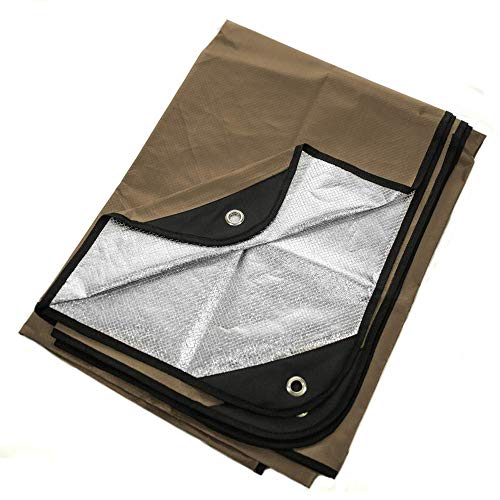
| Arcturus Heavy Duty Survival Blanket | Reusable tarp-style blanket | 60″ x 82″ | ~19 oz | Waterproof tarp + reflective mylar interior | Bug-out bags, get-home bags, car kits, shelter building | Ultralight hiking | Durability + versatility (acts as tarp + blanket) |
| ANLOKE (or Similar) Mylar Blankets | Disposable mylar sheet | ~82″ x 64″ | ~2–3 oz | Reflective mylar | First-aid kits, glove boxes, budget prepping | Reuse, shelter building, rough terrain | Extremely lightweight + cheap enough to stash everywhere |
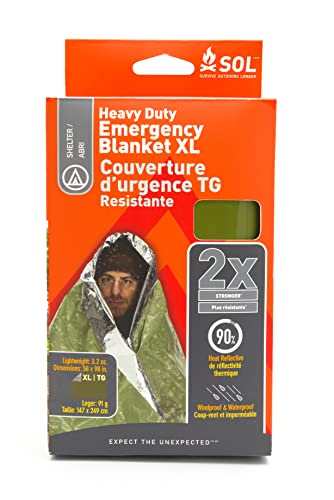
| SOL Emergency Blanket | Lightweight mylar blanket | ~52″ x 82″ | ~2–4 oz | Reinforced mylar | Hiking, running, ultralight packs | Long-term use, shelter construction | Best warmth-to-weight ratio |
| Survival Frog Tact Bivy | Emergency bivvy (sleeping bag style) | One-person (body-length) | ~8–12 oz | Waterproof ripstop + reflective interior | Staying warm overnight, unexpected cold bivouacs | Warm-weather use, breathability | Superior heat retention; true overnight capability |
| Arcturus Military Wool Blanket | Wool survival blanket | ~64″ x 88″ | ~4 lbs | Wool blend (≈80% wool) | Cold-weather emergencies, car kits, home preparedness | Backpacking (too heavy) | Warm even when wet; durable & fire-resistant |
Arcturus Heavy Duty Survival Blanket – Best Overall Emergency Blanket
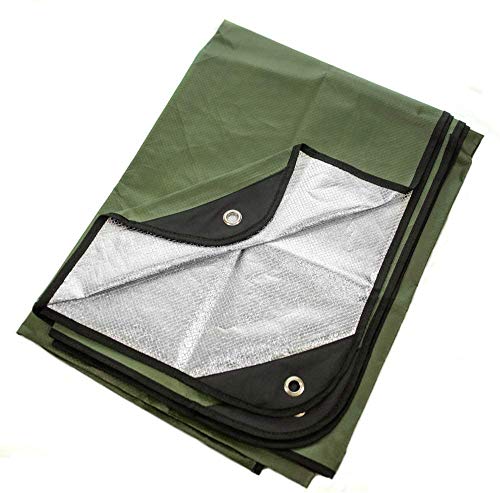
- Size: 60″ x 82″
- Weight: ~19 oz
- Material: Dual-layer waterproof tarp + reflective mylar
- Packability: Big and bulky
- Best For: Car kits, get-home bags, cold-weather emergencies
- Avoid If: You want ultralight gear
The Arcturus Heavy Duty Survival Blanket is the only “emergency blanket” I’ve used that doesn’t feel disposable.
Most mylar blankets tear if you sneeze on them. This one acts like actual gear. I’ve carried it in my truck, stuffed it in my get-home bag, and used it as everything from a windbreak to a groundsheet. After all that, mine barely shows wear.

The outer layer is a waterproof, windproof tarp material that’s surprisingly flexible. The inside is reflective mylar, which helps trap heat when you’re sitting still and trying not to freeze. When I first unrolled it, I expected it to feel stiff, but it folds and packs a lot easier than you’d think for a heavy-duty blanket.
Where this blanket really stands out is versatility. The metal grommets let you pitch it like a lean-to, lash it between trees, stake it down as a ground cloth, or use it as an emergency roof if you’re trying to get out of the wind. I’ve done all of the above with it.
If you’ve ever tried rigging a normal mylar blanket as a shelter, you know it’s a nightmare. They rip instantly. The Arcturus doesn’t. I’ve yanked on the corners harder than I should admit, and it just holds.
Another thing I appreciate: it’s quiet. Most mylar blankets sound like you’re wrestling a bag of chips. This one doesn’t give away your position to everything within a quarter mile.

It is heavier than a pocket-sized emergency blanket, but that’s the tradeoff for durability and real thermal protection. If you want something that actually keeps you alive instead of giving you false confidence, this is the one.
If the bulk bothers you, pair it with a cheap mylar blanket for layering, but for real emergencies, the Arcturus stays in my bag.
Recommended for:
The Arcturus Heavy Duty Survival Blanket is for anyone who wants a reliable, reusable emergency blanket that doubles as shelter material. Perfect for car kits, bug-out bags, get-home bags, and winter emergencies where failure isn’t an option.
PROS
Extremely durable
Works as a tarp, shelter, groundsheet, or reflector
Actually reusable
Reinforced grommets
Waterproof and windproof
CONS
Heavier and bulkier than cheap mylar sheets
Can trap condensation if wrapped too tightly
SOL Emergency Blanket – Best for Ultralight Carry
- Size: ~52″ x 82″ (varies by model)
- Weight: ~2–4 oz (depending on size/version)
- Material: Reflective mylar with reinforced corners
- Packability: Packs down extremely small
- Best For: Backpacking, day hikes, lightweight kits
- Avoid If: You need durable, long-term, or reusable gear
If your priority is weight and pack size first, the SOL emergency blanket is the one you toss into a hiking pack, day bag, or minimalist get-home kit. I’ve carried this version on long trail days and in minimalist packs where every ounce matters, and while it’s not as tough as a laminated tarp-style blanket, it does exactly what a lightweight mylar blanket should: block wind, reflect body heat, and stay stashed until you actually need it.

The reflective material is thin, but decent. In still air and cold temps, you’ll notice a real difference when you wrap it around yourself compared to nothing at all, particularly if paired with clothing layers.
On a cold backpacking rest stop or when an unexpected storm rolls in, this little foil sheet can be the difference between “just cold” and hypothermia risk.
Because it’s so light, I’ve tossed one of these in everything from day packs to glove boxes to pocket pouches. It’s especially handy for runners, cyclists, and hikers who want backup warmth without a bulky piece of gear slowing them down.

A minor gripe: like all lightweight mylar blankets, it’s noisy (crinkly), and the corners can tear if snagged on something sharp. But that’s a trade-off you already signed up for when prioritizing ultralight carry. If your goal is weight first, durability second, this is the staple pick.
Recommended for:
The SOL emergency blanket is for minimalist hikers, trail runners, cyclists, and anyone who wants the lightest possible emergency blanket that still works as intended. Great for day hikes, trail kits, and compact get-home bags where space and weight are priorities.
PROS
Extremely lightweight
Packs down tiny
Provides real warmth and wind protection in emergencies
Affordable and easy to replace
Works well as a backup layer in larger kits
CONS
Not very durable (tears more easily than laminated blankets)
Not truly reusable if you actually use it
Crinkly material can be loud and uncomfortable
Limited versatility compared to larger/heavier blankets
ANLOKE Mylar Emergency Blankets — Best Budget Mylar Blanket
- Size: ~82″ x 64″ (varies slightly by batch)
- Weight: ~2–3 oz per blanket
- Material: Reflective mylar film
- Packability: Ultra-compact; pocket-size when folded
- Best For: Car kits, first-aid kits, multi-kit redundancy
- Avoid If: You want durable, long-term reusable gear
The ANLOKE Mylar Emergency Blankets are exactly the kind of budget survival gear that earns its place in every kit. I’ve stashed these in glove boxes, medical kits, get-home bags, and backpack pockets. At a few bucks each for large, full-sized mylar sheets, you can afford to spread them everywhere you might need one.
These are the classic “space blankets” you’ve probably seen on TV: thin, shiny, crinkly sheets of reflective mylar designed to hold in your radiant body heat. When you’re shocked by a sudden drop in temperature, don’t underestimate what a cheap reflective layer can do: wrapped around your torso over your jacket, they can cut heat loss significantly and help prevent hypothermia in a pinch.

The ANLOKE blankets aren’t rugged, but they’re not supposed to be. These aren’t heavy laminated tarp blankets with reinforced grommets; they’re ultralight, compact, and disposable if you actually use them. They tear if you brush them against rough bark or drag them over rocks, but that’s a known trade-off with this material.
When used correctly, they perform exactly as intended.
I like that each blanket packs down tiny. In a cluttered kit, that matters. If your car’s emergency bag already has 50 things in it, adding a few of these won’t make the zipper complain. And because they’re inexpensive, you can justify stuffing one into every survival kit you own, from the bathroom drawer to the hiking backpack to the roadside emergency kit.

Do they feel premium? No. Do they work when you need them? Absolutely.
Recommended For:
The ANLOKE Mylar Emergency Blankets is for anyone who wants a light, cheap, no-frills mylar emergency blanket that reliably reflects body heat and packs into tiny spaces. Perfect for first-aid kits, glove boxes, backpack emergencies, kid bags, and budget-focused preppers.
PROS
Extremely lightweight
Ultra-compact
Very affordable
Reflects body heat effectively in emergencies
Easy to replace
CONS
Not durable
Crinkly material can be loud and uncomfortable
Not reusable after heavy use
Offers limited warmth compared to heavier options
Survival Frog Tact Bivy — Best for Staying Warm Overnight
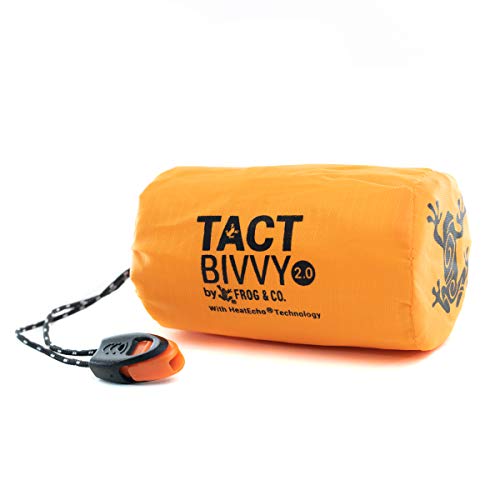
- Size: One-person bivy (snug, body-length)
- Material: Waterproof ripstop shell with reflective mylar interior
- Weight: ~8–12 oz (varies by model)
- Packability: Packs down to a very small footprint
- Best For: Overnight emergency shelter, hiking, bug-out bags
- Avoid If: You want a full sleeping bag or more breathable base layer
If you’ve ever wondered about the difference between a traditional emergency blanket and an emergency bivvy, the Survival Frog Tact Bivy is the gear answer. Mylar blankets reflect heat, and tarps block wind, but a bivvy bag actually traps your body heat around you while shedding water and wind like an actual shelter.
I first added this to my get-home and bug-out bags after a post-holiday hike that turned far colder than expected. Temperatures dipped, winds kicked up, and the crinkly mylar I had in my pack did its job, barely.

A bivvy bag like this, though? It held warmth, blocked wind, and kept moisture out like a tiny emergency sleeping bag.
Unlike a regular sleeping bag, the Tact Bivy isn’t soft or cushy. That’s intentional. Its job isn’t luxury; it’s survival. The reflective interior helps bounce radiant heat back toward your torso, and the waterproof shell keeps wet conditions from robbing you of warmth.
Unlike a flat blanket or tarp, the bivvy surrounds you. When you pull it up to your shoulders on a cold night with no tent, it holds warmth in a way a single layer just can’t.

Because it packs so small and weighs very little relative to its warming ability, I routinely toss this into kits where space and weight matter: my get-home bag, winter day pack, and truck survival drawer. It’s the “if you have to spend a night out unexpectedly” tool in the emergency gear arsenal.
A couple things to note:
It does feel snug and claustrophobic for some people (it’s meant to trap heat), and it’s not as breathable as a sleeping bag, so if you’re sweating hard inside it, condensation happens and can actually cool you. That’s more of a bivvy bag thing than specific to this model. But for warmth, weather protection, and size-to-performance ratio, this is the bivvy worth carrying.
Recommended For:
The Survival Frog Tact Bivy is for hikers, preppers, and survivalists who want a real overnight emergency shelter that traps heat better than a flat blanket. Ideal for get-home bags, bug-out bags, winter day packs, and any kit where you want to be prepared for an unexpected overnight in the cold.
PROS
Great warmth retention
Waterproof and windproof
Packs very small for the performance you get
Lightweight relative to sleeping bags
Far more effective heat retention than flat mylar blankets
CONS
Snug fit can feel claustrophobic
Not as breathable as traditional sleeping bags
Not a substitute for proper winter sleep systems
Reflective material can trap condensation if you’re sweating
Arcturus Military Wool Blanket — Best Wool Emergency Blanket

- Size: ~64″ x 88″
- Material: ~80% wool / 20% synthetic/recycled fibers
- Weight: ~4 lbs
- Packability: Bulky compared to mylar; best for vehicles, home, and basecamp
- Best For: Cold-weather emergencies, car kits, home/cabin survival
- Avoid If: You need ultralight backpacking gear
The Arcturus Military Wool Blanket isn’t a flashy piece of survival gear. It doesn’t shine like mylar and it’s not ultralight like a bivvy, but if warmth, durability, and real-world performance matter to you, it earns its place near the top of any emergency blanket list.
Wool is one of the oldest, most dependable survival textiles in history for a reason: it insulates even when wet, resists flames better than most synthetics, and stays warm against your body in conditions where other blankets fail.

I’ve carried this blanket in my truck, kept one folded with our home emergency stash, and regularly grab it when I need extra warmth around camp or at basecamp. It’s the kind of item you don’t notice until you really need it, and then it becomes invaluable.
Unlike mylar sheets that only reflect heat on one side, wool generates and traps its own warmth. When paired under a tarp or inside a shelter, it adds a layer of insulation that makes a tangible difference overnight, especially in damp, cold environments where reflective blankets fall short.
The Arcturus blend keeps the wool from being unbearably itchy while still retaining the ruggedness you want in survival gear. This blanket has been thrown on the tailgate, dragged across wet ground, and used as an insulation layer under sleeping bags, and it still looks like gear, not trash.

If you’ve ever used a cheap cotton blanket in bad weather, you know how badly it fails: soggy, cold, worthless. Wool holds warmth when it’s damp, breathes when you’re sweating, and doesn’t collapse like synthetics when the temperature drops.
This isn’t a blanket you’ll want to carry on long backpacking treks, but for car kits, home emergency sets, cabins, basecamp use, and any situation where warmth and durability matter more than ounces, it’s hard to beat.
Recommended for:
The Arcturus Military Wool Blanket is for anyone who wants real, dependable warmth that works in cold, wet, or damp emergencies. Best suited for:
- Car and roadside emergency kits
- Home or cabin survival stash
- Basecamp warmth
- Cold-weather layering under tarps/shelters
PROS
Excellent insulation, even when damp
Durable and long-lasting compared to synthetics
More fire-resistant than typical synthetic blankets
Breathable but still very warm
CONS
Heavy and bulky compared to ultralight options
Not ideal for long-distance backpacking
Can feel stiff or slightly scratchy until broken in
How We Tested Emergency Blankets (and What Actually Matters)
Most emergency blanket reviews focus on marketing promises: “90% heat reflection,” “all-weather protection,” “military-grade,” and so on.
But we test gear the way it actually gets used: stuffed in a get-home bag, thrown in an emergency car kit, deployed quickly in cold wind, or used as an insulation layer when temperatures drop faster than expected.
Our testing focuses on four major criteria: weight/packability, durability, warmth/heat reflectivity, and real-world use cases. Those factors make the biggest difference when you’re cold, tired, and trying to keep yourself or your family warm.
Weight & Packability
For most people, an emergency blanket is something you carry everywhere and hope you never need.
So weight and packability matter, especially for:
- Hikers trying to keep pack weight down
- EDC kits that already carry too much
- Get-home bags where space is premium
Mylar blankets (like the ANLOKE set) excel here. They weigh almost nothing, compress down to the size of a deck of cards, and disappear into pockets or first-aid kits.
On the opposite end, wool blankets and laminated tarp-style blankets (like the Arcturus Heavy Duty) take up more space, but they offer better long-term durability and shelter flexibility.
If you’re worried about pack weight, our Bug Out Bag Weight Calculator can help you see exactly what these blankets add.
Bottom line:
Ultralight hikers and EDC users want mylar or SOL-style blankets. Vehicle kits and bug-out bags benefit from heavier blankets that actually survive repeated use.
Durability & Tear Resistance
Most cheap mylar blankets will tear if you:
- Unfold them aggressively
- Pull on the corners
- Catch them on a stick or zipper
- Try to rig them as shelter
That doesn’t mean they’re useless. It just means you can’t treat them like tarps. They’re emergency backups, not workhorses.
This is where reusable tarp-style blankets stand out. The Arcturus Heavy Duty Survival Blanket ranks #1 in durability because its tough outer shell:
- Resists tearing
- Works as a groundsheet
- Can be tied up using the grommets
- Functions as both a blanket and a shelter component
If you want something that can survive being dragged, stretched, folded, stuffed, and used repeatedly in harsh conditions, you need something more rugged than thin foil.
Durability takeaway:
If you plan to actually use your blanket to build shelter, block wind, or cover ground, pick a reusable option, not a $2 space blanket.

Warmth & Heat Reflectivity
Many emergency blankets claim “90% heat reflectivity,” and that number is technically true for reflective mylar surfaces. But it’s important to understand what reflectivity does and doesn’t mean.
Reflectivity = bouncing radiant heat back toward your body. It does not mean insulation. Insulation is what slows heat transfer through material. Wool and synthetic fills insulate. Mylar reflects.
This is why:
- A reflective blanket works best when wrapped around your body
- Using one over insulation layers helps retain warmth
- Pairing mylar with a wool blanket or sleeping pad dramatically improves warmth
- Mylar alone won’t keep you warm in freezing conditions without help because it reflects heat but doesn’t actively insulate on its own.
Heavier blankets (like the wool blanket and the Tact Bivy) add insulation, which prevents conductive heat loss, something reflective foil can’t do alone.
Warmth takeaway:
Mylar = reflects heat
Wool/Bivvy = retains heat
Heavy-duty blankets = do both better than cheap mylar alone
For truly cold nights, use a bivvy or wool blanket as your primary warmth layer, with mylar as a backup or wind barrier.

Real-World Use Cases We Tested
We don’t test emergency blankets in perfect conditions. We use them the way you will when things go wrong:
Cold Nights
Wrapped around the torso or layered over clothing to provide emergency heat retention. The Tact Bivy and wool blanket perform best here, with mylar as backup.
Wind Block
Flat mylar blankets tear easily in high winds, but as a wind barrier inside a shelter, they’re surprisingly effective. The Arcturus Heavy Duty also excels as a wind wall or lean-to.
Groundsheet / Insulation Under Sleeping Bags
Preventing heat loss to the ground is critical. Mylar helps reflect radiant heat upward, while the Arcturus and wool blanket give actual insulation and comfort.
Truck Emergency Kit
The Arcturus Heavy Duty Survival Blanket is the clear winner: durable, reusable, and useful as a tarp or shelter if you’re stranded. Wool blankets are excellent for passive warmth on cold roadside nights.

Get Home Bag / Bug-Out Bag
Space matters. The Survival Frog Tact Bivy offers the best overnight protection, while SOL blankets are ideal ultralight backups. Mylar blankets serve as disposable extras that weigh almost nothing.
If you’re still choosing a pack, we’ve also field-tested the best bug-out bag backpacks.
Use-Case takeaway:
Different blankets fill different roles.
Your kit should match your environment, and in many cases, having two types of blankets (durable + lightweight backup) is the smartest move.
Types of Emergency Blankets (And Which You Actually Need)
Not all emergency blankets are created equal. Some are designed for one-time emergency use, while others can survive years of outdoor abuse. The trick is knowing which type fits your situation because the blanket you’d want for an ultralight hike is not the same blanket you want in a truck during a winter breakdown.
These are the four main types of emergency blankets and what they actually do.
Mylar “Space” Blankets (Ultra Cheap, Ultra-Light)
This is the classic shiny silver blanket everyone imagines when they hear “emergency blanket.” It weighs almost nothing, folds down to pocket-size, and costs less than a cup of gas station coffee. Mylar is designed to reflect up to ~90% of your radiant body heat back toward you.
PROS
Extremely lightweight and compact
Very inexpensive
Good backup layer for heat reflection
Ideal for stuffing into multiple kits
CONS
Tears easily
No insulation (reflection ≠ warmth)
No shelter-building strength
Best For: Budget kits, first-aid kits, glove boxes, backup layers in hiking packs.
Laminated Reusable Survival Blankets (Arcturus-Style)
These blankets combine a tarp-like outer shell with a reflective inner layer, giving you the durability of a shelter and the thermal benefit of mylar. The Arcturus Heavy Duty Survival Blanket is the gold standard here.
PROS
Strong, reusable, and hard to rip
Provides real protection from wind and rain
Works as a tarp, lean-to, groundsheet, or reflector
Far more versatile than thin mylar
CONS
Heavier and bulkier
Too large for minimalist hiking kits
Best for: Bug-out bags, get-home bags, truck kits, shelter-building kits. If you want one blanket that does everything, this category is what you actually need.
Emergency Bivvies (Sleeping Bag-Style Blankets)
A bivvy is basically a reflective emergency blanket shaped into a body-length sleeping bag. Instead of wrapping a flat sheet around you (which leaks heat), a bivvy traps warm air and dramatically boosts heat retention.
The Survival Frog Tact Bivy is a perfect example: warmer, more protective, and far more reliable for actual overnight survival.
PROS
Excellent heat retention
Windproof and waterproof
Compact enough for hiking and GHBs
Best for actual overnight emergencies
CONS
Can feel snug or claustrophobic
Less breathable than sleeping bags
Not ideal for warm climates
Best for: Unexpected overnights, get-home bags, hikers who want real sleep protection. If you camp or hike in cold climates, or want a true “stay alive overnight” tool, get a bivvy.
Wool Blankets (Traditional Warmth & Long-Term Durability)
Wool has been the survival standard for centuries, long before mylar was invented. It insulates even when wet, resists fire, breathes better than synthetics, and delivers reliable warmth across a huge temperature range.
The Arcturus Military Wool Blanket is one of the best emergency wool blankets for home or vehicle kits.
PROS
Warm even when damp
Durable, reusable, and long-lasting
Fire-resistant (safe near campfires)
Comfortable for long-term use
CONS
Heavy and bulky
Not suitable for ultralight carry
Some people find wool scratchy
Best For: Car kits, home emergencies, cabins, cold-weather base camps. When weight doesn’t matter and comfort does, wool is the winner.
Which One Do You Need?
- For hiking / ultralight: SOL Emergency Blanket or a mylar backup
- For real survival or shelter building: Arcturus Heavy Duty Survival Blanket
- For actual overnight warmth: Survival Frog Tact Bivy
- For home or vehicle cold emergencies: Arcturus Military Wool Blanket
- For redundancy everywhere: ANLOKE Mylar 10-packs
Most preppers carry two types: A durable reusable blanket (Arcturus) plus a lightweight emergency backup (SOL or mylar).
That combination covers 99% of realistic scenarios.
How to Use an Emergency Blanket Without Making Things Worse
Emergency blankets are simple tools, but they’re also incredibly easy to misuse. Plenty of people wrap themselves in mylar like a baked potato and then wonder why they’re colder ten minutes later. Used correctly, these blankets can slow heat loss, block wind, and buy you time in dangerous conditions. Used incorrectly, they can trap moisture, leak warmth, or even accelerate heat loss.
Here’s how to get it right.
Don’t Put It Directly on Bare Skin
Emergency blankets, especially mylar, work best when they can reflect your radiant heat back toward your body. If you wrap the reflective layer right onto bare skin, two things happen:
- Condensation builds instantly. Sweat + mylar = cold, wet misery.
- Your body cools faster. The moisture evaporates under the foil, pulling heat away from your skin.
Correct method: Wear a base layer or jacket. Wrap the blanket over your clothing, not against your skin.
Always Add Insulation Under You
Your body loses heat to the ground much faster than to the air. Sitting or lying on cold dirt, rock, or concrete will drain warmth even if you wrap yourself in six layers of mylar. Medical guidelines for treating hypothermia specifically recommend insulating a person from the cold ground as a first step.
This is why our testing always includes ground insulation:
- Use a wool blanket
- Use a sleeping pad
- Use pine boughs, leaves, or even your backpack
- Use a tarp or the Arcturus blanket as a groundsheet
Mylar is a heat reflector, not a ground insulator. Pairing the two makes the system work.

Use It to Block Wind, Not Replace a Sleeping Bag
An emergency blanket isn’t a standalone solution. It’s a component of a survival setup.
When conditions worsen, pair your emergency blanket with:
- A tarp or Arcturus blanket pitched as a lean-to
- A small fire (reflective side facing the flame to bounce heat back)
- Wool layers to trap warmth
- A ground pad or dry backpack under your body
- A wind break built from branches, debris, or your vehicle
Emergency blankets shine brightest as part of a system, not the system itself.
Common Mistakes We See All the Time
- Wrapping it loosely: leaks heat everywhere
- Facing the reflective side out when trying to stay warm
- Trying to use cheap mylar as a tarp (it will shred)
- Not anchoring the corners: wind turns it into a sail
- Not replacing used mylar blankets: they don’t fold back neatly and won’t perform the same twice
If you remember nothing else: Tight and close for warmth; anchored and reinforced for shelter.
What We Personally Carry (From the Field)
Emergency blankets are one of those gear items that look the same on paper but perform wildly differently in real life. That’s why we always test with the same philosophy we use for our survival kits:
If it’s in our truck, get-home bag, or first-aid kits, it earned that spot.
Here’s what we actually carry and why.
In the Truck (Year-Round Kit)
Our truck kit gets the most abuse, so it carries the gear we trust the most. That includes:
- Arcturus Heavy Duty Survival Blanket: This stays permanently in the vehicle because it’s the only blanket tough enough for repeated use. We’ve used it as a tarp in the rain, an insulation layer under gear, a reflective windbreak, and even as a makeshift ground cloth when dealing with cold, muddy terrain.
- One or two cheap mylar blankets: These weigh nothing and take no space, so we keep extras for temperature drops or medical emergencies.
- Wool blanket (Arcturus Military Wool): For winter travel or cold climates, wool is unbeatable. It’s comfortable, warm, and works even if conditions are wet or icy.
The truck kit is all about comfort + durability + redundancy, and this combo checks every box.
Get-Home Bags
Get-home bags are where weight and reliability have to meet in the middle.
Here’s the system we carry:
- Survival Frog Tact Bivy (primary warmth layer): If you’re stuck overnight while walking home, a flat sheet of mylar is not going to save you. A bivvy actually traps heat and blocks wind, and that can be the difference between “cold and miserable” and “dangerous.”
- Arcturus Heavy Duty Blanket (secondary shelter piece): Yes, it’s heavier. Yes, it’s worth every ounce. If I’m hoofing it home during a power outage, blizzard, or severe weather, I want something that can act as a shelter wall, ground cover, tarp, or durable windbreak.
This kit gives us full shelter capability: insulation, reflection, wind protection, and waterproofing, all while keeping weight reasonable.

In First-Aid Kits and Trauma Kits
Every medical kit we own, from home to truck to range bags, includes at least one mylar blanket.
Why?
Because in first-aid scenarios, the fastest killers are:
- massive bleeding
- airway issues
- hypothermia
Even in warm environments, shock can cause rapid heat loss. A simple reflective blanket can help stabilize body temperature while you handle the actual medical issue.
Cheap Mylar blankets are perfect here because:
- They pack extremely small
- They’re inexpensive
- They work instantly when wrapped around the torso
- You won’t feel bad disposing of them after use
We don’t overthink this one: every emergency medical kit gets one.
Around the Homestead / Basecamp
For stationary preparedness, comfort and warmth matter more than pack weight. That’s where the Arcturus Military Wool Blanket shines.
We use wool blankets for:
- Power outages
- Winter storms
- Grid-down scenarios
- Basecamp warmth near the fire
- Layering under cots or over sleeping bags
They’re warm, durable, and infinitely reusable, exactly what you want when the emergency lasts more than a few hours.
The Short Version of Our System
Truck: Arcturus Heavy Duty + Wool + Mylar backups
GHB: Tact Bivy + Arcturus Heavy Duty + Mylar backups
First Aid: Mylar blankets in every kit
Home/Basecamp: Wool blankets for comfort and long-term emergencies
This is the combination that’s served us through cold snaps, storms, long trips, and backcountry overnights, and it’s the gear we trust enough to recommend here. For more big-picture planning, our preparedness hub pulls together bug-out, get-home, and survival planning in one place.
FAQ: Emergency Blanket Basics
Emergency blankets are simple tools, but there’s a lot of confusion about how they work, when to use them, and which type is best. Here are the answers to the most common questions we get about these blankets, based on real-world testing and actual field use, not marketing hype.
Do wool blankets count as emergency blankets?
Technically, yes, wool blankets absolutely count as emergency blankets, especially for home, vehicle, and long-term survival setups. Wool insulates even when wet, is naturally fire-resistant, and provides steady, non-reflective warmth that’s hard to beat.
However, wool isn’t ideal for hiking or backpacking, because it’s heavy and bulky. For mobile scenarios where weight matters, stick with:
- Mylar
- SOL blankets
- A compact bivvy
For stationary emergencies (power outages, winter storms, car breakdowns), a wool blanket is one of the best emergency warmth tools you can own.
How many emergency blankets do I really need?
For most people, a simple setup covers 99% of realistic situations:
- 1 Arcturus Heavy Duty Survival Blanket (your main reusable, shelter-building workhorse)
- 2–4 mylar blankets (cheap backups for shock, heat reflection, or wind blocking)
- 1 wool blanket (for home or vehicle warmth that works even in wet cold)
- Optional: 1 emergency bivvy (for true overnight warmth in your get-home or hiking bag)
Think of it like layering clothing, each type of blanket fills a different role.
Can you sleep in an emergency blanket?
Yes, but with some important limitations.
A flat mylar emergency blanket can help retain heat when you’re sitting still or resting, but it is:
- Not breathable
- Easily torn
- Not insulated
- No substitute for a sleeping bag
You can sleep in one if you absolutely have to, but expect condensation and limited warmth.
A better option for sleeping is a bivvy like the Survival Frog Tact Bivy. It traps heat more effectively, blocks wind, and behaves more like an emergency sleeping bag.
If your goal is to survive an unexpected cold night, use a:
- Bivvy as your primary warm layer
- Arcturus blanket as a windbreak or tarp
- Wool blanket for extra insulation
- Sleeping pad or ground insulation under your body
Sleeping directly on cold ground is a faster way to lose heat than anything else.
Emergency blanket vs. space blanket: what’s the difference?
Nothing. “Space blanket” is just another name for a Mylar emergency blanket. They’re the same product.
The term “space blanket” came from NASA’s early reflective insulation material, which is why many people still use it today.
But be careful: space blanket almost always means the thin, crinkly, disposable style, not the heavy-duty reusable blankets like Arcturus.
Emergency blanket vs bivvy: which is better?
It depends on what you’re trying to survive, but here’s the simple ranking:
Best for Staying Warm Overnight → Bivvy
A bivvy traps heat by surrounding your whole body and blocking wind and moisture. It’s the closest thing to an emergency sleeping bag.
Winner for warmth: Bivvy
Best for Shelter Building → Arcturus-Style Blanket
Reusable, durable, multi-use, and strong enough to tie up as a tarp or windbreak.
Winner for versatility: Arcturus
Best for Ultralight Backup → Mylar Blanket
Cheap, compact, reflective. Great “just in case” layers.
Winner for weight: Mylar
Best for Home/Car Emergencies → Wool Blanket
Reliable warmth, comfortable, and performs well in damp cold.
Winner for comfort + long-term use: Wool
If you need one item for real survival, choose a reusable tarp-style blanket or a bivvy. If you need backup layers everywhere, choose mylar.
Conclusion: What Actually Works When Things Go Wrong
Emergency blankets all claim to do the same thing: keep you warm when conditions turn against you. But after years of carrying them in our truck kits, get-home bags, first-aid kits, and testing them in cold, windy, and downright miserable conditions, one truth stands out:
The blanket that works in real emergencies isn’t always the one that looks the best on paper.
Cheap mylar blankets are fantastic backups because they’re lightweight and nearly free. SOL blankets are great for hikers who want ultralight warmth without weighing down their pack. Bivvies are the closest thing to an emergency sleeping bag, and if you’re stuck overnight, nothing beats them. Wool blankets shine at home or in your vehicle when comfort and long-term warmth matter more than ounces.
But if you want the single most reliable, most versatile emergency blanket, the one that’s earned a permanent spot in our truck, our get-home bags, and several of our home kits, it’s the Arcturus Heavy Duty Survival Blanket. It’s durable, reusable, weather-resistant, and genuinely useful as a shelter component, not just a shiny sheet of foil.
If you’re only adding one blanket to your emergency gear, start with the Arcturus.
If you’re building an entire system, pair it with a mylar backup and a bivvy, then add a wool blanket to your vehicle or home kit for real cold-weather resilience.
Preparedness isn’t about having everything. It’s about having the right things.
And a solid emergency blanket system is one of the cheapest and most effective ways to protect yourself when temperatures drop, and conditions get ugly.
Ready to upgrade your kit? Start with the blanket we trust most: Arcturus Heavy Duty Survival Blanket
