
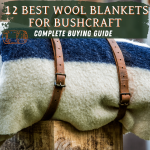
If I could only throw one wool blanket for bushcraft in my pack for a wet, cold night in the woods, it’d be the Pendleton Yakima Camp Blanket.
Here’s why:
Wool isn’t just “warm and cozy.” For bushcraft, it’s practically a cheat code. It keeps insulating when it’s damp, shrugs off campfire sparks, and doesn’t turn into a cold, soggy mess the second the weather changes. In the right conditions, wool can even release a bit of heat as it absorbs moisture, which is exactly what you want when the temperature drops and everything around you feels clammy.
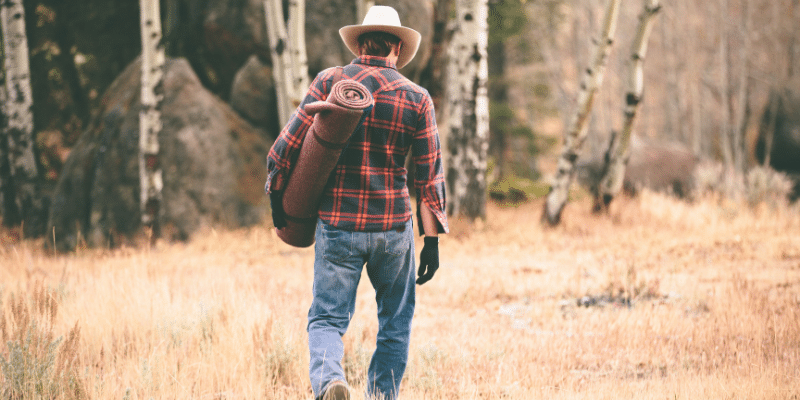
The Yakima nails that balance:
- Built by a company that’s been making hard-wearing wool gear for over a century
- 86% wool for serious warmth and insulation
- Just enough cotton for breathability and comfort
Between my own testing and the opinions of our bushcraft crew (including Blake, who willingly spends one weekend a month living in the woods, all year long), this is the blanket that keeps rising to the top.
That said, no single wool blanket is perfect for everyone. Some of you are counting ounces in a pack. Others want a trunk blanket that can live in the car until something goes sideways. Some of you run cold; others just want a fire-safe layer to throw down on wet ground.
So in this guide, we’ll break down the best wool blankets for bushcraft, who they’re actually best for, and where each one shines (or falls short) in real-world use.
Quick Comparison of The Best Wool Blankets

Swiss Army Military Wool Blanket
Very Durable
Machine-Washable
Generous Size
Price: $$
Save 10% at Army Navy Outdoors with code “SURVIVE10”
Pendleton Yakima Camp Blanket – Best Wool Blanket for Bushcraft

Key Specs
- Size: 84 x 90 inches
- Wool Content: 86% wool / 14% cotton
- Weight: ~4.5
- Best for: Cold-weather bushcraft, car camping, base camps
- Avoid if: You need ultralight gear
Expert Review
If I could only bring one blanket into the woods, it would be this one. The Pendleton Yakima Camp Blanket features high-quality wool, making it warm and durable. Therefore, it’s a great option for bushcraft.
Specifically, it’s made of 86% wool and 14% cotton, providing insulation and breathability. The wool has natural moisture-wicking properties, helping keep it and you dry in wetter situations.
During our Pendleton Yakima Camp Blanket review, this model consistently performs better than lighter or cheaper blankets thanks to its 86% wool construction and reliable warmth.
It’s basically the Swiss Army knife of wool blankets: big enough to double over in the cold, tough enough to throw on the ground, and warm enough to make you forget about that sleeping bag you left at home.
With that said, this blanket does shed quite a bit. In my experience, this can be quite annoying. However, it isn’t uncommon for wool blankets.
This blanket also weighs 4.5 pounds, making it pretty heavy. It isn’t exactly the best option for long-distance backpacking.
While the makeup of the blanket has remained unchanged, Pendleton did release several new designs in 2025, including Mystic Lake and Cascadia.
Recommended For:
If you’re looking for the best wool blanket for bushcraft, the Pendleton Yakima Camp Blanket is easily the best option. Unless you’re on a strict budget or need something for a more specific situation, this blanket is a wonderful overall choice.
PROS
86% wool offers excellent real-world warmth
Large enough to double over for sub-freezing nights
Made in the USA with long-term durability
Breathable but still insulating when damp
CONS
Sheds noticeably until broken in
Heavier than most blankets in its class
Arcturus Military Wool Blanket – Best Budget Wool Blanket for Prepping

Key Specs
- Size: 64 x 88 inches
- Wool Content: 80% wool
- Weight: ~4 lbs
- Best for: Budget bushcraft, rugged multi-use, ground cover
- Avoid if: You want a soft next-to-skin blanket
Expert Review
Buying wool blankets can get expensive very quickly. However, the Arcturus Military Wool Blanket is cheaper than most other wool blankets, making it a great option for those on a budget.
Thick, tough, with enough surface to double as ground cover or wrap up tight on a damp night. It doesn’t pretend to be ultralight, but it delivers where it counts: warmth, durability, and value.
Despite its lower price, it’s made of 80% wool, allowing it to provide excellent insulation and durability. Because it has a high wool content, it can withstand moisture and keep you dry. Plus, it’s machine-washable – a rare feature among wool blankets.
This blanket isn’t as large as some others. While this can be a downside, it also makes it easier to pack. Therefore, if you’re just a single person backpacking, the Arcturus Military Wool Blanket is one of the better options.
That said, it’s got that “rugged” feel: you know you’re carrying something. The edges are rougher, it’s not as soft as merino or high end Pendleton. But each time I hauled it over rocky trails or threw it down on wet ground, it didn’t gasp or tear.
If you need something to beat up, something you trust around fire pits, or something that won’t mind sitting in the trunk of your car until you need it, this one steps up.
Recommended for:
Consider the Arcturus Military Wool Blanket if you want a wool blanket that won’t cost you an arm and a leg. It’s much cheaper than most while still getting the job done.
PROS
Rugged, abuse-ready, and budget-friendly
Machine-washable (rare for wool)
80% wool content provides solid warmth
Versatile size for ground cover or wrapping
CONS
Coarser and scratchier than premium blankets
Bulky when packed
Swiss Army Military Wool Blanket – Best for Rugged Conditions
Save 10% at Army Navy Outdoors with code “SURVIVE10”
Key Specs
- Size: 60 x 84 inches
- Wool Content: 70% wool
- Weight: ~4 lbs
- Best for: Harsh terrain, emergency use, high-abuse situations
- Avoid if: You’re sensitive to scratchy wool
Expert Review
In this military wool blanket review, the Swiss Army Military Wool Blanket stands out for its ruggedness, simplicity, and ability to take real field abuse. Sometimes you just want something that feels like it could survive being dropped into a firefight and still keeps you warm on a wet groundsheet.
It’s made from 70% wool, providing plenty of warmth. It’s durable and made to withstand all sorts of abuse. Plus, it’s plenty big enough to double up if needed.
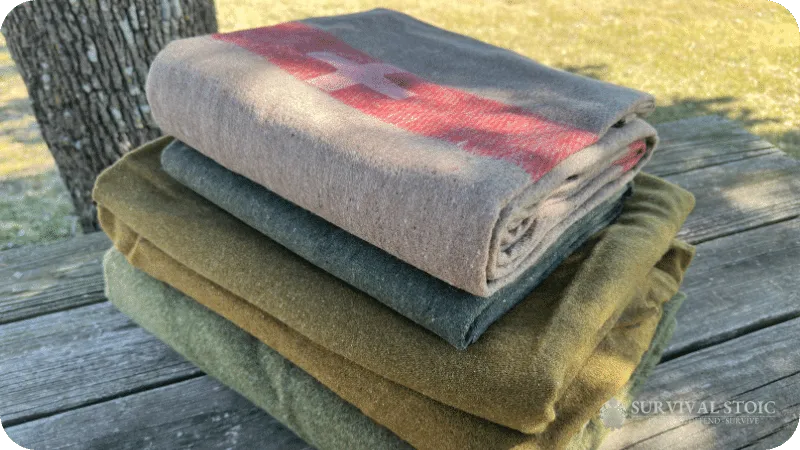
On the downside: it scratches. I found myself wishing I’d worn more layers or used a liner between me and the blanket after a few hours.
Also: if you leave it compressed (e.g. folded under your pack) overnight, it loses a bit of its insulating air pockets, but still outperforms many synthetics in that state. Clean‐up is easier than you’d think (hand wash, gentle soap, air dry) but don’t expect it to dry fast in cold, damp weather.
Recommended for:
I recommend the Swiss Army Military Wool Blanket for those who need a very durable option. It’s perfect for more intense outdoor activities. Plus, it’s pretty inexpensive, too. It’s a mid-range option that provides a lot of versatility, though it may not be as warm as others.
PROS
High durability and field-ready toughness
Decent insulation even when damp
Great for rugged, high-wear environments
CONS
Itchy texture early on
Loses loft when compressed overnight
Woolly Mammoth Merino Wool Blanket – Best Lightweight Wool Blanket for Bushcrafting

Key Specs
- Size: 66 x 90 inches
- Wool Content: 80% merino
- Weight: ~4 lbs
- Best for: Sensitive skin, hiking, layered warmth
- Avoid if: You ned max loft or thick insulation
Expert Review
If you want a wool blanket that treats your skin a little nicer than coarse army-surplus wool, this is your pick. The Woolly Mammoth Merino Wool Blanket strikes a balance: soft Merino warmth, big enough coverage, and rugged enough for real outdoors work, so long as you don’t expect ultralight performance or “throw it by the fire storm” toughness.
It’s important to note that wool allergies are exceedingly rare. However, contact dermatitis caused by wool isn’t, largely because many types of wool are coarse and irritating. Merino wool is much finer and softer, so it’s advertised as hypoallergenic.
Merino wool is much more expensive than other varieties. However, this blanket is surprisingly inexpensive for what you’re getting. This type of wool is also lighter than others, so this blanket is a bit lighter at 4 pounds. It’s also very compact, making it easier to pack.
Drawbacks: It sheds a little early on (loose fibers). Nothing catastrophic, but you’ll find fuzz in your sleeping bag at first. Also, the blend means it won’t perform quite as well as 100% heavy wool in soaking rain or when you need maximum insulation with minimal compression. It also takes time to dry because of its thickness.
Recommended for:
If you find wool irritating, the Woolly Mammoth Merino Wool Blanket is a solid option. It’s much softer and less likely to irritate sensitive skin. It’s also lighter and odor-resistant, making it much easier to keep stored in a bag.
PROS
Soft merino feel, great for sensitive skin
Lightweight relative to warmth
Packs smaller than most traditional wool blankets
CONS
Not as warm as heavy 100% wool
Sheds early on
EKTOS 100% Wool Blanket – Best Wool Blanket for Extreme Cold

Key Specs
- Size: 66 x 90 inches
- Wool Content: 100% wool
- Weight: ~5 lbs
- Best for: Wet/cold conditions, survival setups, fire-side use
- Avoid if: You want a soft or lightweight blanket
Expert Review
Because sometimes you want zero compromises: no blends, just wool doing its thing. The EKTOS 100% Wool Blanket hits that mark. The EKTOS often ranks as one of the warmest wool blankets for outdoors, especially in wet or freezing conditions where synthetic insulation fails.
It’s heavy, and it delivers exactly what wool promises: heat when wet, resistance to fire, and durability under abuse. If you want something that actually feels survival-grade (not just “looks rugged” marketing), this is the blanket.
It’s 66 by 90 inches, plenty big enough to double up. It’s also heavier because of its larger size, weighing 5 pounds. Therefore, it may not be the best option for situations where every ounce counts.
Surprisingly, this wool blanket is averagely priced, which I didn’t expect because of its 100% wool content. However, Ektos doesn’t have the name recognition that Pendleton or Woolrich have, hence the lower price.
It’s not perfect though. When you first open it, you’ll probably get hit with the scent of raw wool (or some production oils); it smells strong, and some people find it unpleasant until you wash and air it out. Also, that wooliness means itching unless you have layers in between or use it spread over a smoother surface.
Recommended for:
The EKTOS 100% Wool Blanket is best for those who prioritize warmth and durability over aesthetics. I highly recommend this blanket if you’re set on 100% wool but have a budget. It isn’t the same as a high-end blanket, but not everyone needs a high-end blanket.
PROS
100% wool = top-tier warmth and fire resistance
Thick weave holds heat extremely well
Great price for full wool content
CONS
Heavy and bulky
Strong wool smell out of the package
Coarse texture on bare skin
Rothco European Surplus Style Wool Blanket

Key Specs
- Size: 62 x 80 inches
- Wool Content: 90% wool
- Weight: ~4 lbs
- Best for: Budgt bushcraft, backup blanket, shelter lining
- Avoid if: You need quick-drying performance
Expert Review
We picked the Rothco European Surplus Style Wool Blanket because it hits that sweet spot: nearly full wool and serious warmth without an insane price tag. If we’re going to trust a blanket with freezing nights or emergency use, we want something that behaves like it came out of the field. This one does.
Compared to other blankets, this one is on the cheaper side. Surprisingly, it’s still made with quality craftsmanship and materials. It has a traditional European design, which I’ve discovered many men with minimalistic tastes prefer.
On the downside: it’s hefty. Once folded up, it eats space. And expecting it to dry fast? Forget it. After a rain, the blanket holds moisture; the blend helps a bit, but that wool content makes it slow to hang and shake dry. Also, the smell when new is real: strong wool/manufacturing oils. I air it out for a day before serious use.
Recommended for:
The Rothco European Surplus Style Wool Blanket works well for budget-conscious bushcrafters who want something light to survive a trek in the woods. It works well for milder climates or as a backup to a thicker wool blanket.
PROS
90% wool makes it warm for the price
Durable stitching and reliable construction
Good “backup blanket” for bushcraft setups
CONS
Slow to dry in wet weather
Noticeable manufacturing smell at first
Coarser than similar-priced blankets
Stansport 1243 Wool Blend Blanket
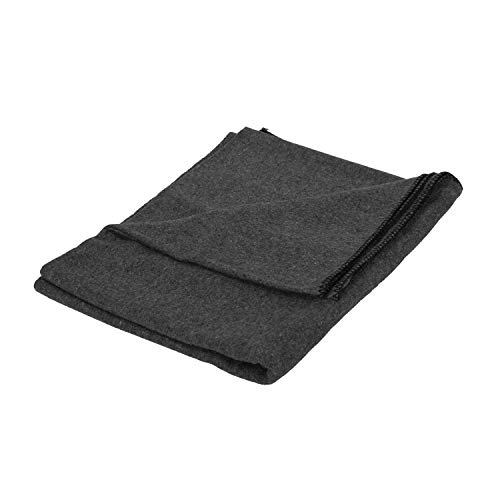
- Size: 60 x 80 inches
- Wool Content: 55% – 60% wool (varies slightly)
- Weight: ~3 lbs
- Best for: Budget car camping, emergency kit storage
- Avoid if: You need heavy-duty insulation or ruggedness
Expert Review
You don’t always need a Swiss-watch level blanket. Sometimes you want something cheap and serviceable. The Stansport 1243 is exactly that kind of “don’t stress it” blanket. It gives you some wool benefits, but sacrifices a lot. It’s a compromise, not a king.
If your mission is car-camping or “something in the trunk,” this one earns its keep.
What surprised me: it doesn’t feel terrible against layers. The synthetic blend smooths out some of wool’s itchiness. On a damp night, though, it became obvious it’s no heavyweight. Its insulating power took hits more rapidly than heavier wool blankets.
Also, edge fraying showed up after repeated dragging over rough ground.
If you toss it in the back of your vehicle as a “just in case” blanket, it’s a smart move. But for hard nights or wet storms, it’s a second-tier tool.
Recommended for:
I recommend the Stansport 1243 Wool Blend Blanket for those who want some wool benefits without paying a premium. It’s a good “step up” from cheap synthetic throws, but not a replacement for serious wool in harsh environments. Use it as a backup, a utility blanket, or for less demanding trips. If your priority is survival performance, you’ll probably want something with higher wool content.
PROS
Very affordable
Softer than many heavy wool options
Useful for casual camping or trunk storage
CONS
Only ~55–60% wool — limited insulation
Frays faster under harsh use
Not durable enough for hardcore bushcraft
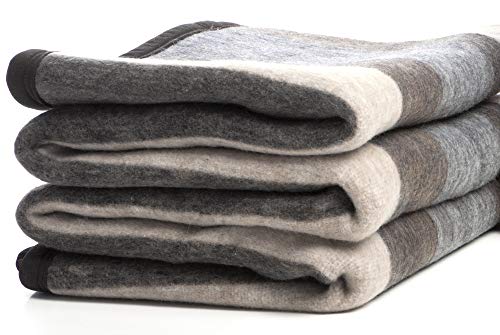
Desert Breeze Alpaca and Sheep Wool Blanket – Best Comfort-First Wool Blanket
Key Specs
- Size: 72 x 88 inches
- Wool Content: 100% alpaca/sheep wool
- Weight: ~4 lbs
- Best for: Cold climates, comfort-first camping, sensitive skin
- Avoid if: You’ll be packing in wet conditions (slow drying)
Expert Review
We picked the Desert Breeze Alpaca and Sheep Wool Blanket because it aims to elevate the wool blanket game: softer than many heavy wools and using a fiber blend (alpaca + merino) that gives you warmth and a gentler feel against skin. If you hate scratchy wool or want something cozy for those damp, cold cliff-side or lean-to nights, this one is tempting.
The alpaca + merino combo really stood out: it didn’t feel like I was wrapped in rough burlap (as many pure wool blankets do at first).
Furthermore, this blanket is made by artisans in Peru, where alpacas are native. These craftsmen come from an area that’s used alpaca wool for hundreds of years, so they know what they’re doing. This expertise makes the blanket particularly high-quality.
On the flip side, when I folded it and packed it up wet, the weight shot up — it stayed wet long into the next morning. If you don’t have somewhere to air it out, that can be a problem. Also, the smell when new is real, and honestly, a bit strong. But after a wash (gentle, cold) + airing, it faded.
Shedding: early days it leaves fuzz, but that tapered off.
Recommended for:
The main selling point of the Desert Breeze Alpaca and Sheep Wool Blanket is the inclusion of alpaca wool, which makes it extra soft. This option is excellent if you’re looking for an exceptionally soft and fluffy blanket. It also works well for sensitive skin, as alpaca wool tends to be softer than sheep wool.
PROS
Very soft and comfortable
Excellent warmth for the weight
Artisan-made with high-quality wool blend
CONS
Holds moisture longer
Higher price tag
Sheds early on
Pendleton Roll-Up Wool Blanket

Key Specs
- Size: 60 x 70 inches
- Wool Content: 100% wool
- Weight: ~3 lbs
- Best for: Portability, picnics, mild camping, fire-side sitting
- Avoid if: You need full-body coverage or deep cold insulation
Expert Review
Because every bushcrafter needs that one blanket you can actually roll up and strap to your pack without making it look like you’re hauling a wool boulder. The Pendleton Roll-Up Wool Blanket gives you a genuine wool blanket with the practicality of a built-in carry system.
It measures 60 by 70 inches, making it the perfect size for bushcraft. It’s large enough to use as a ground cover or lay under without being overly bulky. It also features a leather carrier with a handle for easy transport. Attaching it to your average bushcraft pack is easy to do.
In mild cold nights, it held up decently. But on deep cold, heavy rain or saturated ground, it can’t compete with a full-thickness wool. You’ll notice when you’re pushing limits.
However, it can be a bit scratchy as with most 100% wool blankets.
Recommended for:
The Pendleton Roll-Up Wool Blanket is a great option if you care about portability above all else. It’s made to be rolled up and shoved into a backpack much more easily than others.
PROS
Extremely portable with leather carrier
Good secondary blanket or camp seat
Durable Pendleton build quality
CONS
Smaller than other wool blankets
Scratchy; not ideal next to skin
Not warm enough for deep cold
Heavy Weight Alpaca Wool Blanket

Key Specs
- Size: 70 x 90 inches
- Wool Content: 85% alpaca/sheep blend
- Weight: ~5 lbs
- Best for: Extreme cold, cozy camping setups, high-loft insulation
- Avoid if: You’re backpacking or counting ounces
Expert Review
The Heavy Weight Alpaca Wool Blanket is quite thick, making it a good option for those looking for something very warm. It utilizes quality alpaca wool, so it is much softer than other blankets.
It’s not for lightweight hustling, but for comfort and staying cozy, this kind of blanket doesn’t just meet expectations; it leans into them.
This blanket is made to be less irritating than other wool blankets on the market while still being very warm. It’s heavy, though, so it isn’t the best option for carrying long distances.
Also, when compressed (folded), like when strapped to my pack, you lose a lot of loft, so some insulating power drops. And yes: the initial smell and shedding are real. But after a few uses + airing out + gentle wash, it becomes a blanket you want to curl into rather than toss aside.
Recommended for:
If you need a warm blanket but find sheep wool irritating, I recommend considering the Heavy Weight Alpaca Wool Blanket. Its main selling points are its thick construction and softness.
PROS
Incredibly warm thanks to alpaca blend
Soft next-to-skin feel
LLarge enough for full coverage
CONS
Heavy & bulky
Loses loft if compressed too hard
Slow drying
Walden Backyards Fireside Wool Blanket

- Size: 64 x 90 inches
- Wool Content: 80% wool
- Weight: ~4 lbs
- Best for: Fireside use, moderate cold, attractive camp setups, backyard use
- Avoid if: You need maximum wet-weather insulation or 100% wool performance
Because sometimes you want your gear to feel nice, not just “survive.” The Walden Backyards Fireside Wool Blanket gives you most of what makes wool magical (heat, fire resistance, moisture tolerance) wrapped in a design that doesn’t feel like “rugged gear only.” The leather strap and vintage styling tell you it’s meant to be shown off around the fire, not hidden under your pack.
The blanket itself is 80% wool, which is about average. That’s enough wool to give you the benefits of wool while also making the blanket lighter and more durable than a 100% wool blanket. It’s thick enough to provide plenty of warmth on cooler nights.
Plus, this blanket can be thrown into the washing machine for easy cleaning – no dry-cleaning like other blankets.
But let’s not pretend it’s flawless. The 80% wool blend means it doesn’t reach the “heat maker when wet” performance of full-wool beasts, and after being bunched up damp, drying was sloooooow. Also, the leather strap is durable, but in rough bushcraft use (rocks, branches) I’d watch for wear.
For serious deep-woods camping, you might want something denser; this one shines when you want durability + style + real usability.
Recommended for:
If your bushcraft style includes chill fireside evenings or even use around cabin or backyard fire pits, the Walden Backyards Fireside Wool Blanket is a top pick. It’s not your go-to for high-endurance treks or wet mountain nights, but for comfort and looks in moderate to cold conditions, it delivers.
PROS
Soft feel with a premium look
Leather harness is functional and stylish
Triple-washed for reduced itch
Great warmth for an 80% wool blend
CONS
Slower drying than pure wool
Not ideal for harsh bushcraft abuse
Blend doesn’t generate as much warmth when damp
A Quick Table of Our Favorite Bushcraft Blankets
| Blanket Name | Wool Content | Survival Strength | Ideal Bushcraft Use Case |
|---|---|---|---|
| Pendleton Yakima Camp Blanket | 86% Wool / 14% Cotton | Warm, breathable, durable | General-purpose camp blanket; car camping or base camp comfort |
| Arcturus Military Wool Blanket | 80% Wool / 20% Synthetic | Tough, abrasion-resistant, budget-friendly | Ground cover or shelter liner in rough terrain |
| Swiss Army Military Wool Blanket | 70% Wool / Blend | Military-grade durability, decent insulation | Rugged, high-wear situations; emergency shelter wrap |
| Woolly Mammoth Merino Wool Blanket | 80% Merino Wool / Synthetic | Soft, moisture-wicking, next-to-skin comfort | Active use, sensitive skin, hiking, or layered warmth |
| EKTOS 100% Wool Blanket | 100% Wool | Maximizes heat of sorption; all-weather warmth | Wet or cold conditions; survival situations; fire-proximity use |
| Rothco European Surplus Wool Blanket | 90% Wool / 10% Synthetic | Durable, versatile, moderately warm | Budget-conscious bushcraft; versatile shelter or ground cover |
| Stansport 1243 Wool Blend Blanket | 80% Wool / 20% Polyester | Lightweight, decent insulation | Backpacking-friendly, quick campsite warmth |
| Desert Breeze Alpaca & Sheep Wool Blanket | 85% Alpaca & Sheep Wool | Lightweight, very warm | Cold-but-lightweight situations; alpine or winter treks |
| Pendleton Roll-Up Wool Blanket | 100% Wool | Easy to carry, warm, multi-use | Fireside, camping, or emergency shelter; portable comfort |
| Heavy Weight Alpaca Wool Blanket | 85% Alpaca & Sheep Wool | Max warmth-to-weight ratio | Extreme cold, lightweight packing, basecamp insulation |
| Walden Backyards Fireside Wool Blanket | 80% Wool | Soft, stylish, fire-safe | Moderate cold, backyard fire or cabin use; versatile camp lounging |
Wool 101: Why It Works
Wool isn’t just “warm and fuzzy.” It’s basically nature’s survival tech, and the science behind it explains why it has outperformed synthetics for thousands of years.
Crimp = Tiny Insulation Chambers
Wool fibers have a natural crimp, little bends and waves that trap microscopic pockets of air. Those air pockets act like insulation, keeping warm air close to your body while blocking cold from creeping in
So what does this mean when you’re freezing your butt off in the rain?
Glad you asked: even damp wool still holds onto that insulating air, so you don’t feel the chill the way you would with cotton.
Heat of Sorption = Built-In Furnace
Here’s the cool part: wool doesn’t just hold heat; it makes it. When wool absorbs moisture, it releases a small amount of heat in the process. That’s called the “heat of sorption,” and it’s why damp wool still feels warm instead of clammy.
Translation:
You get a low-key chemical hand-warmer effect, right when you need it most.
Fire Resistance & Durability = Campfire-Proof Comfort
Unlike synthetic blankets, wool doesn’t melt or drip when it hits sparks. It chars, self-extinguishes, and keeps on insulating. That means you can cozy up close to the fire without worrying about melting holes in your blanket. Add in the fact that wool fibers can bend over 20,000 times without breaking, and you’ve got a material that’s as tough as it is warm.
In practice?
Wool takes the abuse of bushcraft life (dirt, sparks, rain, cold) and shrugs it off.
This natural flame tolerance is why so many bushcrafters rely on a fire-resistant wool blanket when working close to a campfire or wood stove.
If your priority is staying warm in unpredictable conditions, the best wool blanket for survival is one that balances high wool content with durability, moisture resistance, and real-world insulation.
Tips for Choosing the Best Wool Blanket
If you’re an avid camper, bushcrafter, or simply enjoy spending time outdoors in the wilderness, having a reliable, high-quality wool blanket is essential.
But, as you can see, not all wool blankets are made the same. There are many different styles, materials, and sizes to choose from. Some blankets work great for backpacking in milder climates, while others are heavy.
The best blanket for you depends on your situation and needs. This buying guide will help you sort through exactly what you need in your wool blanket.
Material
Not all wool is the same. While wool blankets are often sold under the same category, the wool they’re made out of can vary widely.
Wool may be derived from various species, including sheep, alpaca, llama, and yak. Each variety of wool has distinct properties that influence the blanket’s performance. Alpaca’s wool, for example, is a popular and inexpensive choice recognized for its softness and insulating characteristics. Sheep wool, on the other hand, is extremely warm and long-lasting, making it perfect for use in cold and harsh situations.
The quality of wool also varies widely. Some sheep produce better wool than others. As you’d probably guess, lower-quality wool doesn’t perform as well and tends to be rougher. However, it’s also less expensive, so many companies use it in budget blankets.
High-quality wool is often fairly expensive, which drives up the price of the blanket.
Lower-quality wool blankets may not include that much wool at all. Many add synthetic fibers to their blankets to help “stretch” the wool. For this reason, it’s important to look at the percentage of wool in the blanket.
The quality of the wool does matter. One of our experts was once very close to developing hypothermia when on a training mission in the dead of winter. However, the group luckily had high-quality wool blankets on standby, and he was able to avoid a trip to the hospital.
Size and Weight
Wool blankets vary widely. The size and weight of the blanket both play a role in how it performs—and who it is best suited for.
The size is pretty straightforward. Some blankets are the size of a twin bed, while others are much bigger. Some like to carry two sizes, a twin size to lay on and a queen size to cover with.
The “weight” refers to the thickness of the blanket. This includes the literal thickness and how tightly the blanket is woven. Heavier blankets will be heavier. However, they’re also warmer.
When choosing a size and weight, consider the distance you’re traveling. You probably don’t want to carry a huge blanket when backpacking to your final location. However, a larger blanket may be called for if you aren’t going very far.
Furthermore, a larger blanket may be more helpful if you are in the field for a while. Most people can withstand a single night in the cold. However, a week is another story, when comfort becomes more of a priority.
Durability and Quality
When shopping for a wool blanket for bushcraft, it can be difficult to determine the quality from a description. However, several factors affect the quality – some of which you can tell from a product description.
Higher-quality wools often produce higher-quality blankets. These wools often come from sheep breeds that produce stronger, finer fibers. Therefore, they produce more durable blankets. Furthermore, blankets that are more tightly woven are less likely to develop holes and last longer.
It’s important to look for wool blankets made by reputable brands with a history of producing high-quality outdoor gear. These companies are more likely to use superior materials, employ skilled craftspeople, and implement rigorous quality control measures to ensure their products meet the highest standards.
Plus, you can also look at reviews like ours to see how blankets stood up in the real world.
Warmth and Insulation
Of course, the primary purpose of a wool blanket is to keep you warm. How well a wool blanket does this is important. Luckily, wool is a natural insulator, so most wool blankets are exceptionally warm. However, a lot affects a blanket’s ability to insulate.
Heavier blankets usually provide more warmth than lighter ones. However, heavy blankets are not always practical for bushcraft, as they can be bulky and harder to pack. Therefore, you often have to balance portability with insulation.
One major reason wool is so popular for bushcraft is because of its moisture-wicking abilities. Wool can absorb up to 30% of its weight in moisture without feeling damp, making it great for wetter climates.
(However, despite some misconceptions, sucking up moisture does affect wool’s insulating properties somewhat. The blanket just won’t get you wet.)
If you’re particularly concerned about moisture, choose a wool blanket with high wool content.
FAQs
Is a wool blanket good for survival?
A wool blanket is great for survival because wool is very insulating and naturally moisture-wicking. Wool blankets can absorb up to 30% of their body weight in water before becoming damp, preventing you from becoming wet while resting.
Is a wool blanket good for camping?
Wool blankets are more versatile than just a sleeping bag. Since they are moisture-wicking, they can be used as a ground cover as well as a blanket.
What size wool blanket should be for bushcraft?
The size of a wool blanket for bushcraft is mostly a person’s preference, and also depends on the weather conditions. Many like a doubled-up queen-size blanket for a base layer to lie on and a separate twin-size blanket to cover with. These can be rolled up together with bushcraft tarp and attached to bushcraft pack.
How heavy should a wool blanket for bushcraft be?
The weight of a wool blanket for bushcraft depends on your climate. If you live somewhere cold, you want a heavier blanket. However, you also have to balance the insulating quality of the wool blanket with the portability of the blanket. Sometimes, a heavy blanket just isn’t practical.
Can wool blankets be used in wet weather?
Wool blankets are typically weather-resistant and able to provide insulation in wet weather. However, they can only soak up about 30% of their weight in moisture before they become damp and start getting the user wet.
How do you care for a wool blanket for bushcraft?
To keep your wool blanket in good condition, you’ll have to follow the instructions provided by the manufacturer. Generally, wool blankets cannot be machine-washed. Instead, you’ll need to spot-clean as you go. Wool blankets can also be dry-cleaned in most situations, which can help with any bad smells.
Why Wool Beats Sleeping Bags Sometimes
Sleeping bags are great — until they aren’t. Wool blankets fill in the gaps where bags fall short.
- Closer to Fire: Synthetic sleeping bags melt if a single ember lands on them. Wool? It just shrugs off sparks, making it safe to scoot right up to the flames.
- Still Works When Wet: A damp sleeping bag is a hypothermia trap. Wool stays insulating even when soaked, thanks to that moisture-wicking “heat of sorption” trick.
- Multi-Purpose: A wool blanket isn’t just for sleeping. It doubles as a ground cover, cloak, poncho, or even an emergency shelter wall. Try doing that with a mummy bag.
Bottom line: in a survival or bushcraft setting, a good wool blanket is more than bedding. It’s versatile gear that keeps working when conditions get nasty.
Wool Blanket Care & Maintenance
If you’ve ever pulled a doll-sized sweater out of the dryer, you already know: wool needs special treatment. The good news? With a little know-how, your blanket can last decades.
Why Wool Shrinks
Wool fibers are covered in tiny overlapping scales. Add hot water, soap, and agitation, and those scales lock together like Velcro, permanently. That’s called felting, and once it happens, there’s no going back.
Wash it wrong, and your blanket will shrink and lose that cozy loft.
Cold Water = Safe Water
Cold water keeps the wool fibers relaxed and prevents the scales from binding. Handwashing or a gentle cycle with cold water protects both the size and softness of your blanket. Use a mild wool detergent that won’t strip away the natural lanolin (the waxy coating that helps repel water).
Skip the Dryer
Heat + tumbling = guaranteed shrinkage. Instead, lay the blanket flat to dry. Hanging it can stretch the fibers, so a clean surface (like a spare bed or floor with towels) is best.
Bottom line:
Treat your wool blanket like gear, not laundry. Care for it right, and it’ll keep you warm for a lifetime of campfires.
What Wool Blanket Should You Choose?
Not all wool blankets perform the same in real bushcraft conditions. Some collapse when damp, some lose too much loft when compressed, and some turn into an itchy punishment unless you’re layered up.
After years of winter camping, gear testing, and living through Tennessee’s unpredictable “it was 70° yesterday, now it’s sleeting” weather, I’ve learned exactly which blankets hold up when comfort becomes survival and which ones just look good in product photos.
If you want a blanket that’s warm, durable, and dependable through cold nights and wet conditions, start with the Pendleton Yakima Camp Blanket; it’s the one I reach for when I’m packing fast and can only bring one piece of wool. If budget matters more than perfection, go with the Arcturus Military Wool Blanket. And if softness and comfort are dealbreakers, especially during long trips or next-to-skin use, the Woolly Mammoth Merino is the clear winner.
Wool blankets aren’t just nostalgic gear. They’re one of the most reliable tools you can bring into the outdoors. Choose the one that matches your climate, your pack weight, and your tolerance for the cold, and you’ll stay warmer, drier, and a whole lot happier out there.
Ready to pick your setup?
Start with the Yakima for an all-around bushcraft workhorse, the Arcturus for a tough budget option, or the EKTOS if you want maximum warmth for brutally cold nights.
Your future, shivering self will thank you.
