
After testing nearly every first aid kit we could get our hands on, I’ve decided that the MyMedic Sidekick Pro stands out as the best overall first aid kit for camping, hiking, and wilderness survival.
I’ll be completely honest: this one wasn’t easy. Balancing life-saving gear with weight is like trying to pack a trauma ward into your pocket. No single kit nails everything, but the Sidekick Pro gets the closest we’ve found.
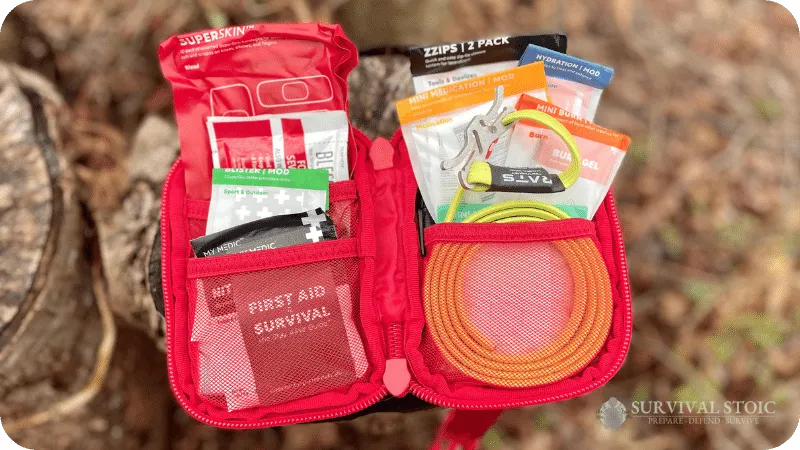
It’s compact, packed with quality supplies, and (unlike most “Amazon special” kits) it’s actually designed for outdoor use. Inside, you’ll find hydration packets, burn gel, blister strips, BleedStop, and even a tourniquet (though the RATs model it comes with wouldn’t be my first pick).
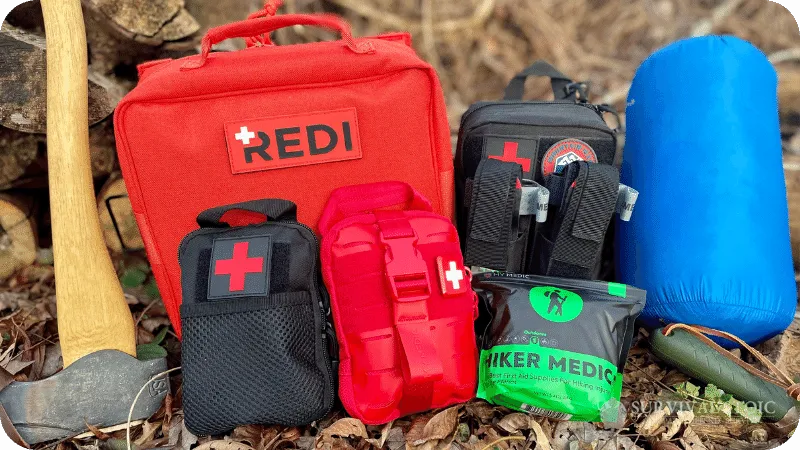
I go hiking weekly and have consulted with other experts, including Blake, an Army veteran on our team trained in battlefield medicine, to review the available kits on the market. I also discussed first aid with Brian McLaughlin, Director of Training at Mountain Man Medical.
Between real-world use and expert insight, we’ve narrowed down the best kits for every scenario, from ultralight hikers to full-on bushcrafters.
Keep reading to find which option is best for you.
Quick Comparison of Our Favorite First Aid Kits for Camping and Hiking
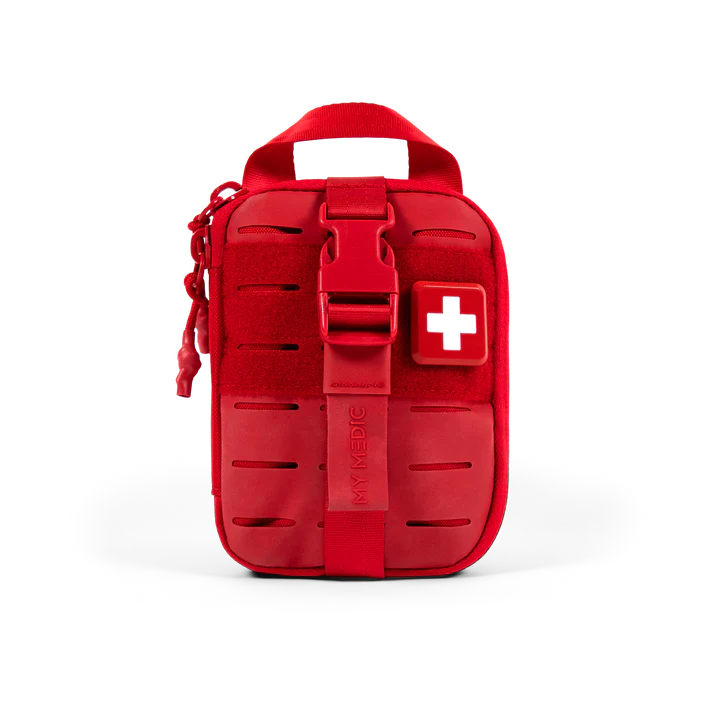
My Medic Sidekick Pro
Compact
Trauma Items
Outdoor Items
MSRP: $119.95

Mountain Man Medical Basecamp Kit
Comprehensive
3 Tourniquets
Outdoor items
MSRP: $239.99
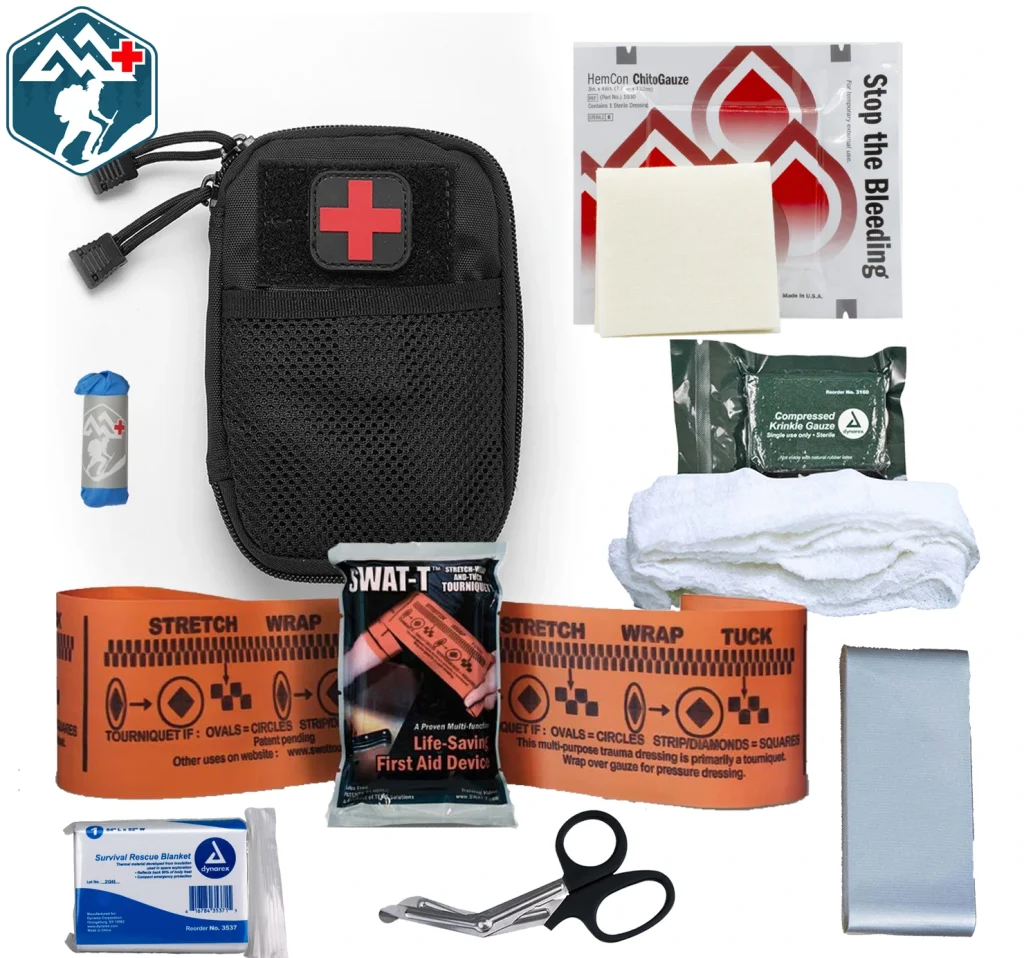
Mountain Man Medical Tracker Kit
SWAT-T Tourniquet
Quick Clot Gauze
Compact Pouch
MSRP: $72
MyMedic Sidekick Pro
Best For Serious Outdoorsmen
Save 15% off your order at My Medic with code “SURVIVALSTOIC15”
- Weight: 14.2 oz
- Dimensions: 7.5” x 5.5” x 1”
- MSRP: $119.95
If I could only take one kit on a trail, it’d be this one. The MyMedic Sidekick Pro is built for the kind of real-world injuries hikers actually face: blisters, burns, dehydration, cuts, and the occasional “that’s gonna scar” moment.
Everything’s color-coded (huge win), so you’re not digging around for gauze while bleeding. It includes hydration packets, water purification tablets, burn gel, and common meds (all things I’ve personally used more than once).
It even packs trauma gear: hemostatic powder and a compact RATs tourniquet. I’ll admit, I prefer a SWAT-T for versatility (it doubles as a splint), but the RATs is lightweight and easy to stash.

The MOLLE-compatible pouch makes it easy to strap on your pack, and the pull-away design is handy when every second counts.
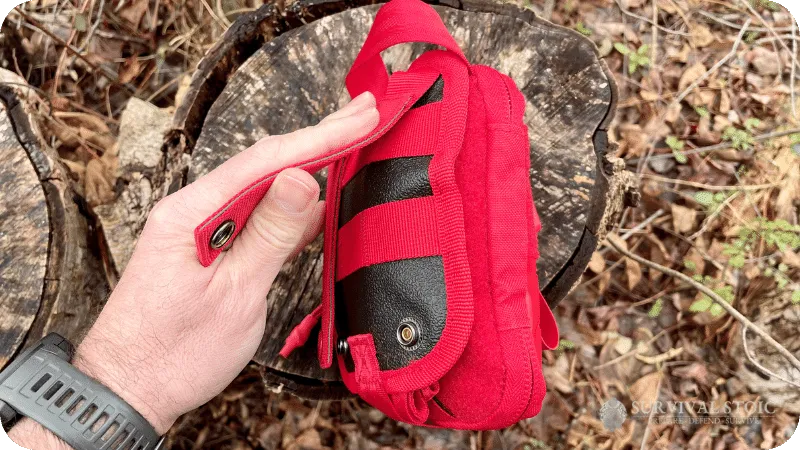
Is it heavy for ultralight hikers? A bit. But I’ll take a few extra ounces over being unprepared any day.
Recommended for:
If you want to be ready for major and minor injuries on the trail, the MyMedic Sidekick Pro is the best first-aid kit you can purchase.
PROS
Compact and portable
Comprehensive supplies
Organized, color-coded layout
High-quality gear
CONS
Not for ultralight enthusiasts
RATs tourniquet isn’t top-tier
Mountain Man Medical Basecamp Trauma and First-Aid Kit
Best First Aid Kit for Camping
- Weight: 41.3 oz
- Dimensions: 6″ x 8″ x 8″ (with tourniquet pouches)
- MSRP: $239.99
If the Sidekick Pro is your “carry everywhere” kit, The Mountain Man Medical Basecamp Trauma and First-Aid Kit is your camp HQ. This thing is massive (in a good way). It’s the kind of kit you leave in your truck or at base camp to cover multiple people and serious emergencies.
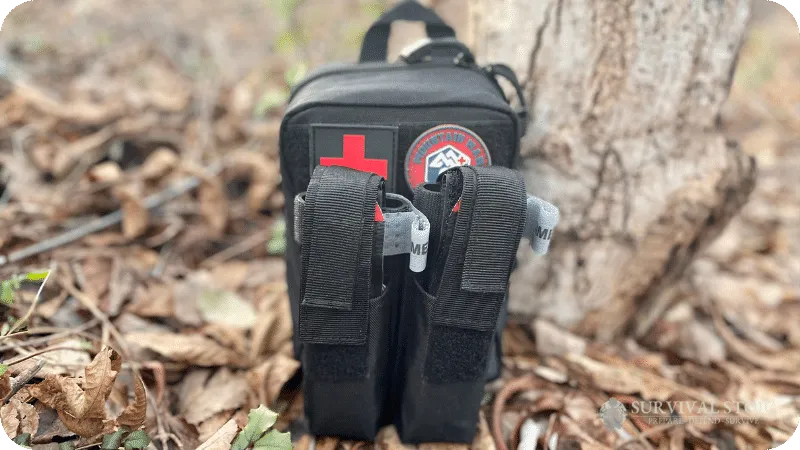
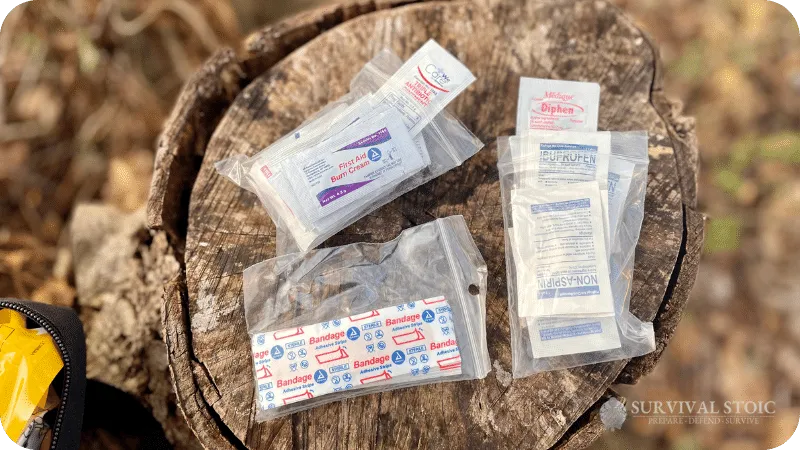
When I’m camping with family or friends, this is the one I bring. It’s got everything: a full-size splint, huge burn dressings, three tourniquets, and more meds than a Walgreens shelf.
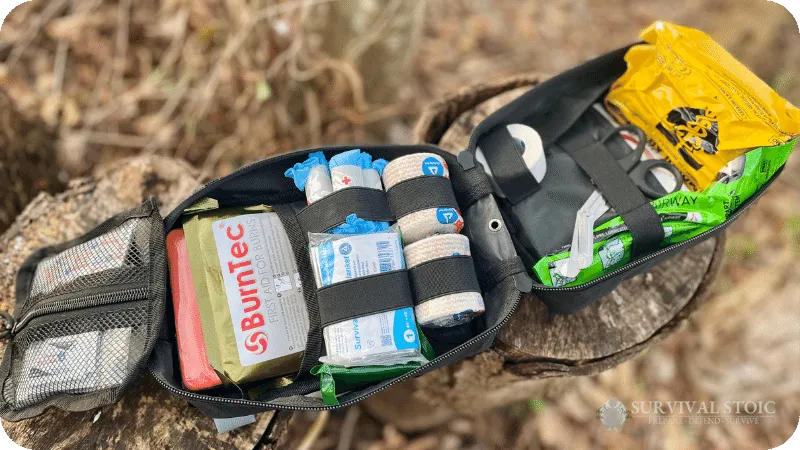
Burns and sprains are the most common camping injuries I see at camp, and this kit handles both beautifully. My favorite feature? The organization. Every pouch is labeled, though you’ll want to familiarize yourself with it before you need it. It’s easy to lose smaller items behind others

It also has one of the biggest burn gel dressings I’ve ever seen. Burns are another common injury I see when camping.
Yes, it’s heavy. Yes, it’s expensive. But when you’re deep in the woods and someone takes a bad fall, you’ll be glad you have it.
Recommended for:
The Mountain Man Medical Basecamp kit is for campers, overlanders, and bushcrafters who want a full medical setup ready for multi-person emergencies.
PROS
Comprehensive
Durable, water-resistant bag
Organized pouches
Perfect for group use
CONS
Bulky and heavy
Pricey Investment
Mountain Man Medical Tracker Trauma Kit
Best for Short Day Trips
- Weight: 12 oz
- Dimensions: 6″ x 4″ x 2″
- MSRP: $72
The Mountain Man Tracker Trauma Kit is a minimalist’s dream. It’s small enough to fit in a cargo pocket but still trauma-focused enough to save your life.
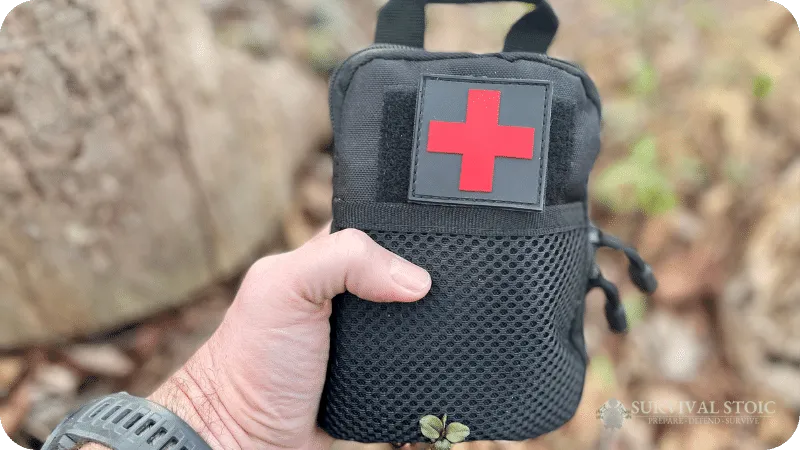
I use this one when hunting or taking short hikes away from camp. It’s got all the critical gear: a SWAT-T tourniquet, hemostatic gauze, duct tape (don’t laugh; it’s a lifesaver), and a mylar blanket.
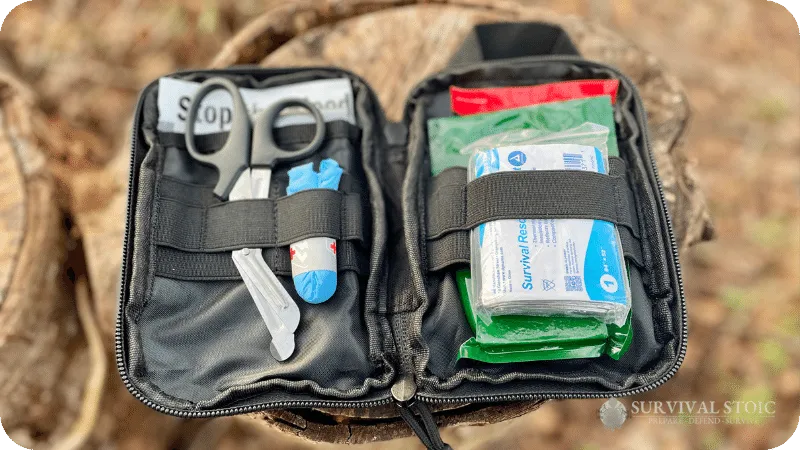
This isn’t the kit you use for blisters. It’s for stopping bleeds, stabilizing breaks, and getting you back to your Basecamp kit or vehicle.

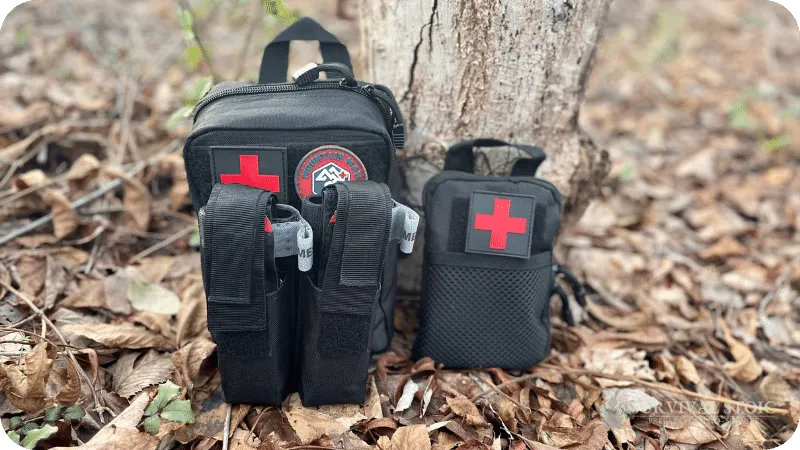
Pairing the Tracker with the Basecamp gives you a one-two punch that covers both field response and longer-term care. That’s how I roll on multi-day trips.
Recommended for:
The Mountain Man Medical Tracker Kit is prfect for hunters, day hikers, and survivalists who prioritize life-saving gear over comfort items.
PROS
Focused trauma supplies
Affordable and durable
Lightweight and small
Quality supplies
CONS
Limited for minor injuries
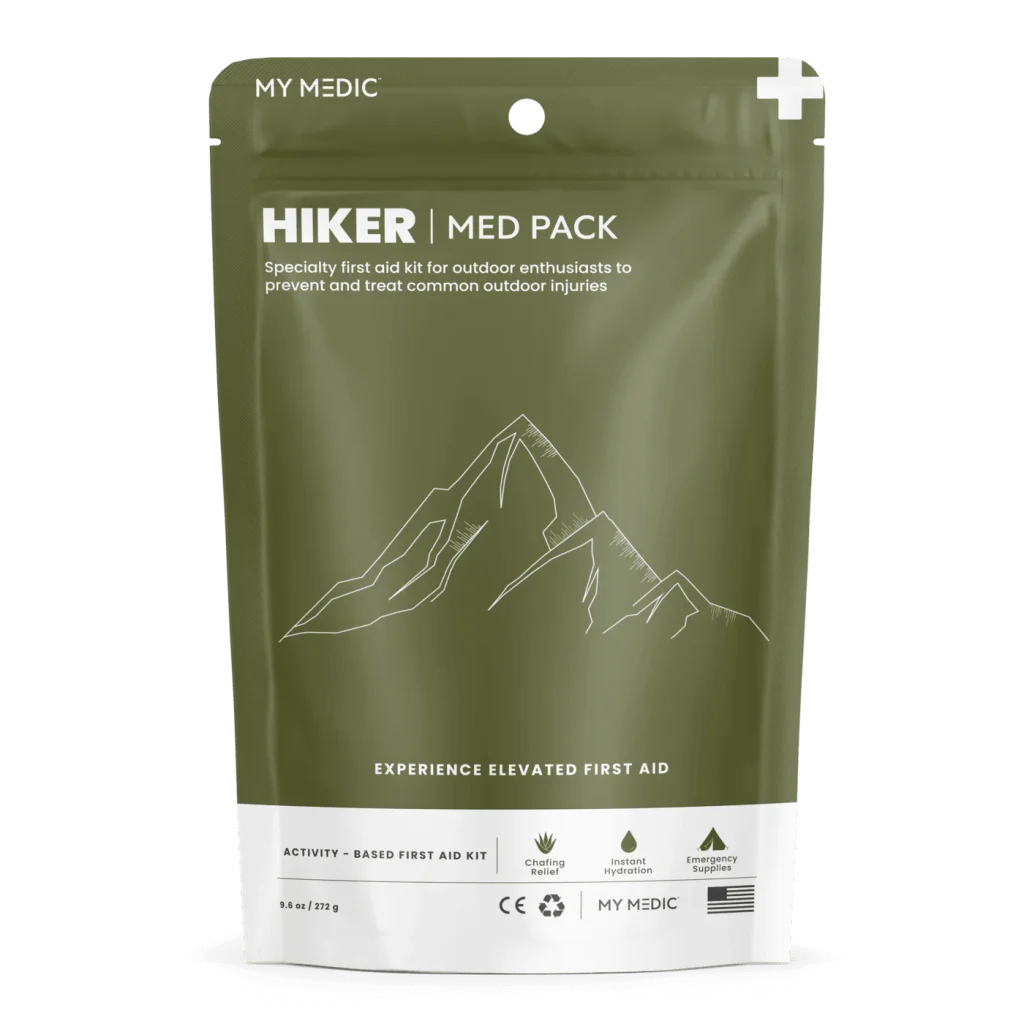
MyMedic Hiker Med Pack
Best for Ultralight Hiking
Save 15% off your order with code “SURVIVALSTOIC15”
- Weight: 10 oz
- Dimensions: 8.8″ x 6.75″ x 2″
- MSRP: $34.95
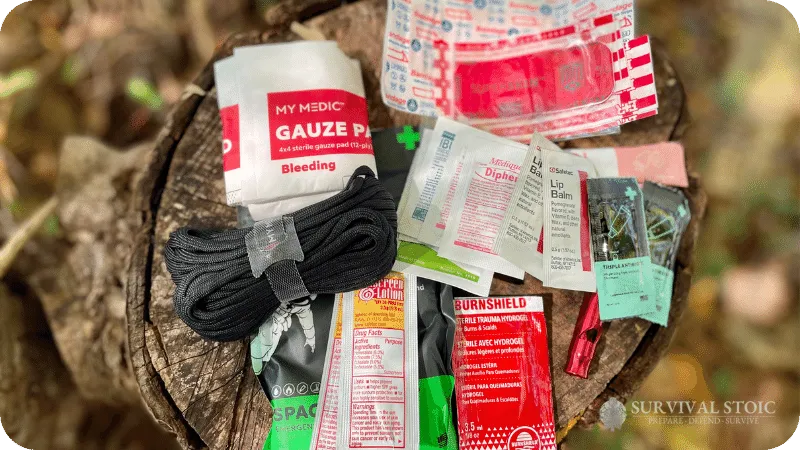
If shaving ounces is your religion, this is your kit. The MyMedic Hiker Med Pack eighs less than a pound but still manages to pack around 30 genuinely useful items.
It’s not designed for trauma. It’s built for the injuries you actually get while hiking: blisters, sunburns, dehydration, small cuts, and the occasional “I shouldn’t have touched that plant.”
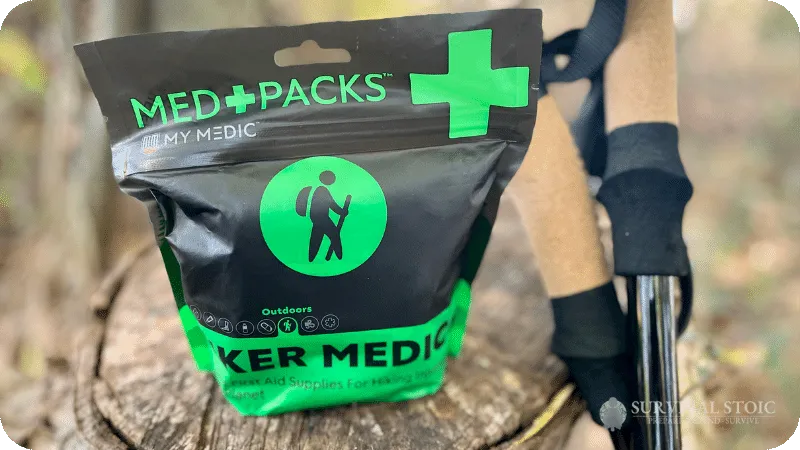
Unlike other cheap “ultralight” kits stuffed with nothing but band-aids, this one includes hydration packets, common meds, blister strips, and even a space blanket.
I keep one of these in my daypack year-round. It’s compact, affordable, and waterproof; everything a casual hiker needs to stay safe without overpacking.
Recommended for:
We highly recommend the MyMedic Hiker Med Pack day hikers and ultralight backpackers who want to stay safe without carrying a brick.
PROS
Extremely lightweight
Well-organized
Versatile supplies
Waterproof pouch
CONS
Not for hardcore expeditions
No trauma gear
Adventure Medical Kits Sportsman Series 400
Best for Extended Multi-Day Trips

- Weight: 2.6 pounds
- Dimensions: 11″ x 8″ x 8″
- MSRP: $165
The Adventure Medical Kits Sportsman 400 is built for real backcountry use, the kind where you’re miles from help and have to handle things yourself. It’s designed for hunters, anglers, and anyone who heads into remote terrain where a twisted ankle or bad cut isn’t just an inconvenience. It’s a real problem.
What makes the Sportsman 400 stand out is its organization. Every section is labeled by injury type (wound care, bleeding, fractures, medications) so you can grab what you need fast.
When you’re dealing with an accident and your adrenaline’s spiking, that structure keeps your head clear.
Inside, you’ll find supplies for both small annoyances and real emergencies. There’s plenty of basic first aid gear (bandages, antiseptics, moleskin, and blister pads), but also more advanced tools like trauma dressings, irrigation syringes, and a wound-closure kit. It even comes with pain relievers, antihistamines, and stomach meds, which you don’t always see in outdoor kits.
The build quality feels solid, too. The soft-sided case is water-resistant and rugged, and the interior pouches keep supplies from shifting around in your pack. It’s heavier than ultralight options, but that’s the tradeoff for real preparedness. It’s meant to serve small groups on multi-day trips, not just day hikers.
Recommended for:
I recommend the Adventure Medical Kits Sportsman 400 for small groups who want a reliable, well-stocked medical kit.
PROS
Exceptional organization
Comprehensive range of tools
Includes medication
Rugged, water-resistant case
CONS
Heavier than basic kits
Bulky for solo trips
Comparison Table of the Best First Aid Kits
| First Aid Kit | Best For | Weight | What We Like | MSRP |
|---|---|---|---|---|
| MyMedic Sidekick Pro | Serious Outdoorsmen | 14.2 oz | Color-coded and trauma-ready | $119.95 |
| Mountain Man Medical Basecamp Kit | Camping & Overlanding | 41.3 oz | Multi-person setup with truma supplies | $239.99 |
| Mountain Man Medical Tracker Kit | Short Day Trips & Hunting | 12 oz | Affordable but serious trauma kit | $72 |
| MyMedic Hiker Med Pack | Ultralight Hiking | 10 oz | Smart mix of hiking-specific supplies | $34.95 |
| Adventure Medical Kits Sportsman 400 | Extended Multi-Day Trips | 2.6 lbs | Includes meds, wound closure, irrigation, etc. | $165 |
Tips for Choosing the Best First Aid Kit for Camping, Hiking & Survival
Even the best-laid adventures come with risks. A blister, a twisted ankle, or an unexpected allergic reaction can happen miles from help. That’s why a good first aid kit isn’t optional gear; it’s essential. But with hundreds of options on the market, finding the right one can feel overwhelming.
In this section, I’ll provide you with everything you need to know about purchasing a first-aid kit for your next expedition. We’ll review how to determine what you need and what features are worth the price.
Match Your Kit to the Adventure
Different trips need different gear. A four-hour hike doesn’t call for a 5-pound trauma kit, and a week of bushcraft camping demands more than a handful of Band-Aids.
If you’re just heading out for a quick hike, go light: blister treatment, wound cleaning, and hydration packets will handle most problems. But for multi-day or remote trips, go with a more robust setup; something that can treat burns, sprains, and bleeding injuries when help is hours away.
And if kids are involved? Pack double the bandages and antiseptic wipes. (Trust me: you’ll use them.)
If you hike with your family, you need to consider everyone. Children tend to get more bumps and scrapes than adults do. You may need an assortment of band-aids to cover both the adults and children in your family.
Pro Tip: Don’t buy two full kits. Keep a larger trauma kit at base camp and carry a compact one, like the MyMedic Sidekick Pro or Tracker Kit, on the trail.
For a deeper dive into building modular gear setups, see our Survival Kit Guide. It walks through a practical multi-level strategy for wilderness readiness.
Focus on Features That Matter
Manufacturers love flashy features (mirrors, tweezers, glow-in-the-dark zippers), but most of that won’t save your skin. Here’s what actually matters:
Size and weight
A first aid kit is only useful if you actually bring it. Choose something you’ll carry, not admire on your shelf.
- Day trips: Lightweight, minimal gear for minor injuries.
- Weekend camping: Medium kits with meds, bandages, and a few trauma tools.
- Base camps and overlanding: Go big; weight isn’t your enemy here.
Organization
In an emergency, chaos kills time. Look for clearly labeled compartments and separated trauma sections.
Brian, an Army medic, summed it up best:
“Separate pockets (are) ideal so that you aren’t sorting through a big mess of items trying to locate your life-saving gear, but in the same bag isn’t bad if you have the room. Often though, your first aid items (Band Aids, sun block, motrin etc) are the most commonly used items so keep them easy to access regularly.”
Labeled compartments and pouches are also a boon. I can’t tell you how many times I’ve opened up a first-aid pouch and seen a ton of unnamed plastic packages. Even for smaller issues, clear labeling prevents wasted time (and stress) when you’re rummaging for ibuprofen.
Contents
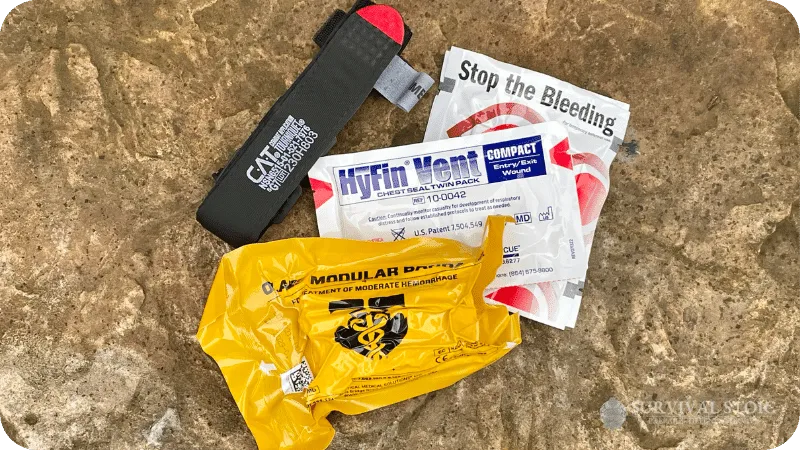
What’s inside determines what problems you can actually handle. Most kits lean one way or the other—minor care or trauma care. A few, like the Mountain Man Medical Basecamp, strike a nice balance.
If you’re unsure, think through your risks. Day hikers mostly need to treat cuts, blisters, and dehydration. But once you head into the backcountry, you’ll want tools to handle bleeding, burns, or broken limbs until help arrives.
You can always go hybrid: keep a trauma kit like the Tracker on your person and a full-sized kit at camp.
Durability
A flimsy nylon pouch is a liability. Look for tough, water-resistant materials. Something that can live at the bottom of your pack without bursting open.
All the kits we reviewed above (except maybe the ultralight Hiker Med Pack) are built to take abuse. The goal? Gear that survives the trip and the elements.
The Definitive Camping First Aid Checklist
If you’d rather build or customize your own kit, here’s what the American Red Cross, Wilderness Medical Society, and our own field testing recommend.
These are the essentials every camping or hiking first aid kit should include, broken down by purpose, not alphabetically.
Basic Care Essentials
These handle 90% of outdoor injuries: cuts, scrapes, and blisters.
- Adhesive bandages (various sizes)
- Sterile gauze pads and adhesive tape
- Antiseptic wipes or iodine swabs
- Moleskin or blister pads
- Tweezers (for splinters and ticks)
- Small scissors
- Medical gloves (nitrile)
Medications and Topicals
These small packets keep minor issues from becoming trip-enders:
- Pain relievers (ibuprofen, acetaminophen)
- Antihistamines (for allergies and stings)
- Antacid tablets
- Hydration and electrolyte packets
- Burn gel or aloe
- Antibiotic ointment
- Hydrocortisone cream
If you’re traveling in remote areas, the Wilderness Medical Society recommends adding a small antibiotic course (with your doctor’s approval) for wound infections but not for GI issus.
Trauma and Emergency Gear
Even if you’re not a medic, it pays to carry life-saving tools, especially if help is far away.
- Tourniquet (preferably CAT or SWAT-T)
- Hemostatic gauze (QuickClot or equivalent)
- Elastic bandage (ACE wrap)
- SAM splint or moldable splint
- Emergency (mylar) blanket
- Triangle bandage (for slings)
- Trauma shears
Remember: trauma gear is only useful if you’ve trained to use it. The first aid course from Mountain Man Medical is worth every hour.
Environmental and Outdoor-Specific Gear
These items are particularly helpful for campers and hikers:
- Water purification tablets
- Insect sting relief pads
- Sunscreen and lip balm
- Instant cold packs
- Thermometer strips
- Duct tape (yes, it’s first aid too)
- Small survival flashlight or headlamp
Many wilderness responders (and most of our team) also stash a Sharpie marker in their kit. It’s great for noting injury times, tourniquet application, or even leaving notes on gear.
What to Add to Your Pre-Made Kit
Even the best pre-stocked first aid kits aren’t truly yours until you customize them (and, based on our experience, no pre-made kit is perfect). Every outdoor trip has different risks, so it’s smart to add a few personal essentials to make your kit mission-ready.
Below are our top recommended add-ons, based on guidance from the American Red Cross and Wilderness Medical Society, plus our own experience and expertise.
- Personal prescription medication: Always include a backup supply of any prescription drugs you take regularly, especially if you’re heading off-grid. Keep them in labeled, waterproof bags.
- Anti-inflammatories and pain relief: Aches, sprains, and headaches are part of outdoor life. Stock ibuprofen, acetaminophen, or naproxen in your kit, depending on your preferences.
- EpiPen or allergy medications: If anyone in your group has allergies, this isn’t optional. Pack an EpiPen and backup antihistamines. These can save lives in remote areas where medical response is hours away.
- Blister and burn upgrades: Even if your kit includes moleskin or hydrogel, it’s smart to add extras. Products like HydroSeal Blister Bandages or Adventure Medical GlacierGel Dressings can make a huge difference when trekking long distances.
- Water filtration and purification: Clean water is part of first aid; dehydration and infection often start here. Check out our review of the top water filters for our recommendations.
- Extra trauma supplies: If you’re venturing deep into the backcountry or hunting far from help, consider upgrading with a trauma module. Add an extra tourniquet, hemostatic gauze, and a pressure bandage.
- Hygiene: Hygiene is one of the most overlooked parts of first aid. If you’re dirty, infections are far more likely. Pack some compact wipes and trash bags to help manage messes.
Simply put:
Your kit should reflect your environment, your group, and your risk level. A few well-chosen additions can transform a “standard” kit into a personalized emergency system you actually trust when things go wrong.
Choose the Best First Aid Kit for Your Outdoor Lifestyle
For your average hiking and camping trip, I recommend the MyMedic Sidekick Pro. It’s compact, organized, and built to handle the usual suspects, like sprains, blisters, and mild dehydration, without weighing you down.
f you’re heading out on longer or more remote trips, step up to the Basecamp kit by Mountain Man Medical. It’s a true field-grade setup, stocked for everything from minor scrapes to serious trauma ideal for group camping or off-grid adventures.
When weight and space really matter, the Mountain Man Medical Tracker kit earns its spot. It’s streamlined yet capable, balancing ultralight design with real emergency readiness.
For general first aid preparedness, see our guide on how to choose the best first aid kit for your needs.
And remember: gear only works if you know how to use it. Whether you’re new to first aid or brushing up on skills, take the time to train. Affordable resources include:
Once you’ve chosen your kit, dive into our Survival Guides and Gear Reviews to keep your setup adventure-ready year-round.
Also be sure to check out our guide on how to backtrack when lost. If you ever do become lost, it will help you find your way back to safety.
