
In this guide, we will explain the differences in pistol red dot footprints available on the market.
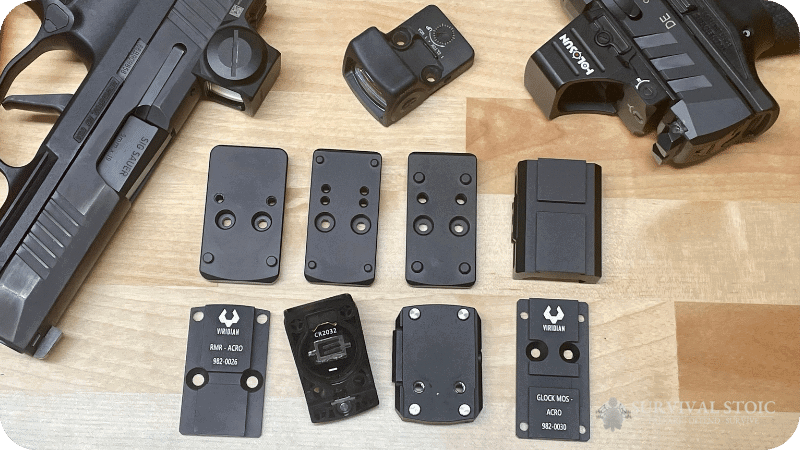
Often, pistols are advertised as “optics-ready.” However, that doesn’t necessarily mean that a pistol can accept any red dot sight. There are different red dot footprints, and not all red dots will fit on every handgun, despite the advertising.
I am an engineer with over 25 years of experience with handguns and red dot optics. I also carry everyday and shoot handguns in competitions.
I have personally experienced how confusing it can be to interpret the different red dot footprints. Retailers and manufacturers rarely explain the red dot footprint on their handguns in a way that’s easy to understand – if they even mention it at all.
I have created this guide based on my own experiences and research to make it easier for you. Keep reading to learn everything you need to know to figure out if a red dot is compatible with a specific handgun.
Red Dot Footprint Compatibility Chart
| Footprint | Common optics | Typical use | Important fitment note |
|---|---|---|---|
| Trijicon RMR | RMR, SRO, 407C, 507C, 507Comp | Full-size pistol optics | Not interchangeable with DPP or RMSc |
| Docter/Noblex | Burris FastFire, Vortex Viper | Older full-size systems | Less common on newer optics |
| DeltaPoint Pro | DPP, Defender ST/XL, SCS-320, Romeo-X Pro | Full-size pistols, some P320 slides | Not the same as RMR; exact P320 cut varies |
| Aimpoint ACRO | ACRO P-1/P-2, compatible enclosed optics | Enclosed full-size optics | Uses a side-clamping mounting system |
| C-More | RTS2B, STS2B, RS-15 | Competition-oriented optics | Requires a compatible cut or plate |
| Shield RMS/RMSc | Defender CCW, RomeoZero, Romeo-X Compact | Slim carry pistols | RMSc and Holosun K are similar but not identical |
| Holosun K | 407K, 507K, EPS Carry family | Micro-compact pistols | Some RMSc slides need a plate or modification |
| Holosun 509T | 509T | Enclosed full-size optic | Proprietary and not ACRO-compatible |

Fitment warning: A shared footprint name does not always guarantee a direct fit. Recoil posts, screw length, slide generation, and included hardware can differ. Verify the exact pistol model, slide version, optic, and mounting instructions before ordering or installing anything.
How to Identify Your Pistol’s Red Dot Footprint
The easiest way I have found to identify a red dot footprint is to start with the exact handgun, not the optic. You would think anything advertised as “optics ready” would accept any pistol red dot. Unfortunately, that is not how it works.
Here are the steps I use:
- Find the exact handgun and slide version. Don’t stop at something broad like “Walther PDP” or “Sig P365.” Some handguns have different optic cuts depending on the model, slide, or year they were made. The Walther PDP 1.0 and 2.0 are good examples.
- Check the handgun manufacturer’s specifications. The owner’s manual or manufacturer’s website should tell you which footprint or adapter plate system the slide uses. This is more reliable than a random product listing.
- Check the footprint of the red dot. Red dot manufacturers normally list the footprint in the specifications. Look for terms like RMR, Shield RMSc, Holosun K, DeltaPoint Pro, or ACRO.
- Figure out if you need an adapter plate. If the slide cut and red dot footprint are the same, the optic may mount directly to the slide. If they are different, you will need the correct adapter plate. Some handguns always use a plate system, even when they are optics-ready.
- Check the posts and screws. Just because the screw holes line up does not mean everything fits correctly. Recoil posts, screw length, thread size, and plate generation can all be different. Screws that are too long can cause problems inside the slide, while screws that are too short may not hold the optic securely.
When in doubt, check the instructions for the handgun, optic, and adapter plate. I have learned not to trust “fits most optics-ready pistols.” There are just too many different standards for that phrase to mean much.
Red Dot Footprint Size
The size of the slide on your handgun determines the size of the red dot you can mount on it and the footprint.
For concealed carry handguns, there are two basic sizes. They get called many different things, as there isn’t a regulated sizing guideline. For our sake, we will call them full-size and compact. Note that I am talking about the width of the slide and not the overall size of the handgun.
Full-size slides are about 1.0 – 1.1 inches wide. These include handguns like the Glock 19, Walther PDP, and H&K VP9.
Compact slides are about 0.8 – 0.9 inches wide. These include the Sig P365, Springfield Hellcat, and Glock 43.
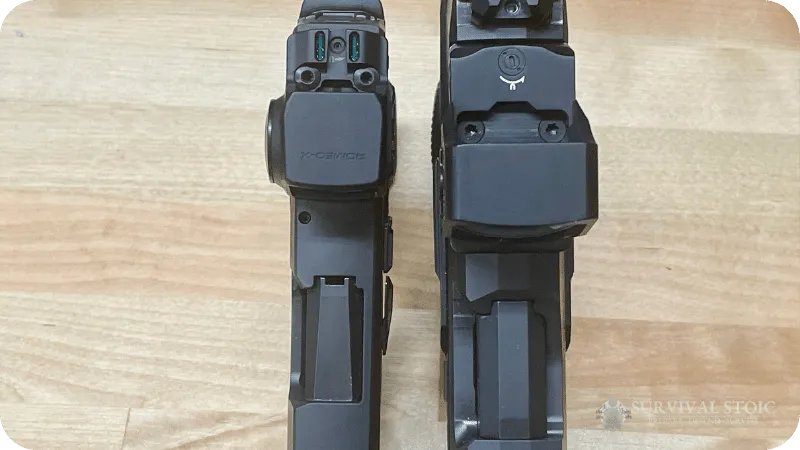
This is important to remember since it will help you narrow down which red dot sights will work for your handgun. You don’t want to order a full-size red dot for your compact handgun or vice versa.
You can figure out the size of your pistol’s slide by measuring it or looking at the manufacturer’s specifications.

Optics Ready Handgun Adapter Plates
Before getting into the different footprints, it is also important to understand if your optics-ready handgun needs adapter plates or not.
Adapter plates are a second plate that mounts to the pistol slide. The advantage of this is it allows me to mount red dots with different footprints on my handgun.
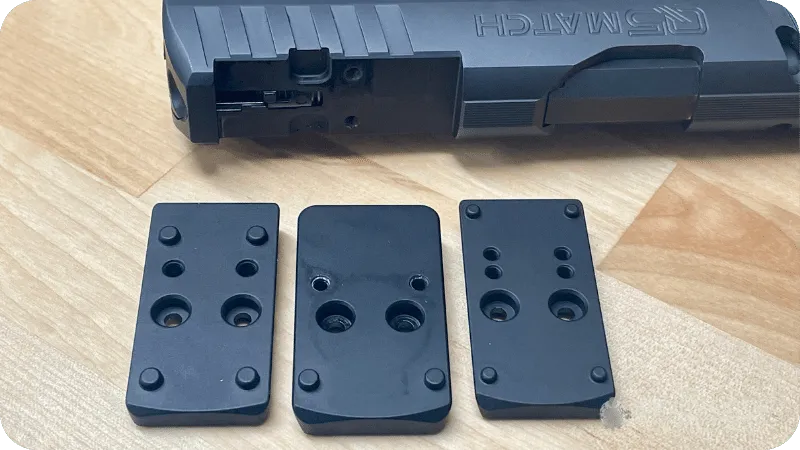
The disadvantage of adapter plates is they raise the red dot higher on the slide. Sometimes, this results in the current iron sights no longer being useful. On some handguns, the adapter plate replaces the rear sight.
If you are used to using the iron sights, you will have to present the handgun in front of your eye slightly lower with the red dot since it sits up higher on the slide with the adapter plate.
Adapter plates also introduce more screws that can come loose. These should be torqued properly and checked periodically.

Handguns like the Glock 19 MOS and the Walther PDP have adapter plates that can be used for all the common red dot footprints. Some red dots are made to bolt directly to these guns; however, they are not that common yet. Depending on the red dot, these are more desirable than using the adapter plate, in my opinion.

See the red dot footprint sections below for a list of red dots that are direct mount options for various pistols with proprietary red dot mounting footprints.
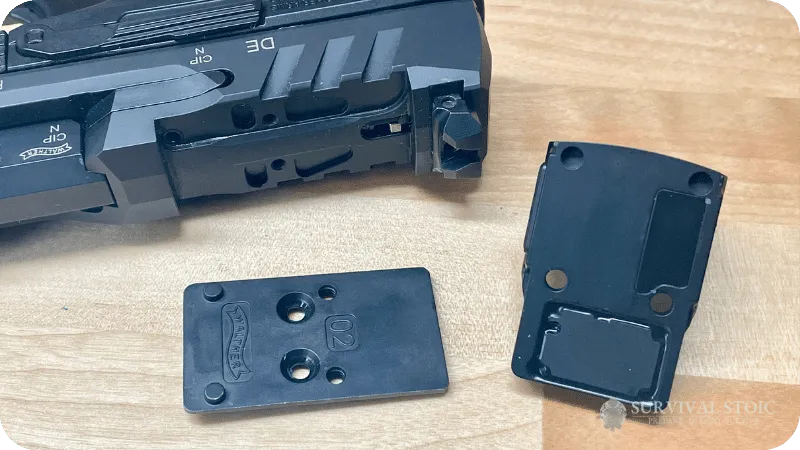
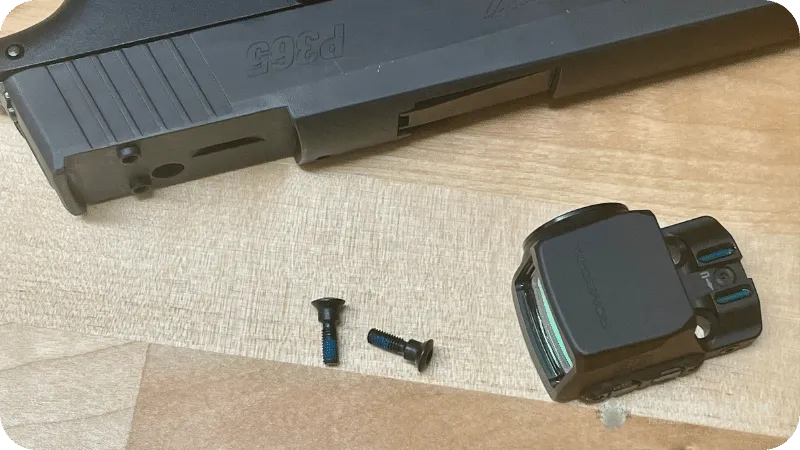
Handguns like my Sig P365 shown below have a common red dot footprint (RMSc and Holosun K footprint in this case) and do not need adapter plates. See our guide on the Best Red Dots for the P365 for our favorites!
Where To Get Red Dot Adapter Plates
If you need an adapter plate for your handgun, two great options are C&H Precision and DPP Titanium Adapter Plates.
Also see our full DPP Titanium Adapter Plate Guide. We have included cross reference tables so you can easily find which plate you need.
Optics Force also has a full selection of both of these adapter plates and are quick to answer any questions.

What To Do If Your Handgun Is Not Optics Ready
If you do not have an optics ready handgun, you have two options.
Dovetail Red Dot Mounting Plates
The first is to use a dovetail red dot mounting plate. These mounting plates use the rear sight dovetail in the slide to attach to the handgun. To install them, the rear sight has to be removed, and then the mounting plate slides into the dovetail and is held in place with screws.
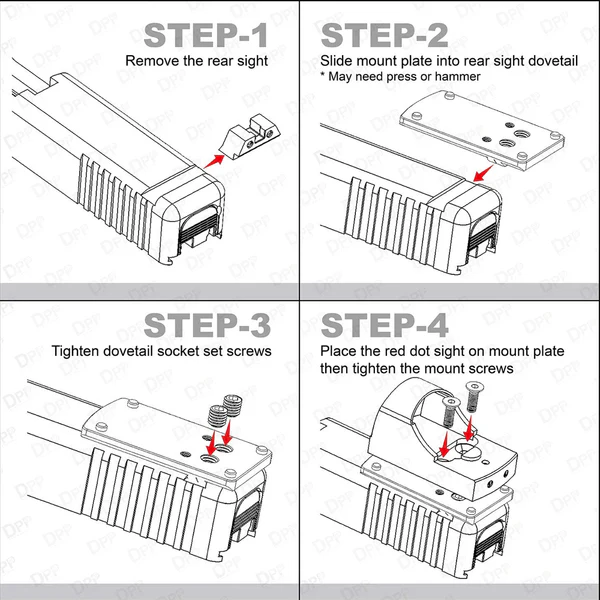
There are a few Pros and Cons with these:
Pros:
- Low Cost
- Quick and Easy
- Can be Removed Later
Cons:
- No Back Up Sights
- Red Dot High on the Slide
- Not as Secure
- Not Widely Available
While being quick and easy, you do loose the back up irons sights and the red dot sits considerably higher on the slide. When I present my handgun, it makes it harder to find that dot compared to what I am used to.
DPP has a number of dovetail mounting plates that are affordable and work well. They are available here on Amazon and also here at Optics Force. Our DPP Titanium Adapter Plate Guide also has a full list of these.
| Handgun Model | Red Dot Footprint | Amazon |
|---|---|---|
| Full Size Glock non MOS | Docter | Check Price Here |
| Full Size Glock non MOS | RMR/Holosun C | Check Price Here |
| Full Size Glock non MOS | Holosun K/Shield/RMSc | Check Price Here |
| S&W M&P | Docter | Check Price Here |
| S&W M&P | RMR/Holosun C | Check Price Here |
| S&W M&P | Holosun K/Shield/RMSc | Check Price Here |
Slide Milling
The second option is to have the red dot footprint that you want machined into your slide. C&H Precision has an easy service here where you can send in your slide and they will mill your preferred footprint.
There are some Pros and Cons to having your slide milled:
Pros:
- May Allow Backup Sights
- Red Dot Low on the Slide
- Very Secure
Cons:
- Higher Cost
- Waiting Time
- Permanent
This is the preferred option if you are looking to add a secure and permanent red dot footprint to your handgun. However, once it is done you can’t go back.
Full-Size Red Dot Footprint
I’ve seen larger pistol red dots called “mini reflex sights,” which adds to the confusion. Red dots started out on rifles and were reduced in size, hence the term “mini.” All pistol red dots are technically mini based on that definition.
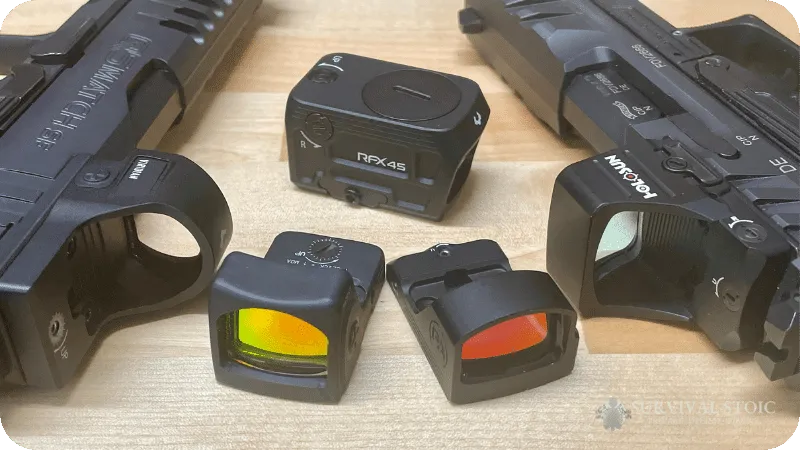
In general, these red dots are about 1.25 inches wide and 1.75 inches long. They fit wider handgun slides like those on the Glock 19 and Walther PDP. That does not mean every full-size red dot uses the same mounting footprint, though.
Below are the most common full-size red dot footprints you will see.
Trijicon RMR Footprint
The RMR is the most common footprint today for full-size handguns. Trijicon developed it for the RMR, or Ruggedized Miniature Reflex, red dot.
It uses two screws and two posts to locate the red dot on the slide. Those posts help hold the optic in place under recoil instead of forcing the screws to do all the work.
Popular RMR Footprint Optics:
- Trijicon RMR Type 2
- Trijicon SRO
- Holosun 407C
- Holosun 507C
- Holosun 507 Comp
- Viridian RFX35
- Primary Arms Classic Series Mini
- C&H Precision EDC-XL
Some aftermarket slides are cut directly for the RMR footprint. If you have one of these, you may not need an adapter plate. My custom Brownells Glock slide, for example, has an RMR cut that lets the optic mount directly to the slide.
Handguns like the Glock MOS and Walther PDP use their own plate systems. You will normally need an RMR adapter plate unless the red dot was made to mount directly to that particular handgun.
The RMR footprint is often confused with the DeltaPoint Pro footprint. They are both used on full-size handguns and look similar at a glance. Unfortunately, the screws and posts are in different locations, so they are not interchangeable. Close doesn’t count here.
Adapter plate? Not if your slide has a true RMR cut. For most factory plate systems, you will need the correct RMR plate.
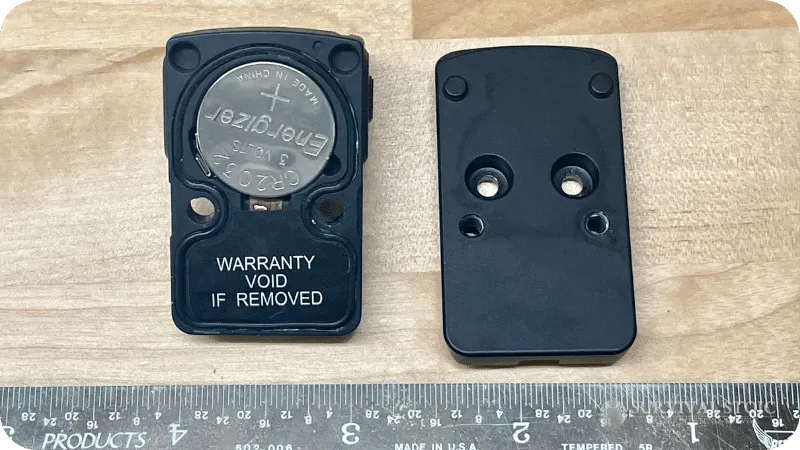
Docter/Noblex Footprint
The Docter/Noblex footprint was popular in the past but has died out considerably. Most new full-size red dots use the RMR footprint instead.
It uses two screws and four posts to locate the red dot. That may sound similar to the DeltaPoint Pro and Shield footprints, but the measurements are different.
Popular Docter/Noblex Footprint Optics:
I don’t see many new handguns cut directly for this footprint. You are more likely to find it on an adapter plate or dovetail mount, especially for an older handgun or red dot.
It is easy to confuse this footprint with other four-post designs. Just because the optic has two screws and four holes does not mean it will fit. The spacing still has to be correct.
Adapter plate? Usually. Unless your slide is specifically cut for Docter/Noblex, you will probably need a plate or mount made for it.
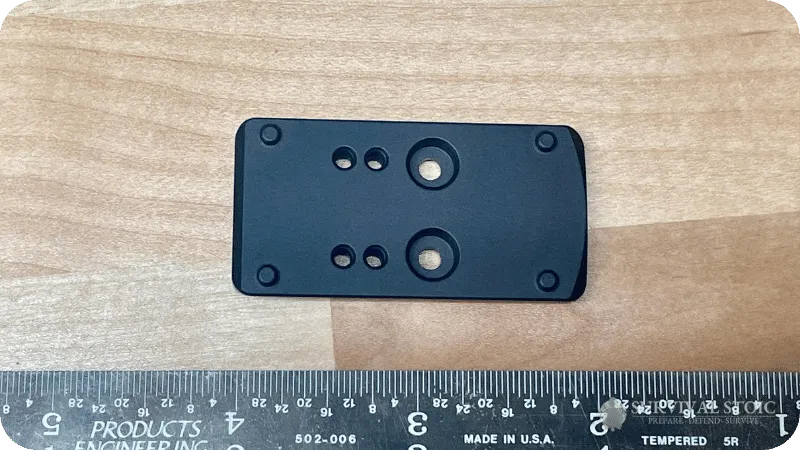
Leupold Delta Point Pro Footprint
The DeltaPoint Pro footprint was originally made for the Leupold DeltaPoint Pro. It is not as common as the RMR, but several newer full-size red dots now use it.
This footprint has two screws and four posts to locate the red dot. It looks similar to the Shield RMS footprint, but the post sizes and other measurements are different. I would not try to mix the two without a plate specifically made for that combination.
Popular Delta Point Pro Footprint Optics:
Some SIG Sauer P320 optics-ready slides use the DeltaPoint Pro footprint. However, SIG has used different optic cuts over the years, so check your exact P320 slide before assuming the optic will bolt directly to it.
This footprint also gets confused with the RMR. They are both full-size patterns, but the mounting holes and posts do not line up.
Adapter plate? Not on a verified DeltaPoint Pro cut. Glock MOS, Walther PDP and most other factory systems will need the correct plate.
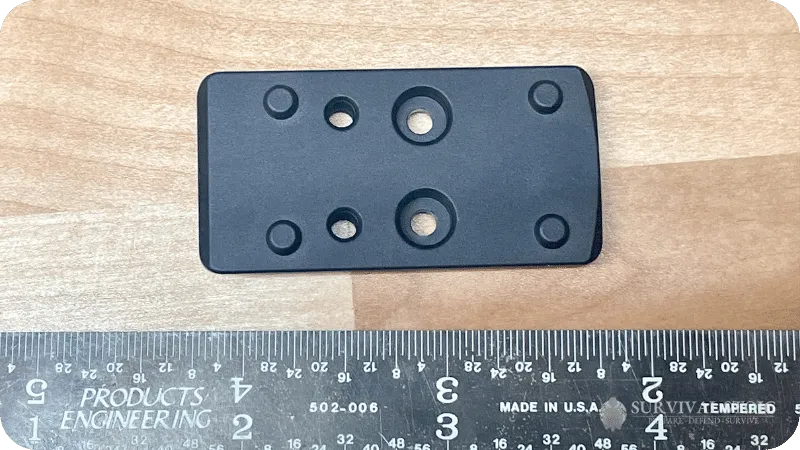

Aimpoint ACRO Footprint
Aimpoint created this footprint for its ACRO red dot sights. These are larger, fully enclosed red dots that are not as common for concealed carry.
Instead of using screws and posts through the top of the optic, the ACRO mounts to a rail-like surface and clamps into place from the side. It may look a little like a tiny Picatinny mount, but it is not the same and will not mount directly to a Picatinny rail.
Popular Aimpoint ACRO footprint Optics:
There are slides cut directly for the ACRO, but most optics-ready handguns will need an adapter plate. Plates are available for common systems like Glock MOS and Walther PDP.
The ACRO is often confused with the Holosun 509T because they both clamp onto the mount from the side. They look similar, but the two footprints are different and not cross-compatible.
Adapter plate? Usually. If your slide has a true ACRO cut, you’re good. Otherwise, you will need a plate made for your exact handgun and the ACRO footprint.
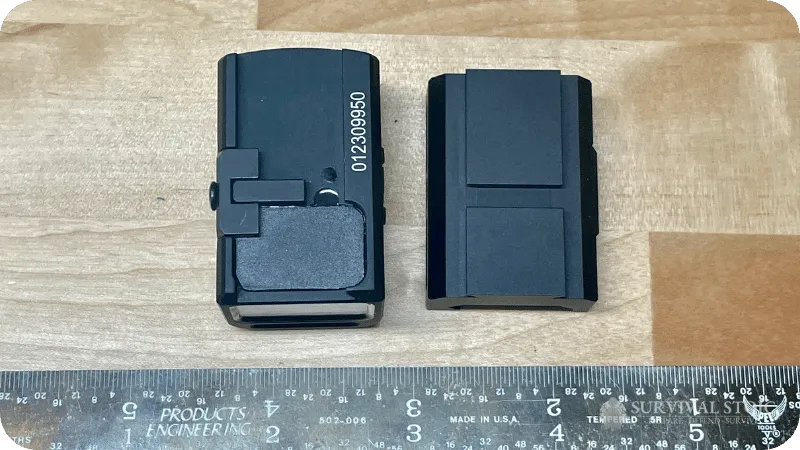
C-More Footprint
The C-More footprint was developed by C-More for its red dot sights. These are commonly used on larger 2011-style competition handguns. They are not found as often on factory optics-ready carry guns.
The C-More uses its own mounting pattern. Some red dots with this footprint include an adapter for a particular handgun, so be sure to check what comes in the box.
Popular C-more Footprint Optics:
- Primary Arms GLx RS-15 (comes with a Glock MOS adapter plate)
- C-More RTS2B
- C-More STS2B
The Primary Arms RS-15 is a good example. It uses the C-More footprint but comes with a Glock MOS mount. That allows it to attach to a Glock MOS without changing the actual footprint of the red dot.
The C-More and RMR footprints are both used on full-size handguns, but the mounting patterns are different. One will not bolt directly to the other.
Adapter plate? Usually. You will not need one if your handgun or mount was cut specifically for C-More. Otherwise, check whether the optic includes the plate you need.

Compact Size Red Dot Footprints (Micro)
Compact red dots are also called “micro” red dots, which are smaller than “mini.” I know. The names could not be more confusing if they tried.
These red dots are generally about 0.95 inches wide and 1.6 inches long. They are made for thinner handgun slides like those on the SIG P365, Springfield Hellcat and Glock 43X.
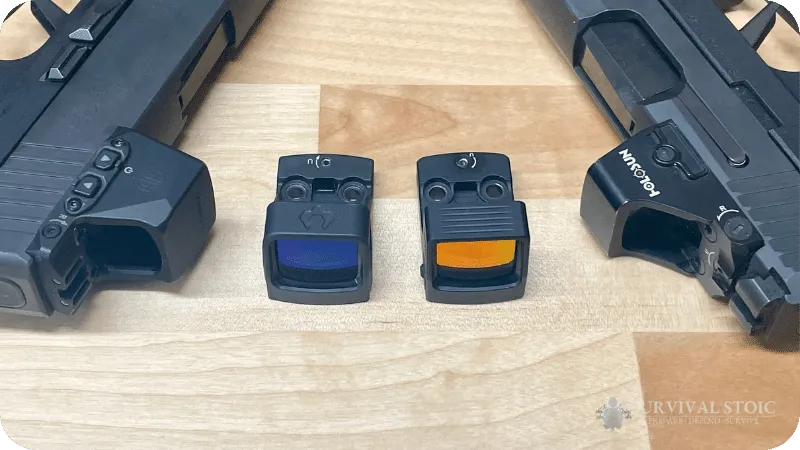
Below are the most common footprints used on compact red dots.
Shield RMS and RMSc Footprint
Shield designed this footprint for compact red dots that fit thinner handgun slides. You will often see both RMS and RMSc mentioned.
The two use the same basic arrangement of two screws and four posts. The RMS optic body is wider, while the RMSc is narrower and made for slim carry pistols. An RMSc optic may fit on an RMS-sized mount, but the larger RMS optic can be too wide for an RMSc slide.
Popular RMSc Footprint Optics:
- Vortex Defender CCW
- Sig Sauer Romeo Zero
- Sig Sauer Romeo-X compact
- Viridian RFX 11 and RFX15
- Primary Arms Classic Series Micro
- C&H Precision EDC
A lot of micro-compact handguns use an RMSc-style cut. However, manufacturers sometimes remove posts or change the cut slightly so the slide can accept other compact footprints too.
The RMSc is most often confused with the Holosun K footprint. They are very similar, but they are not exactly the same. A Holosun K optic may not sit flat on a strict RMSc cut because of the rear posts.
Still confused? I don’t blame you. You’d think they would have made a universal system for compact red dots, but here we are.
Adapter plate? Not if the slide and optic use the same RMSc pattern. You may need a thin plate if you are putting a Holosun K optic on a strict RMSc cut.
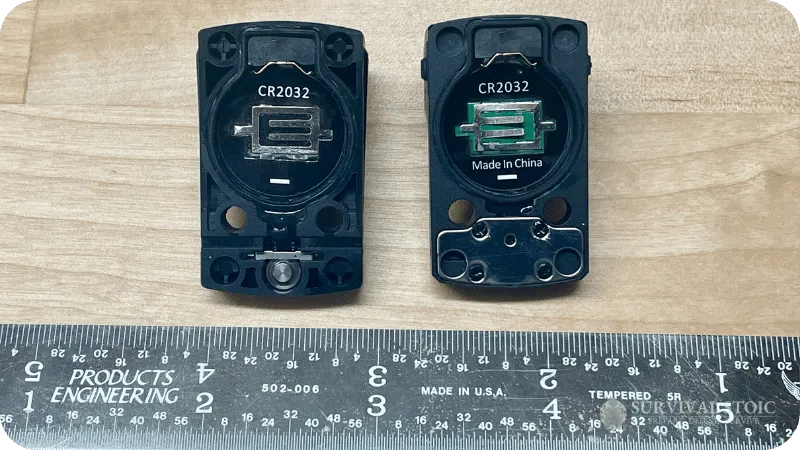
Holosun “K” Footprint
Holosun designed the K footprint for compact red dots like the 407K and 507K. It is very similar to the Shield RMSc footprint.
The main difference is in the recoil posts. The Holosun K pattern removes the two rear posts and uses shorter front posts. This means the screw holes may line up on an RMSc slide while the optic still will not sit flat.
Popular Holosun K Footprint Optics:
Some handguns accept both RMSc and Holosun K optics because the slide has no rear posts. My SIG P365XL is one example. Other pistols with a strict RMSc cut will need a thin adapter plate or spacer for a K footprint optic.
My Springfield Hellcat Pro has the rear posts found on a strict RMSc pattern. I use a thin DPP Titanium plate to mount a Holosun 507K without modifying the slide.

This is probably the most commonly confused pair of footprints. If a handgun manufacturer says the slide is RMSc compatible, do not automatically assume that a Holosun 407K or 507K will mount directly.
Adapter plate? Not on a true K cut or a slide specifically designed to accept both patterns. A strict RMSc cut will commonly need a thin RMSc-to-K plate.
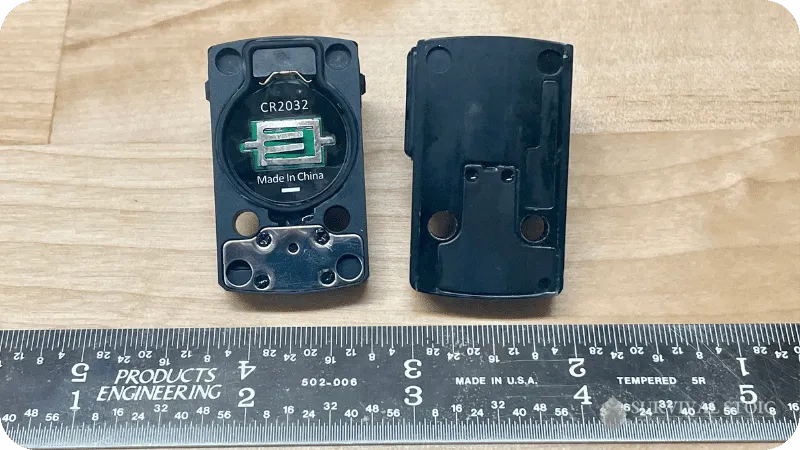
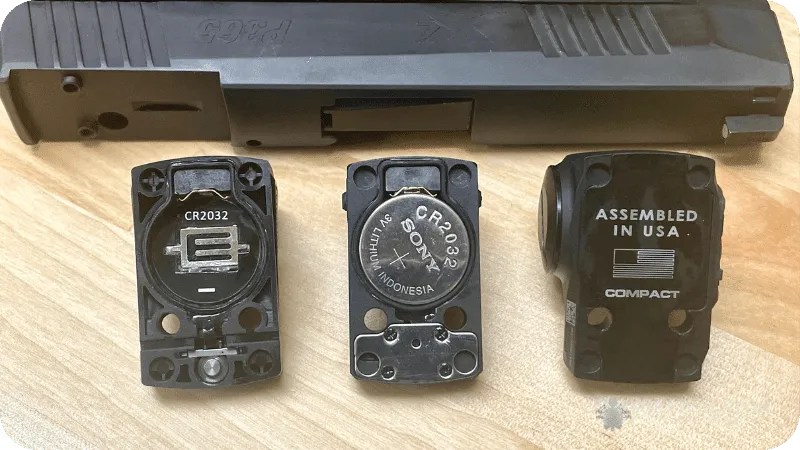

Other Red Dot Footprints
In addition to the more “standard” footprints above, there are some other nuances to understand. Some red dot manufacturers and handgun manufacturers have their own footprints.
Holosun EPS and EPS Carry Footprint
The Holosun EPS and EPS Carry are enclosed red dots built around the Holosun K mounting pattern. They do not use an entirely separate footprint, even though the mounting setup can make it look that way.
The full-size EPS is designed for wider handgun slides. It uses the K footprint and commonly includes an RMR-to-K adapter plate. If your slide has an RMR cut, that plate allows the EPS to mount without stacking multiple plates.
The EPS Carry is narrower and made for compact handguns. It also uses the K footprint and commonly includes a thin RMSc-to-K adapter plate.
The thin plate sits between the slide and optic. It allows the K-pattern optic to clear the posts on a strict RMSc cut. I would avoid stacking two adapter plates. That raises the optic higher and introduces another set of screws that can come loose.
The EPS Carry is sometimes advertised as RMSc compatible. Usually, that means it can work with an RMSc slide by using the included plate. It does not mean the K and RMSc footprints suddenly became identical.
Adapter plate? Not on a compatible K cut. An RMR or strict RMSc slide will normally need the appropriate adapter.


Holosun 509T Footprint
The Holosun 509T is an enclosed red dot intended for full-size handguns. It uses a proprietary mounting footprint.
Like the ACRO, the 509T clamps onto its mount from the side instead of using two screws through the top of the optic. The designs look similar, but the 509T and ACRO are not cross-compatible.
Most optics-ready handguns will need a 509T adapter plate. Some 509T packages include an adapter for another common footprint, but check the exact model and what comes in the box before ordering.
Adapter plate? Usually. I have the adapter plate from C&H Precision. You will not need one on a slide cut directly for the 509T. Anything else will require a plate made for that slide and optic combination.

Red Dot Footprint Comparisons
Some footprints look almost identical until you put them next to each other. Unfortunately, “almost identical” is not good enough when mounting a red dot to a handgun.
Here are the footprint comparisons that seem to cause the most confusion.
RMR vs. RMSc Footprint
The easiest way to tell these apart is by size. The RMR footprint is made for full-size red dots and wider handgun slides. The RMSc footprint is made for micro red dots and thinner carry guns.
The RMR uses two screws and two recoil posts. The RMSc uses two screws and four posts. The screw spacing and overall mounting dimensions are also different.
An RMR optic is usually too wide for a micro-compact slide. An RMSc optic may physically fit within the width of a full-size slide, but it will not bolt directly to an RMR cut.
You can sometimes find adapter plates that let you mount a compact optic on a full-size handgun. However, the plate adds height and another set of screws. I would only do this if I had a specific reason to use the smaller optic.
The simple answer is that RMR and RMSc are not interchangeable. If your slide has an RMR cut, buy an RMR-pattern optic or the correct adapter. If it has an RMSc cut, use an RMSc-compatible optic.
RMR vs. DeltaPoint Pro Footprint
The RMR and DeltaPoint Pro footprints are both used on full-size handguns, which is probably why they get confused so often.
The RMR pattern uses two screws and two recoil posts. The DeltaPoint Pro pattern uses two screws and four posts. The screw locations, post arrangement and overall dimensions are different.
An RMR red dot will not simply bolt onto a DeltaPoint Pro cut. The same is true in the other direction. Even if the optic appears to sit on the slide, it needs the correct mounting surface to handle recoil and stay secure.
This comes up frequently with SIG P320 slides. Some P320 models use a DeltaPoint Pro-style cut, while other versions may include additional holes or use a different arrangement. I always check the exact slide instead of assuming every optics-ready P320 is the same.
If you want to mount an RMR optic on a DeltaPoint Pro cut, use a plate made for that exact slide and combination. Do not rely on the screws alone to hold everything together.
DeltaPoint Pro vs. RMSc Footprint
The DeltaPoint Pro and RMSc footprints are easy to confuse because both use two screws and four posts. That does not make them the same footprint.
The DeltaPoint Pro is a full-size pattern. The RMSc was designed for smaller red dots and thinner carry pistols. Their post diameters, spacing and overall optic dimensions are different.
You may see claims that a DeltaPoint Pro optic can sit on a Shield RMS-style mount because some of the locations appear close. I would not treat that as a safe direct fit. Any looseness around the posts allows more recoil force to reach the screws, which is exactly what the posts are supposed to prevent.
There is also the difference in optic width. Even if you could line up the screws, a full-size DeltaPoint Pro optic may be much too wide for a slide designed around an RMSc optic.
If you need to combine the two systems, use a properly designed adapter plate. Approximate alignment is not compatibility.
Holosun K vs. RMSc Footprint
The Holosun K and RMSc footprints are the pair that causes the most trouble. They are very similar, but there is one important difference.
A standard RMSc pattern uses two front posts and two rear posts. The Holosun K pattern removes the rear posts and uses shorter front posts.
Because the screw locations are similar, a K-footprint optic may look like it should mount to an RMSc slide. The problem is that the rear posts can stop the optic from sitting flat. The taller front posts may also interfere.
Some pistols have an RMSc-style cut with no rear posts, allowing both patterns to work. My SIG P365XL is set up this way. Other pistols have a stricter RMSc cut and need a thin adapter plate for a Holosun 407K, 507K or EPS Carry.
You may also see people file down the posts to make a K optic fit. That is a permanent slide modification, and I would not start grinding on a carry gun unless the manufacturer approves it and I know exactly what I am doing.
The safer options are simple:
- Use an optic that matches the slide
- Use a properly made RMSc-to-K plate
- Use a slide specifically advertised as compatible with both patterns
Always check the exact handgun model. “RMSc compatible” does not automatically mean “Holosun K compatible.”
Handgun Manufacturer Red Dot Mounting Footprints
To make things more confusing, some handgun manufacturers have made their own standard footprints. When you buy an optics-ready handgun, it may have one of the standards we mentioned above, or it could have a proprietary footprint. While adapter plates are usually needed, there are some red dots that will mount directly to these standards.
| Pistol system | How it works | What the owner needs to verify |
|---|---|---|
| Glock MOS | Proprietary slide cut using plates or certain direct-mount optics | MOS generation, plate and screw set |
| Walther PDP | Proprietary 1.0 or 2.0 system | Whether the pistol uses PDP 1.0 or 2.0 |
| S&W M&P optics-ready system | Proprietary cut generally using plates | Exact model, plate and screw length |
| HK VP9 optics-ready system | Proprietary system generally using plates | Plate matched to the optic footprint |
| CZ optics-ready systems | Model-specific proprietary systems | Exact pistol model and required plate |
Glock MOS Footprint

Glock handguns that are optics-ready have their proprietary MOS (Modular Optics System) mounting footprint. This footprint is unique and has two screws near the center of the red dot. An adapter plate is usually used for this standard to convert it to one of the other common ones.

Holosun and C&H Precision makes a red dot that will mount directly to a Glock MOS slide without an adapter plate.
An important note here. The Glock MOS standard applies to the full-size handguns only (like the Glock 19 MOS.) The compact Glock handguns, the Glock 43x MOS, and the 48 MOS do not have the MOS standard (even though they are called MOS.) They have the RMSc footprint and will not work with Holosun K footprints without modification or an adapter plate.
Walther PDP 2.0 Footprint
Similar to the Glock MOS, Walther introduced their own mounting footprint in the PDP line of handguns. Adapter plates are typically used to mount a red dot to the slide. Holosun and C&H Precision makes a red dot that will mount directly to the Walther PDP 2.0 without an adapter plate.
Note that PDP handguns that were manufactured earlier had the 1.0 footprint, which is different than the 2.0. Removing the cover plate to see which standard you have is easy.
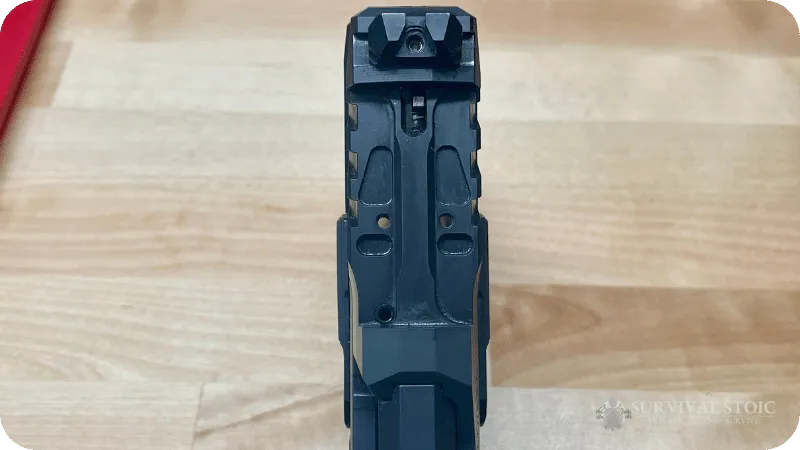
Walther offers one free adapter plate for each PDP that you can get with their optic plate request form. They also have a picture of the difference between the 1.0 and 2.0 standards.
Smith & Wesson M&P 2.0 Footprint
Similar to the other manufacturers, Smith & Wesson has their own proprietary footprint on their M&P 2.0 optics-ready handguns. Adapter plates are typically used to mount red dots with other footprints. Holosun and C&H Precision makes a dedicated red dot for this standard as well.
Heckler & Koch VP9 Footprint
H&K V9 optics-ready pistols have this footprint. Just like the others, it is different and proprietary and requires adapter plates to mount most optics. Holosun and C&H Precision makes a model for these similar to the other manufacturers.
CZ Optics Ready Footprint
CZ’s P10 and Shadow 2 optics-ready pistols have this footprint. Just like the others, it is different and proprietary and requires adapter plates to mount most optics. C&H Precision makes a model for these similar to the other manufacturers.
Learn More about Red Dots
Now that you know the standards and what red dots can fit on your handgun, be sure to read our guide on how to mount a pistol red dot and how to zero a pistol red dot. It is much more than just tightening a few screws and making a few adjustments.
Also, see our guide to the best red dots for concealed carry. If you have not followed our concealed carry guide, be sure to, as it contains information not found anywhere else.
Up Next: 11 Best Pistol Red Dot Sights for Concealed Carry
Go To: Concealed Carry Guide
